A calm, step-by-step nail trimming guide that helps you avoid the quick, condition nervous dogs, and handle accidents safely.
If your dog turns into a trembling, slippery noodle the moment the brush comes out, you are not alone. Grooming anxiety is incredibly common, especially for rescue dogs, puppies who missed early handling practice, and sensitive pups who have learned that grooming predicts scary stuff like loud dryers, slippery tubs, or nails getting clipped too short.
The good news: most grooming fear is absolutely workable. The goal is not to “get it done no matter what.” The goal is to help your dog feel safe enough that grooming becomes tolerable, then routine, and sometimes even relaxing. Below are science-based strategies used by many trainers and veterinary teams, with practical setup tips you can start today.
Why dogs get anxious during grooming
Anxiety during grooming usually comes from a few overlapping issues:
- Loss of control: Being held still, lifted, or restrained can feel scary, even for friendly dogs.
- Sensory overload: Buzzing clippers, high-velocity dryers, running water, and strong-smelling shampoos can be intense.
- Pain or discomfort: Matted fur pulling on skin, ear infections, arthritis, hip pain, dental pain, or sensitive paws can make handling genuinely hurt.
- Past learning: If your dog has been rushed, forced, or accidentally nicked during a nail trim, they can quickly learn “grooming = bad things happen.”
- Fear of surfaces: Slippery tubs, wobbly grooming tables, or loud echo-y bathrooms are often a big part of the problem.
Important: If your dog’s grooming tolerance suddenly gets worse, or they react when you touch a specific body part, schedule a vet visit. Pain and skin or ear issues commonly show up as “behavior problems.”
Start with safety
Grooming puts your hands close to sensitive areas, and bites can happen fast when a dog is scared. If your dog has snapped, bitten, or you feel unsafe, pause the DIY plan and get help from a qualified trainer (fear-free, reward-based) and your veterinarian. For urgent needs like severe matting or nails curling into pads, vet-supervised grooming with medication support can be the kindest option.
Before training: calm setup
Training works best when the environment is not stacking the deck against your dog. A few small changes can dramatically lower stress.
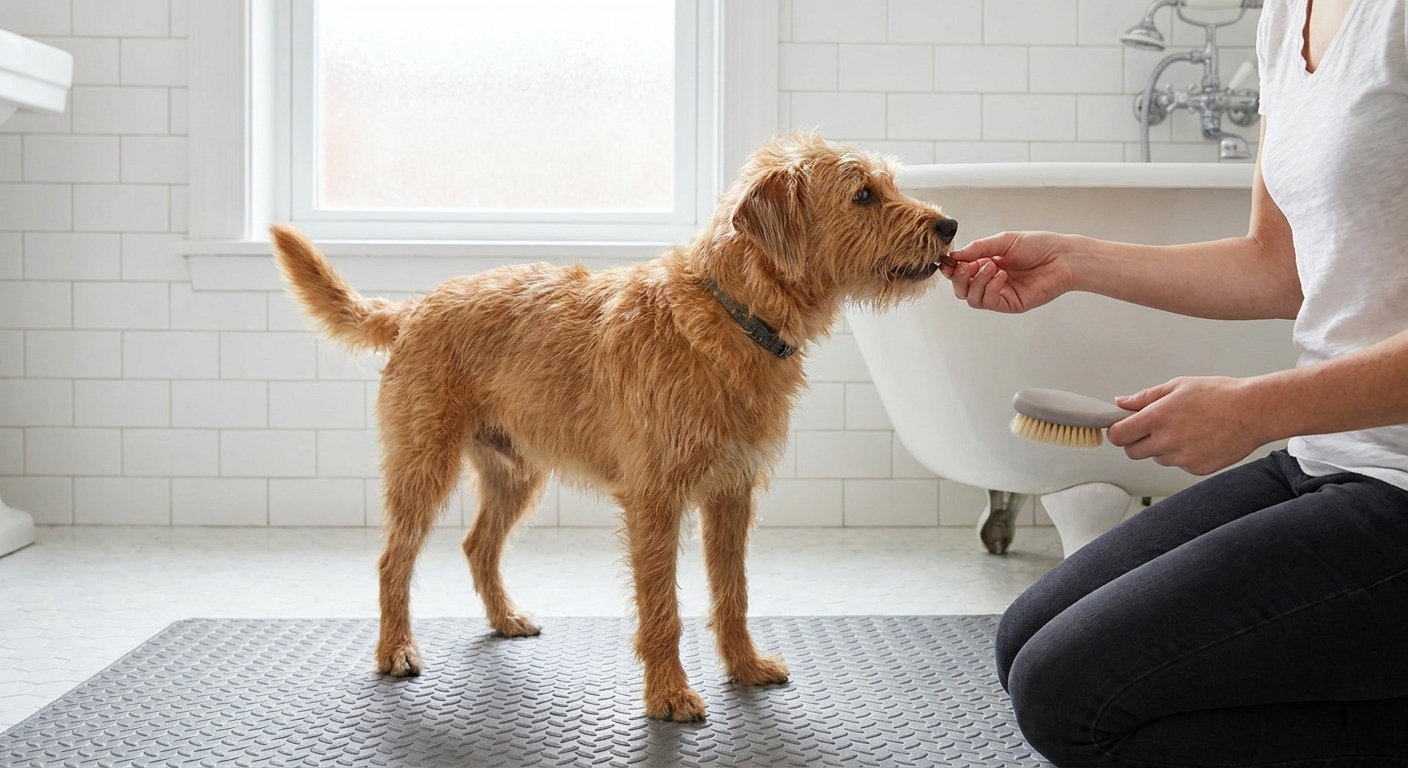
Make footing non-slip
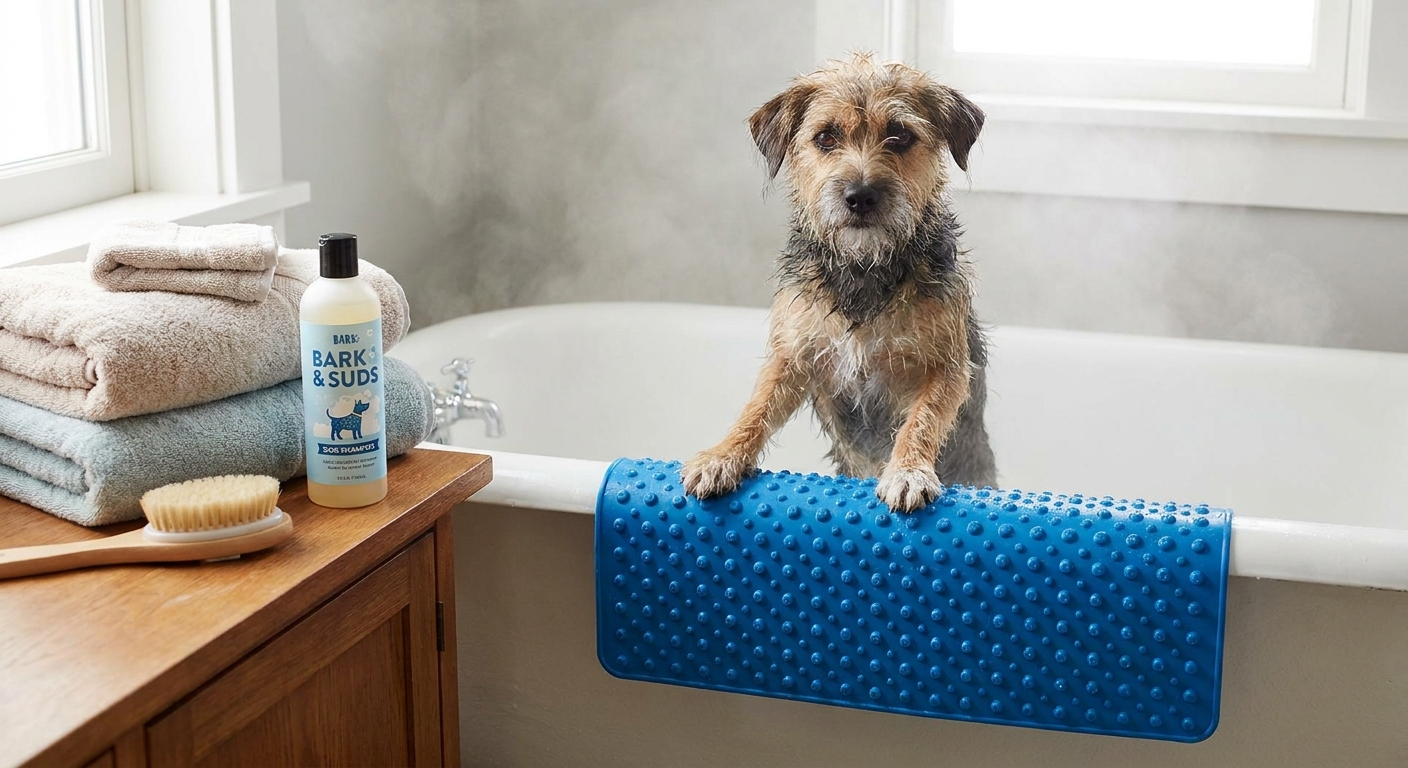
For baths, put a rubber bath mat or a folded towel in the tub. For brushing and nail trims, use a yoga mat, rubber-backed rug, or non-slip grooming mat.
Control sound and splash
- Run the water softly and aim it at the tub wall, not directly at your dog.
- If your shower head is loud, fill a pitcher or a bucket and pour slowly instead.
- Keep bathroom fans off if they spook your dog.
Warmth matters
Many dogs hate baths because they get cold. Use comfortably warm water and have towels ready. If your dog is small or short-coated, a warm room makes a big difference.
Use better tools
Using the wrong brush or a dull nail trimmer can make grooming uncomfortable. The best “calming hack” is reducing discomfort.
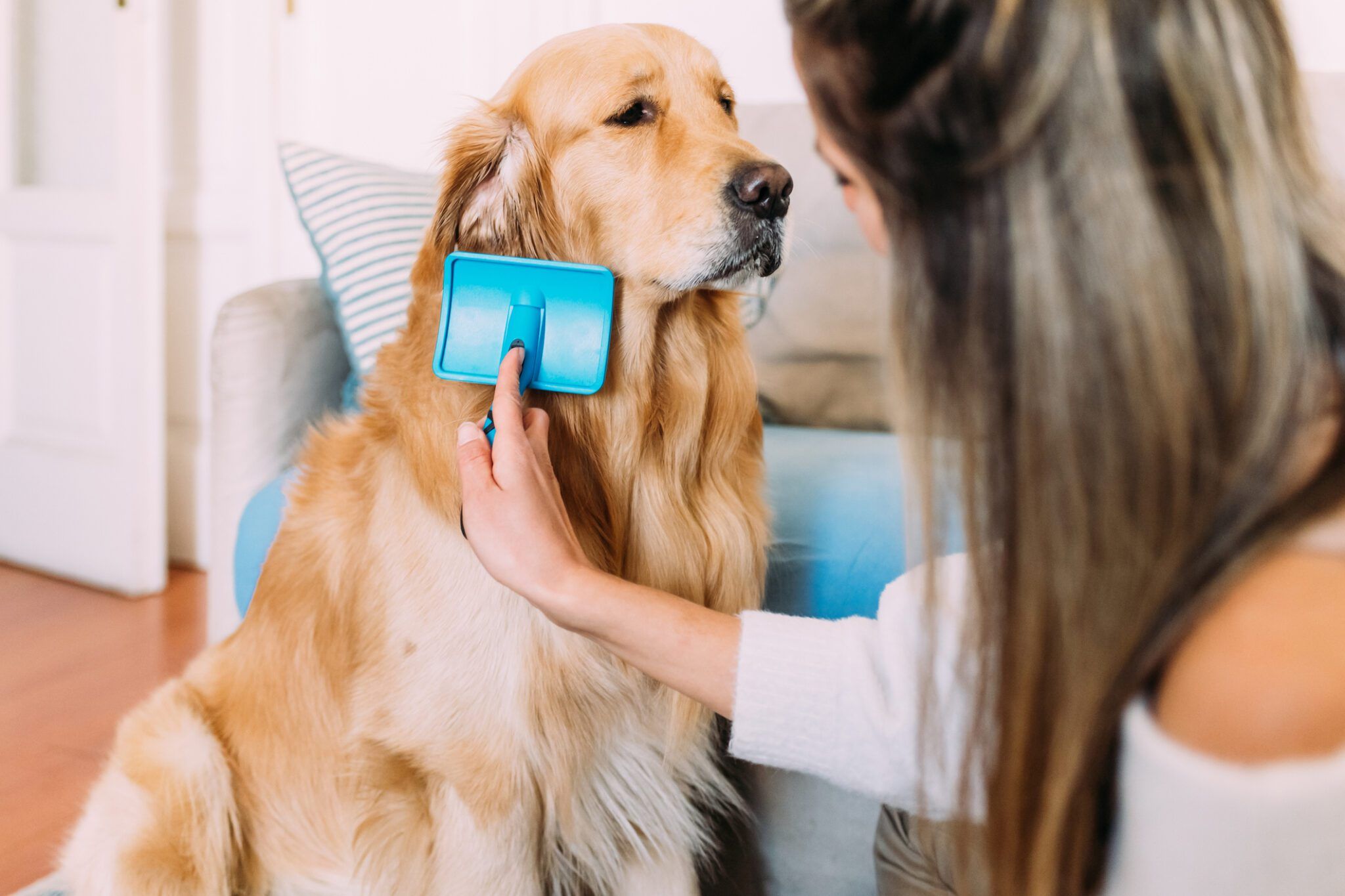
- Brush: Choose a tool that matches coat type. For example, many double-coated dogs do better with an undercoat rake and slicker used gently in short sessions, while short-coated dogs may only need a rubber curry.
- Nails: A quality grinder can be less startling than clippers for some dogs, but the sound can be a hurdle. Others prefer sharp clippers and quick, clean snips.
- Shampoo: Pick a gentle dog shampoo. Human shampoos can irritate skin and increase discomfort.
Spot stress early
Most dogs do not go from “fine” to “biting” out of nowhere. They broadcast discomfort in quieter ways first. If you can learn your dog’s early signals, you can pause, back up, and keep training productive.
- Mild stress: lip licking, yawning, turning head away, paw lift, slow movements, pinned ears, tucked tail, whale eye.
- Escalating stress: freezing, trembling, panting when not hot, trying to leave, growling, snapping, thrashing.
Rule of thumb: If your dog will not take a treat they normally love, they are often over threshold. However, treat refusal can also happen with nausea, pain, heat, or low food motivation. Use it as one clue, not the only one.
The training plan: tiny steps
A widely recommended approach for fearful grooming is desensitization (exposure in tiny, non-scary doses) paired with counterconditioning (pairing the grooming thing with something your dog loves). This is the same learning principle used for fear of vet visits, car rides, and strangers.
If it helps to think in a simple pattern, each repetition is: present the grooming trigger → feed a treat → remove the trigger. That “trigger disappears” part matters.
Keep it predictable
Predictability lowers anxiety. Pick a simple cue like “spa time” and do sessions in the same low-distraction spot with the same mat. Keep sessions short enough that your dog finishes thinking, “That was it?”
Teach a “yes” signal
Consent-based grooming does not mean your dog controls everything. It means your dog has a clear way to communicate “I can handle this” and you respect when they say “I need a break.”
Two easy options:
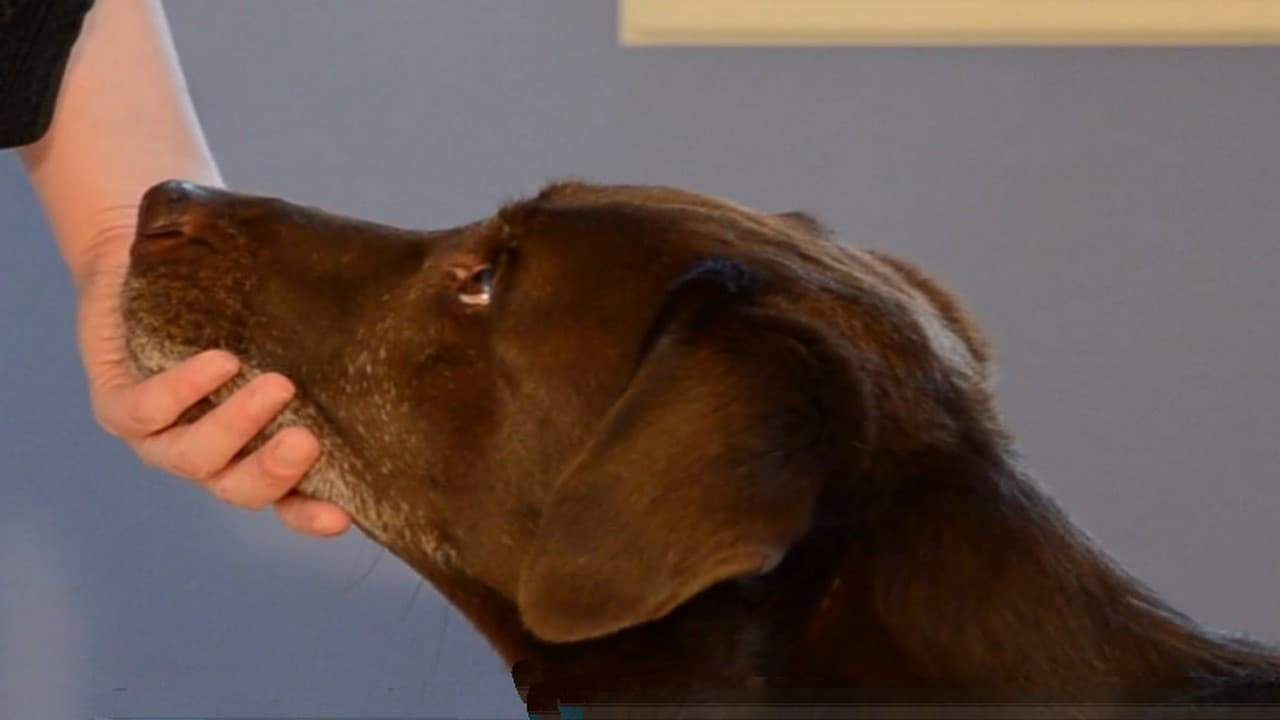
- Chin rest: Teach your dog to rest their chin in your palm or on a towel. Chin down means “continue.” Chin lifts means “pause.”
- Stationing: Teach your dog to stand on a mat. Four paws on the mat means “ready.” Stepping off means “break.”
Pay heavily for these skills with tiny, high-value treats. I keep “spa treats” extra special, like chicken, squeeze cheese, or a lickable treat on a spoon.
Brushing a fearful dog
Brushing is often uncomfortable because it pulls. Your job is to make the sensation gentle and predictable.
Progression
- Step 1: Show the brush, then treat. Put it away. Repeat until your dog’s body loosens up when they see it.
- Step 2: Touch the brush to your dog’s shoulder for one second, treat, stop.
- Step 3: One very short stroke, treat, stop.
- Step 4: Gradually add strokes, one small body area at a time.
Prevent setbacks
- Prevent mats: Frequent mini-brush sessions are kinder than rare marathon brushing.
- Hold the fur at the base: If you are brushing near a tangle, use your free hand to hold the hair near the skin so you are not yanking.
- Start with easy zones: Begin with shoulders and back. Save armpits, belly, and tail for later. Those areas are often more sensitive.
If your dog is already matted and brushing hurts, stop and call a groomer or your vet. Dematting at home is one of the fastest ways to turn a nervous dog into a terrified dog.
Nail trims without panic
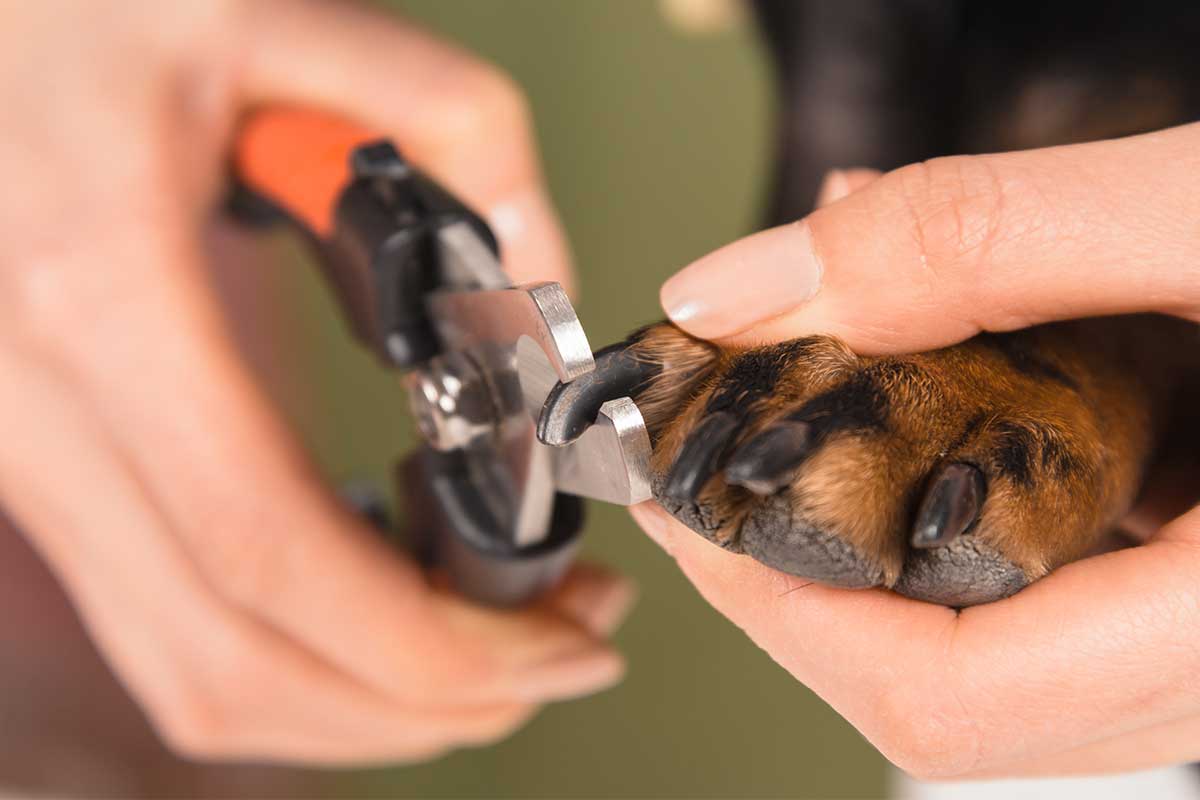
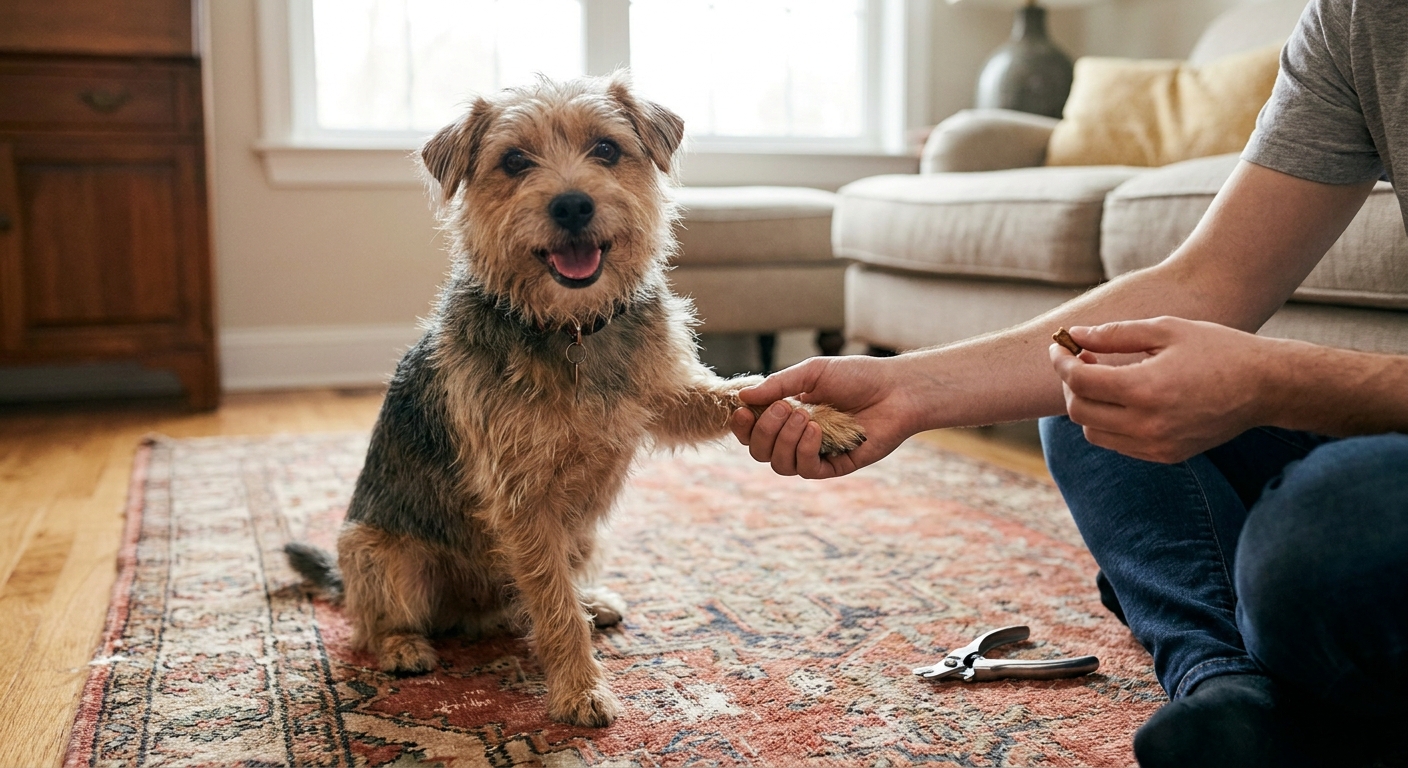
Nails are a big trigger because the paws are sensitive and the procedure feels weird. Also, quicking a nail once can create a strong fear memory. If your dog is reactive around feet, think of nail care as a multi-week project, not a single event.
Rebuild paw handling
- Touch shoulder, treat.
- Touch elbow, treat.
- Touch leg, treat.
- Touch paw briefly, treat.
- Lift paw for half a second, treat.
Repeat until your dog stays loose and soft at each step.
Introduce the tool
- Show clippers or grinder, treat.
- Tap tool lightly to a nail (no cutting), treat.
- Clip one single nail tip (or grind for one second), treat jackpot, done for the day.
Make it easier
- Trim after a walk: Many dogs are calmer after exercise, which can make handling easier.
- Use bright light: It helps you avoid the quick.
- Take micro-slices: Tiny clips reduce risk and reduce pressure sensations.
If your dog has black nails: clip tiny bits. Look for a chalky white center turning darker. When you see a small dark dot in the center, you are close to the quick. Stop there. If you are not sure, stop early and trim again in a few days, or ask a groomer or vet tech to show you in person once.
Calmer bath time
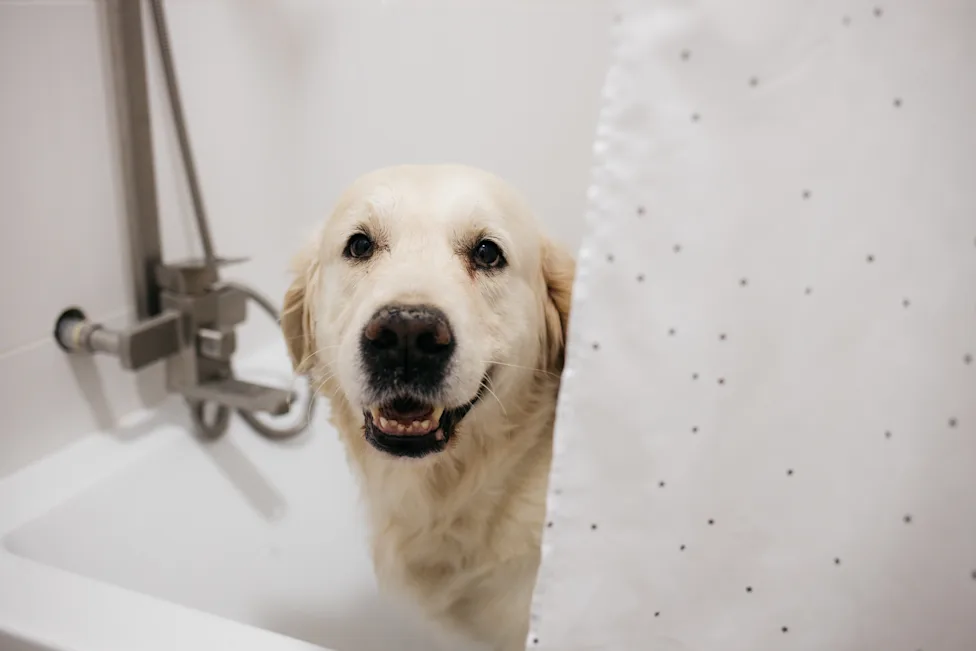
Baths combine multiple triggers: slippery surfaces, water sensation, restraint, and noise. You can train bath tolerance without running water at first.
Phase 1: bathroom = snack bar
Walk into the bathroom, treat, walk out. Repeat until your dog enters willingly. Then add the empty tub or shower area as the treat zone.
Phase 2: dry tub practice
- Put a non-slip mat down.
- Invite your dog in, feed a steady stream of treats for 5 to 10 seconds, then release.
- End before your dog tries to escape.
Phase 3: tiny water pieces
- Turn water on briefly with your dog outside the tub, treat, water off.
- Next session: dog in tub, water on for one second, treat, water off.
- Progress to damp washcloth wipe-downs before full rinses.
Phase 4: wash efficiently
When you are ready for a real bath, keep the actual washing portion short and organized:
- Pre-dilute shampoo in a cup or bottle to reduce scrubbing time.
- Start with the body, save face for last, and use a damp cloth for the head.
- Rinse longer than you think. Leftover soap causes itchiness, which makes next time worse.
Skip the bath if you can: For many dogs, a good brush-out, pet-safe wipes, or a waterless shampoo foam can stretch time between full baths.
Drying and dryers
Many dogs tolerate a bath but panic at drying, especially blow dryers. Towel drying is your friend, and training the sound separately helps a lot.
Towel drying tips
- Use a super-absorbent microfiber towel.
- Blot and squeeze, do not vigorously rub. Rubbing can tug hair and irritate skin.
- For long coats, towel in the direction of hair growth to reduce tangles.
Desensitize the dryer sound
- Dryer in the room, off. Treat.
- Dryer on in another room for one second. Treat.
- Gradually increase duration and decrease distance over days.
- Only later, aim air near the dog, not at the face. Treat continuously.
If your dog is noise-sensitive, consider a quieter dryer designed for pets or stick with towels and air-drying when safe. Use cool or low heat settings and keep airflow moving so you do not overheat the skin. Extra caution is needed for flat-faced breeds, seniors, and dogs with heart or breathing issues.
Calming tools that help
Products work best when they support training, not replace it. Here are options that help many dogs, plus realistic expectations.
Lick mats and long-lasting food
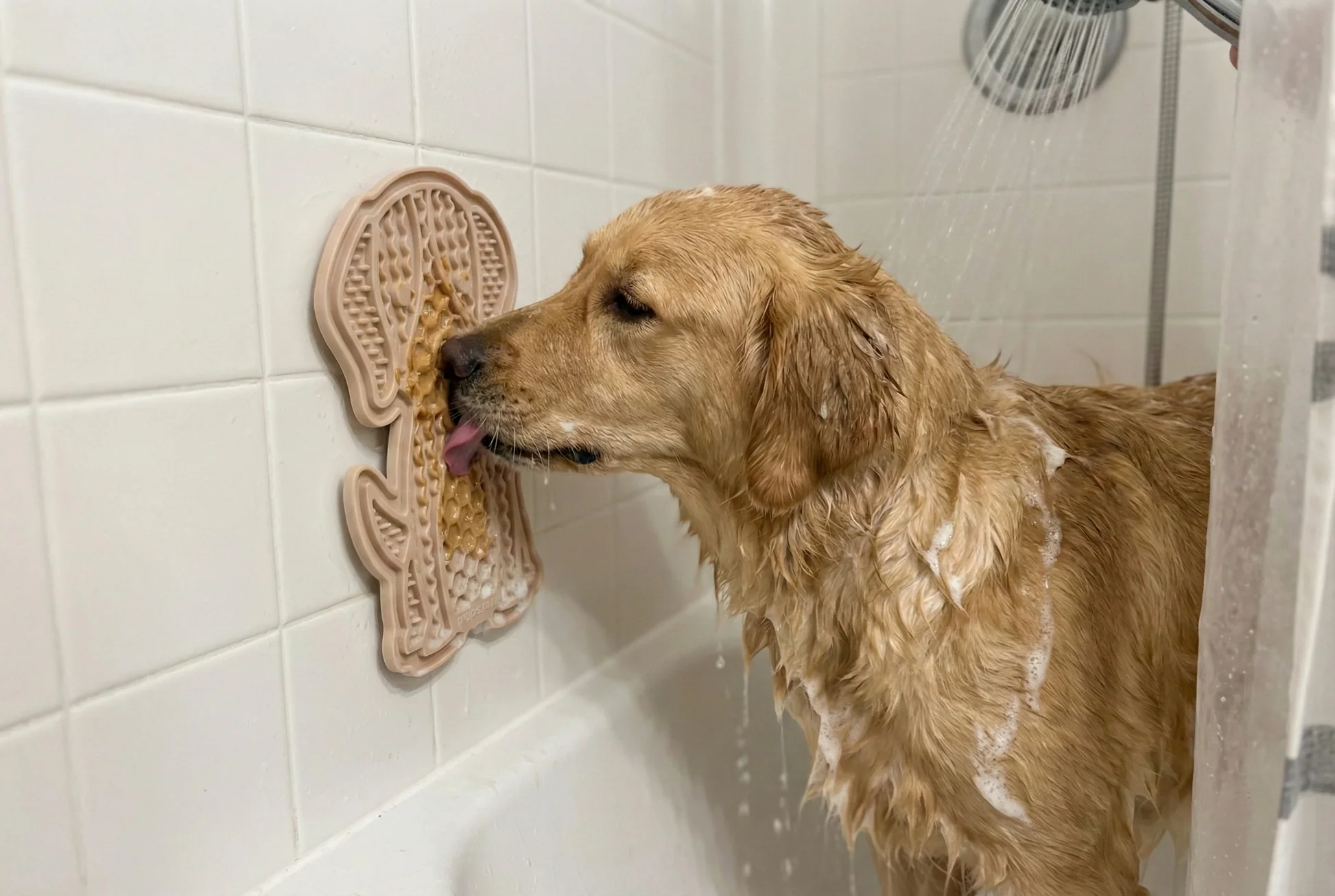
Licking can help many dogs stay busy and settle during handling. Smear a lick mat with wet food, yogurt (if your dog tolerates dairy), or canned pumpkin, then stick it to the tub wall. For nail trims, try a spoon of something lickable held at nose level. Supervise closely in the tub to prevent slipping, and if your dog gets intense or guardy around high-value food, skip this and use tossed treats instead.
Adaptil (dog-appeasing pheromone)
Available as a collar, diffuser, or spray. Some dogs show noticeable improvement, others do not. If you try it, give it several sessions and pair it with training.
Anxiety wraps
Deep pressure can be calming for certain dogs. Introduce it like any other new gear: shirt appears, treat. Put it on briefly, treat, take it off. Do not put it on right before a scary bath and expect magic.
Non-slip gear
This is not marketed as “calming,” but it should be. Feeling stable reduces panic. Bath mats, grooming mats, and even a ramp for large dogs can change everything.
Supplements
Products with ingredients like L-theanine, alpha-casozepine, or calming probiotics may help mild anxiety in some dogs. Talk with your veterinarian first, especially if your dog takes other medications or has health issues.
Prescription support
For severe fear, medication can be humane and training-friendly. Many dogs make faster progress once panic is reduced enough for them to learn. Ask your vet about situational meds for grooming or a longer-term plan if anxiety shows up in multiple areas of life.
Face and ears: go slow
Heads, ears, and faces are common grooming deal-breakers because they are sensitive and dogs cannot see what you are doing.
Face handling
- Touch cheek, treat, stop.
- Touch under chin, treat, stop.
- Briefly lift lip, treat, stop.
- Wipe face with a dry cloth, treat, stop. Then progress to a barely damp cloth.
Ear care
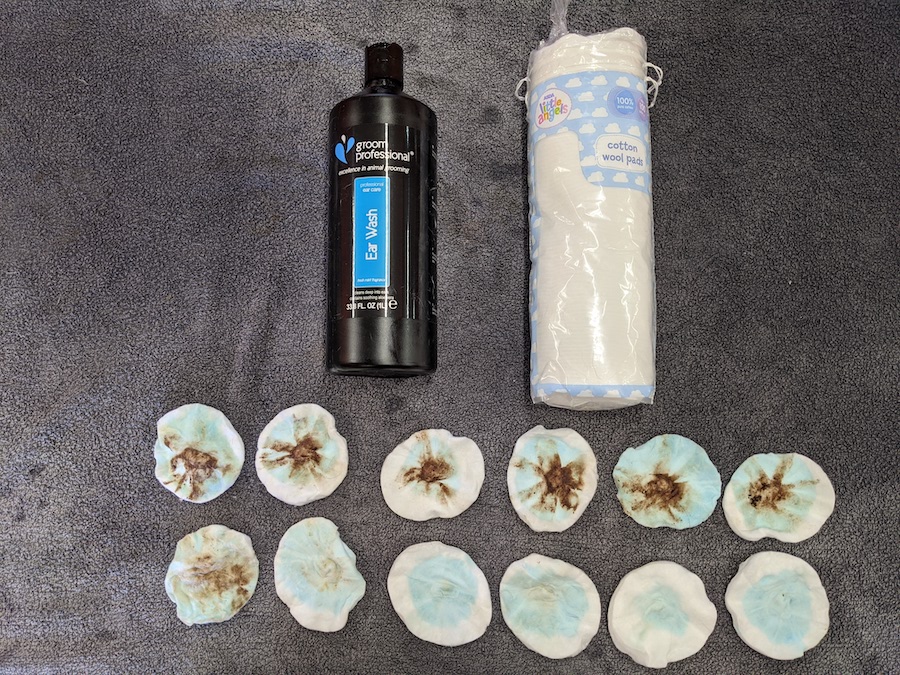
Skip at-home ear cleaning if you notice odor, redness, discharge, head shaking, or pain. Those signs deserve a vet visit. If your vet has recommended routine cleaning, build tolerance the same way: show the bottle, treat; touch ear flap, treat; briefly touch a cotton pad to the outer ear, treat. Do not push swabs down into the ear canal.
Coat realities
Some coats are simply harder to maintain, and that is not a training failure.
- Curly, long, and doodle-type coats: These can mat quickly and often do best with a consistent professional schedule plus frequent gentle brushing at home.
- Double coats: Heavy shedding coats usually benefit from regular de-shedding and thorough brushing. If you are considering shaving, talk with a reputable groomer or your vet about what is appropriate for your dog’s coat and skin.
- Short coats: Often easier to brush, but many short-coated dogs still hate nail trims and baths.
What not to do
- Do not punish growling. Growling is valuable information. Punishing it removes the warning but not the fear.
- Do not flood your dog. Forcing them through a full bath or full nail trim while they panic can intensify fear long-term.
- Do not restrain harder as the first solution. More restraint often increases thrashing and risk of injury.
- Do not use muzzles without training. A properly fitted basket muzzle can be a wonderful safety tool, but it needs a positive introduction. Never leave a muzzled dog unattended.
- Do not battle in the tub. If it turns into a wrestling match, stop, dry off, and regroup with a smaller plan.
Groomer vs vet
There is zero shame in outsourcing. In fact, it can protect your relationship with your dog.
Find an anxiety-savvy groomer
Look for a groomer who is comfortable with slow intros, shorter appointments, and handling breaks. Ask if they can schedule your dog during a quieter time of day. Mobile groomers or one-on-one salons can be a good fit for noise-sensitive dogs.
Consider vet-supervised grooming
If your dog is severely fear-reactive, has a history of biting, or has painful skin or ear conditions, talk to your vet. Some dogs do best with grooming done at the vet with medication support, especially for urgent matting or nails that are curling into paw pads.
Safety check
If you feel unsafe, stop. A certified trainer can help you build a plan, and your vet can help with pain control and anxiety management.
How often to groom
Needs vary by coat, lifestyle, and health, but these ranges can help you plan:
- Brushing: short coats 1 to 2 times per week; medium and long coats 3 to 7 times per week; curly or mat-prone coats often need daily line brushing.
- Nails: often every 1 to 4 weeks. If you hear nails clicking on floors, you are usually due.
- Baths: often every 4 to 12 weeks, or as needed for dirt and odor. Dogs with skin disease should follow a vet plan.
Quick calm routine
On busy days, aim for a small win instead of a full session.
- 1 minute: Mat down, treats ready, calm breathing (yours counts too).
- 2 minutes: Consent practice (chin rest or stand on mat), treat every few seconds.
- 2 minutes: Brush or touch the tool to the body for 3 to 5 tiny reps, treating each rep.
- 2 minutes: Handle one paw, treat, done. Or clip one nail tip, treat jackpot.
- 3 minutes: Snuggle break or scatter treats on the floor and end.
Progress is built from lots of tiny, successful sessions. That is how you change your dog’s feelings, not just their behavior.
FAQ
How long does it take to calm an anxious dog for grooming?
It depends on the intensity of fear, past experiences, and whether pain is involved. Some dogs improve in a week of daily mini-sessions. Others need a few months. The biggest predictor of speed is staying under threshold and keeping sessions short and successful.
Should I bathe my dog more often to help them get used to it?
Not usually. Repeated full baths can backfire if your dog is panicking. Instead, do frequent dry training sessions in the bathroom and very small water exposures. Save full baths for when you can keep it calm and controlled.
My dog shakes during grooming. Is that always fear?
Shaking can be fear, cold, or both. Check temperature, use warm towels, and watch the rest of your dog’s body language. If shaking is paired with tucked tail, wide eyes, or escape attempts, assume stress and slow down.
Is it okay to muzzle my dog for nail trims or baths?
It can be, as long as it is a properly fitted basket muzzle and your dog has been trained to wear it comfortably with positive reinforcement. A muzzle is not a substitute for going slowly, but it can add a necessary layer of safety while you work on the underlying fear. Never leave a muzzled dog unattended.
What if my dog is only anxious with groomers, not at home?
That is very common. Grooming salons have barking, dryers, slippery tables, and unfamiliar handling. Ask your groomer about shorter appointments, quiet scheduling, and “happy visits” where your dog pops in for treats and leaves.