A practical checklist of the most important dog cues for safety, calm behavior, and real-life manners, plus easy training steps and proofing tips.
Resource guarding can look scary fast. One minute your dog is happily chewing. The next they stiffen, hover over a bowl, freeze over a toy, growl when someone walks by, or even snap. If you are dealing with this at home, take a deep breath. Guarding is common, it is not a moral failing, and in many cases it improves a lot with the right plan.
As a trainer and former veterinary technician, I want to be very clear about two things up front: you need a safety-first setup, and you need a behavior plan that changes your dog’s emotional response, not one that relies on intimidation. This article walks you through both.
Quick reality check: even when guarding has natural roots, it can still be a serious safety issue. Take it seriously without taking it personally.
What it is (and is not)
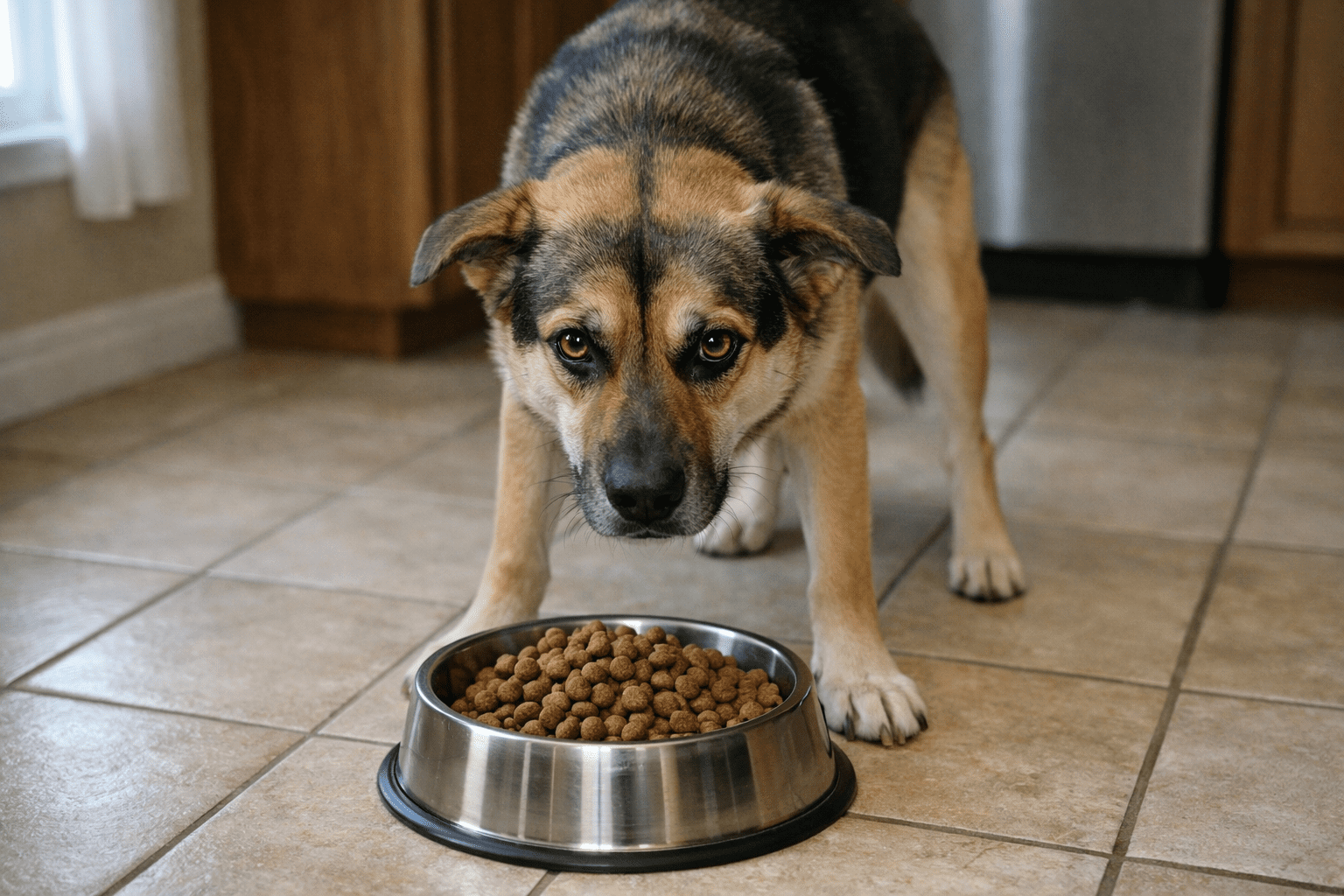
Resource guarding is a common canine behavior where a dog tries to keep access to something they value. That “something” might be:
- Food bowls, chew sticks, bones, Kongs, and stolen snacks
- Toys, especially high-value squeakers or tug toys
- Resting areas like a couch corner, dog bed, or your lap
- Found items like socks, tissues, wrappers, or kids’ toys
- People, in some cases (guarding a favorite person from others)
Guarding exists on a spectrum. Early warning signs are subtle: pausing chewing, eating faster, hovering, a hard stare, “whale eye” (white of the eye showing), or a still, tight body. More obvious signs include growling, baring teeth, air snapping, and biting.
Resource guarding is not your dog being “dominant” or trying to “take over the house.” It is usually about feeling unsafe that the resource will be taken.
Why dogs guard
- Genetics and temperament: Some dogs are simply more prone to guarding.
- Learning history: If items are frequently grabbed away, dogs learn “humans approaching means I lose my stuff.”
- Scarcity or competition: Multi-dog homes, past shelter life, or inconsistent routines can raise the stakes.
- Pain or medical issues: Dental pain, arthritis, GI discomfort, ear infections, and other conditions can make a dog more defensive.
- Development and stress: Adolescence can increase arousal, impulsivity, and reactivity. Guarding may intensify as a dog matures or as stress piles up.
It matters because the solution is not “show them who is boss.” The solution is teaching your dog that people near their valued stuff predicts better things, not loss.
Read your dog’s signals
Your dog decides the training pace. Your job is to keep them under threshold, meaning they can notice you and still feel safe.
- Relaxed looks like: loose muscles, soft eyes, normal chewing pace, easy movement, able to take treats.
- Tense looks like: freezing, stiff body, hovering over the item, hard stare, lip lift, low growl, gulping food faster, trying to block your approach.
Rule: end sessions while your dog is still comfortable. Stop early, win small, repeat often.
Start here: safety rules
Before training, set up your home so nobody gets hurt and your dog stops rehearsing the guarding behavior.
1) Stop the risky moves
- Do not tease, hover, pet, or kiss your dog while they eat or chew.
- Do not reach into the bowl, grab the chew, or pry a “stolen” object from their mouth.
- Do not punish growling. Growling is information. If you punish it, you may remove the warning and keep the bite.
2) Add physical management
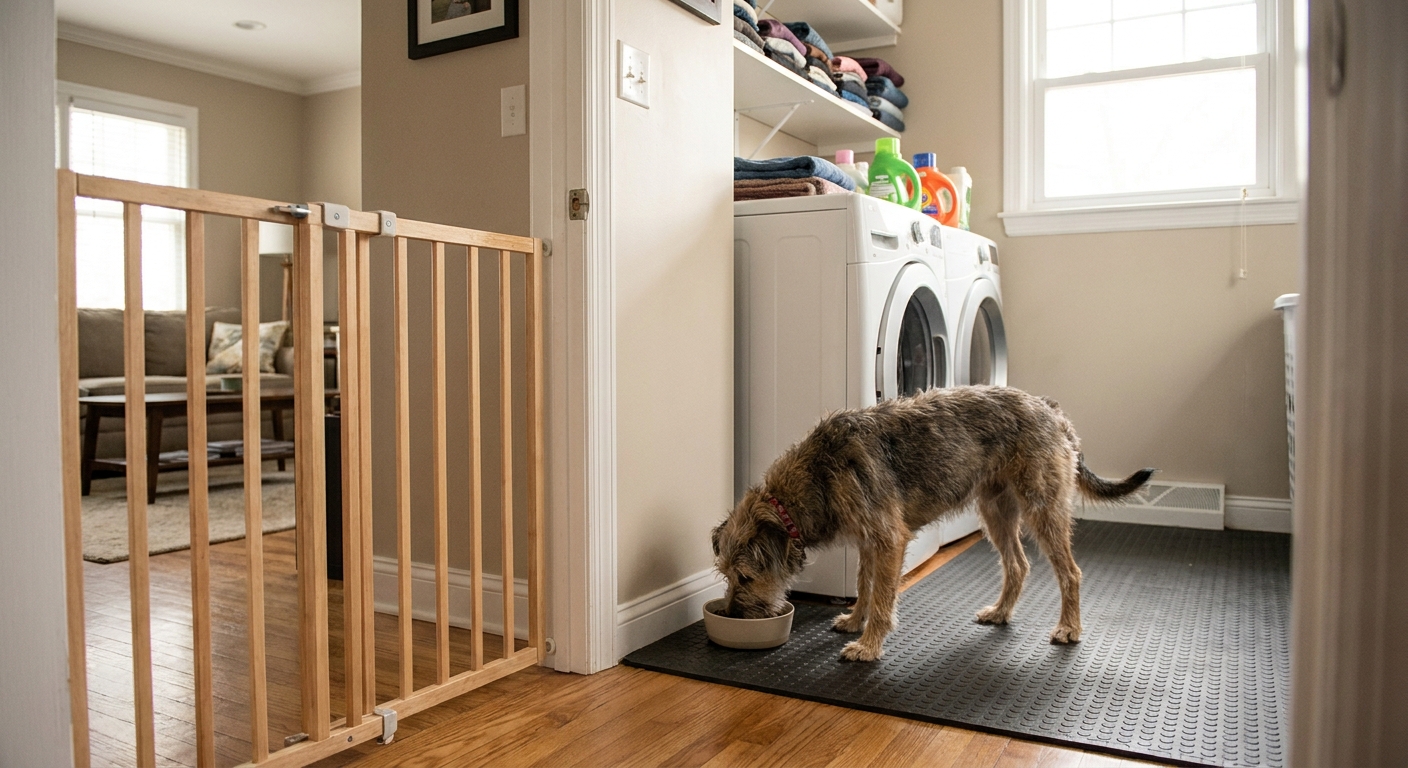
- Feed in a quiet area behind a gate, in a crate (if your dog is crate-comfortable), or in a closed room.
- Pick up bowls after meals (when the dog is not nearby) to reduce guarding opportunities.
- Use leashes, gates, and closed doors during high-risk moments like kids’ snack time.
- If your dog guards the couch or bed, block access for now or use a leash to prevent rehearsals.
Kid rule: children should not approach dogs who are eating, chewing, or guarding a spot. Ever. Even the “sweetest” dog can bite when guarding.
When to call a pro
Resource guarding is often very treatable, but some cases are too risky to DIY. Bring in a qualified force-free professional (CPDT-KA, KPA, IAABC) and involve your veterinarian if you see any of the following:
- A bite has occurred, especially if skin was punctured
- Guarding is happening around children or visitors
- Guarding is escalating quickly or “comes out of nowhere”
- Your dog guards multiple items and multiple locations
- Your dog guards from across the room (charging, lunging)
- You suspect pain, sudden irritability, or appetite changes
Extra safety note: if your dog has a significant bite history, do not run the exercises below without professional guidance. Management and a customized plan are the safer path.
Medical issues and behavior issues often overlap. If guarding intensity increases suddenly, treat that as a vet check flag.
In the moment: what to do
When guarding is happening right now, your goal is simple: create space and prevent rehearsal. Training comes later.
Stolen item
- Do: stay calm, avoid eye contact, and stop moving toward your dog.
- Do: toss several treats away from the item (a scatter), then calmly pick up the item once your dog has moved away.
- Do: if needed, use a barrier or step on a leash at a safe distance to prevent running off.
- Do not: chase, corner, or grab at the object.
Food bowl or chew
- Do: call people and pets away and block access with a gate or closed door.
- Do: let your dog finish in peace in a quiet space.
- Do not: “test” your dog by taking the bowl, reaching in, or touching their collar.
Couch or bed guarding
- Do: stop approaching and give space.
- Do: toss a treat away from the furniture to encourage movement, then guide your dog to a mat or another room.
- Do not: push, drag, or physically move your dog off furniture.
Step-by-step: change the feeling
The core training plan is systematic desensitization and counterconditioning. In plain English, you will expose your dog to a mild version of the trigger (you at a safe distance) and pair it with something wonderful (high-value treats), gradually working closer only when your dog stays relaxed.
Supplies: soft, high-value treats (chicken, cheese, hot dog slices), a treat pouch, baby gate or leash for safety, and your dog’s normal meal or chew.
Step 1: Find the safe distance
Start when your dog has a low-to-medium value item, not the most precious bone on earth.
- Stand far enough away that your dog notices you but stays loose.
- If your dog freezes, stiffens, covers the item, growls, or eats faster, you are too close.
Goal: your dog looks up and stays soft because your presence predicts treats.
Step 2: Treat-and-retreat
This is my favorite starting exercise because it is clear, safe, and builds trust fast.
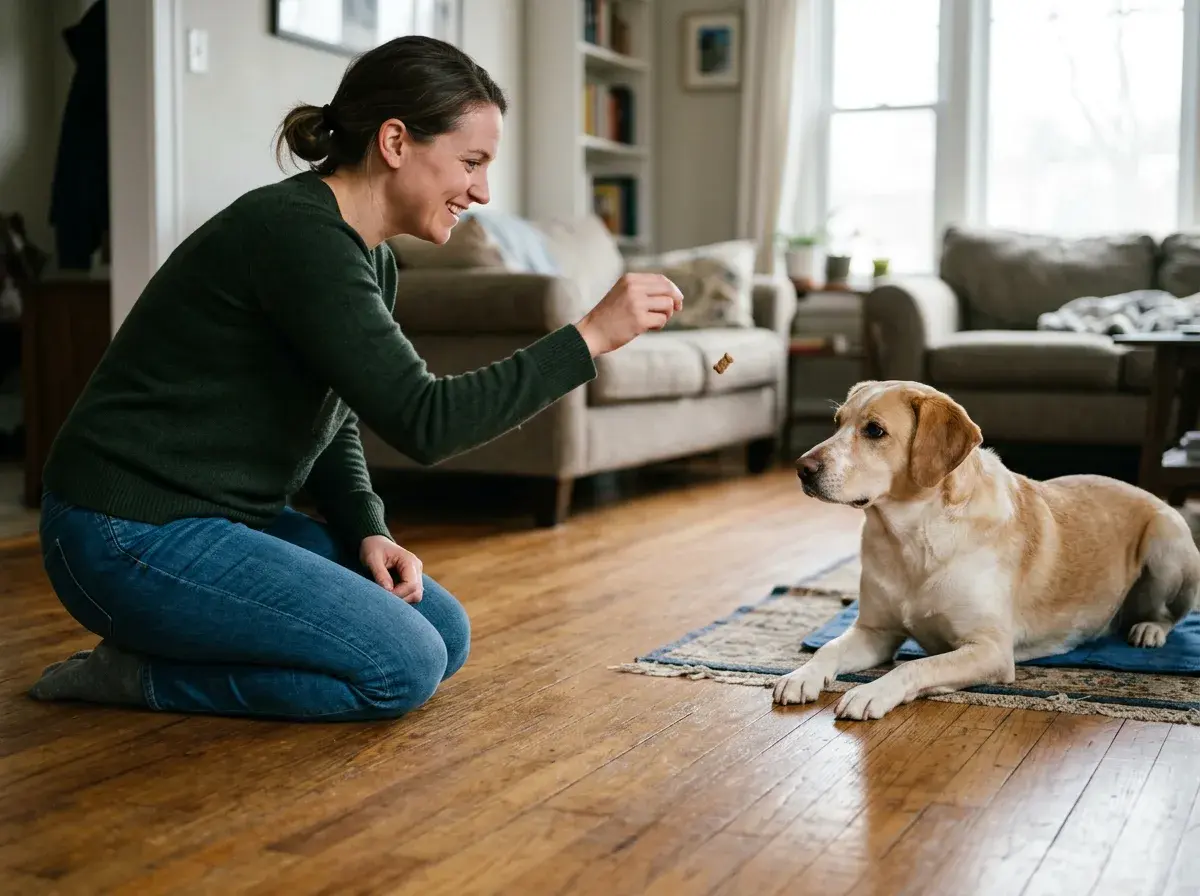
- Approach to your dog’s safe distance.
- Toss a treat past your dog so they have to move away from the resource to get it.
- Immediately turn and walk away.
Repeat 5 to 10 times. Your dog should start to look happy when you approach. You are teaching: “Human coming near means I get bonus pay and nobody steals my stuff.”
Progress safely
Move forward only when your dog stays relaxed at the current level for several sessions. If you see tension, go back a step.
Food bowl
- Level A: Walk by at a distance and drop treats into the bowl, then keep walking.
- Level B: Step closer, drop treats into the bowl, then step away.
- Level C: Pause briefly near the bowl, drop treats in, then leave.
- Level D: Reach toward the bowl and drop treats in (do not touch the bowl yet), then leave.
- Level E: Briefly touch the bowl while dropping treats, then leave.
Important: the point is not to prove you can take the food. The point is to convince your dog you will not. Reaching in to grab the bowl “to test them” usually backfires.
Chews
- Level A: Treat-and-retreat while your dog chews.
- Level B: Trade practice: toss a treat away from the chew, then calmly place an extra treat near the chew as you walk away.
- Level C: Hand trade: present a high-value treat at your dog’s nose, and when they release or move off the chew, briefly lift it or cover it with your hand, feed the treat, then return the chew.
Safety and pacing note: picking up a chew is too advanced for many dogs early on. If there is any stiffness or hesitation, skip lifting the chew and stick with treat tosses and trades. During training, the chew should reliably come back.
Toys
Guarding around toys often improves with clean, predictable rules.
- Play tug only if your dog can perform a cue like “sit” first.
- Teach “drop it” as a game, not a confrontation.
- End the session before your dog gets over-aroused.
Teach “drop it” and “leave it”
Drop it
- Offer a low-value toy.
- Present a high-value treat right at your dog’s nose.
- When they let go of the toy to eat the treat, say “drop it,” then feed the treat.
- Give the toy back right away to keep the cue safe.
- Practice many short reps, then slowly use better toys.
Rule: “drop it” should predict payment and often the toy returning, especially early on.
Leave it
- Place a treat in your closed fist.
- Let your dog sniff. The moment they look away or back off, mark with “yes” and give a different treat from your other hand.
- Repeat until they quickly disengage, then progress to an open palm and eventually to items on the floor.
This reduces the odds your dog grabs forbidden objects and then feels defensive when you approach.
What not to do
- Do not alpha roll, pin, or physically intimidate. These methods increase fear and bite risk.
- Do not punish growling. You want the warning signs to stay intact while you change the underlying emotion.
- Do not take bowls away mid-meal. It teaches your dog to eat faster and guard harder.
- Do not corner your dog to retrieve items. Use trades, leashes, barriers, and prevention instead.
- Hand-feeding note: hand-feeding can be useful for training and bonding, but it is not required to fix guarding and it should never be used to pressure a dog. If your dog seems tense with food in hands, switch to tossing treats or dropping them into a bowl instead.
If you are feeling stuck or scared, that is your sign to bring in professional support. You do not have to muscle through this.
Guarding spots
Space guarding can be sneaky because it often looks like “grumpiness” until it escalates. Common triggers include being approached while resting, being moved off furniture, or someone trying to sit nearby.
A safer plan
- Management first: block off furniture for now, or use a leash to prevent access until training catches up.
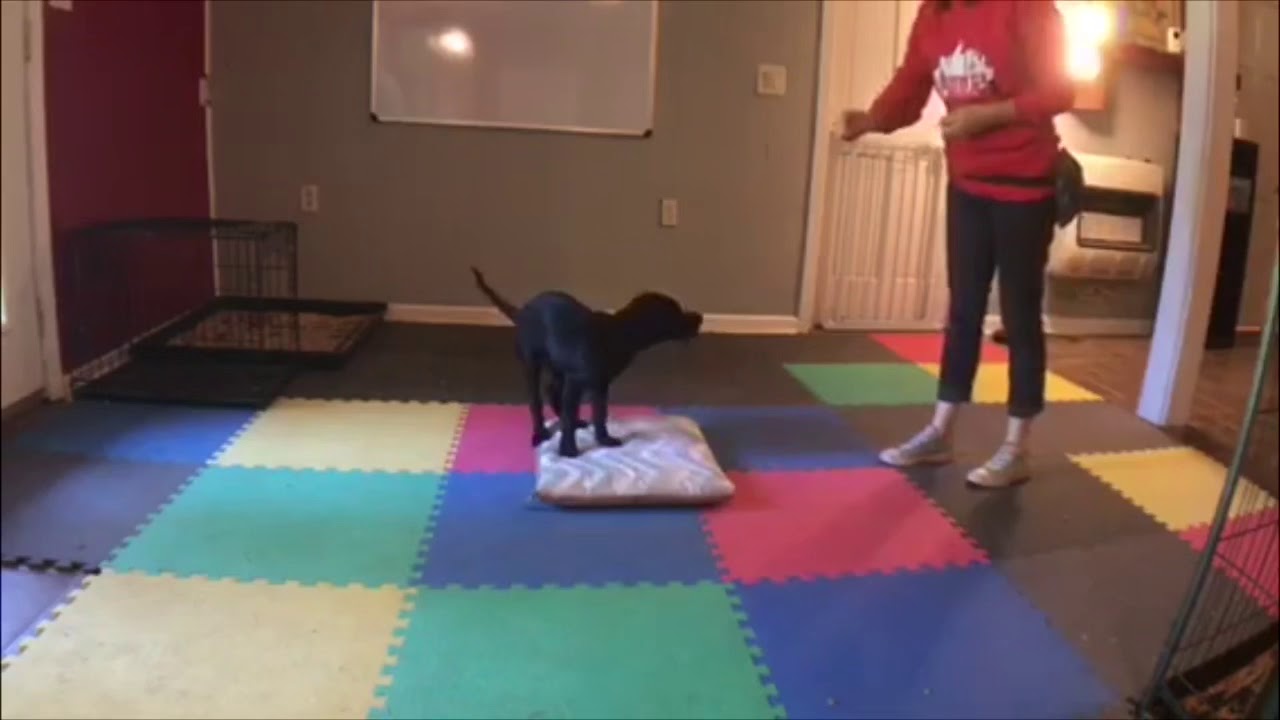
- Create an awesome station: teach “go to mat” and reward heavily for choosing the mat.
- Pair approaches with treats: from a distance, toss treats onto the mat as you walk by.
- Consent matters: if your dog is resting, call them off with a cheerful voice and reward on the floor. Avoid physically dragging or pushing them.
Multi-dog homes
Guarding can escalate in multi-dog homes when competition and reinforcement build over time. Your goal is to remove the competition completely.
- Feed dogs in separate spaces with a barrier.
- Pick up bowls when meals are done.
- Only offer chews when dogs are separated.
- Supervise toys, especially new or high-value ones.
- Teach each dog a “go to your place” cue so you can create calm structure.
If fights have occurred, get professional help. Multi-dog guarding can escalate quickly and is not a “wait and see” situation.
How long does it take?
It depends on intensity, triggers, bite history, and how consistently the household follows the plan. Mild guarding can improve noticeably within a few weeks of daily practice. More serious cases may take months, and some dogs will always need management in high-stakes situations. Progress is still progress if your home is safer and your dog is less stressed.
A good sign you are on track: your dog starts to look happy when you approach while they have a resource, because they expect treats, not theft.
Prevention tips
- Practice trades early: “give” a toy, get a treat, toy comes back.
- Respect meal time: do not let kids hover near bowls.
- Normalize humans walking by: occasionally drop an extra tasty treat into the bowl as you pass.
- Teach a mat settle: a dog who loves their mat is less likely to claim the couch as a spot to defend.
- Prevent scavenging: use baby gates, covered trash, and “leave it” training so fewer conflicts happen in the first place.
FAQ
Should I take my dog’s food away to show I am the boss?
No. That approach typically increases guarding. Instead, teach your dog that your approach adds value, like dropping treats into the bowl, and use management so they can eat in peace.
Is it okay if my dog growls at me?
It is not something to ignore, but it is valuable communication. Do not punish the growl. Create distance, improve management, and start a training plan. If you are concerned about safety, contact a qualified trainer.
My dog guards stolen items. What should I do?
First, prevent access as much as possible. When it happens, avoid chasing or cornering. Use a trade: scatter treats away from the item, close a door or step on a leash if needed for safety, then calmly pick up the item once your dog has moved away.
Can muzzle training help?
Yes, when done positively. A well-fitted basket muzzle can add a layer of safety while you work with a trainer. It is not a cure by itself, but it can protect everyone during the behavior modification process.
A calm next step
If you take only one idea from this guide, let it be this: your dog guarding means they do not feel safe about losing something. Your job is to make your presence feel safe and predictable again. Start with management today, then add treat-and-retreat practice in tiny, successful sessions.
If kids, visitors, or a bite history are part of your picture, treat that as a professional-help situation, not a solo project. A force-free trainer can tailor the steps and keep everyone safe, and your veterinarian can rule out pain that may be raising the intensity. You are not alone in this, and your dog is not “bad.” They are telling you they need a better system.