From road salt to allergies to yeast infections, paw licking has lots of causes. Learn what to look for, why one paw vs all four matters, and when it’s a sam...
I grew up in a house where there was always at least one foster dog recovering from something, and limps were basically a weekly plot twist. Later, as a vet tech, I learned the two big truths about limping: sometimes it is a simple paw problem you can fix in two minutes, and sometimes it is your dog’s way of saying “this is urgent” without words.
This guide will help you read the limp, do a safe at-home check, and decide what needs a same-day vet visit.
First, read the limp like a clue
1) Which leg is it?
If your dog will walk a few steps calmly, watch from behind and from the side on a flat surface.
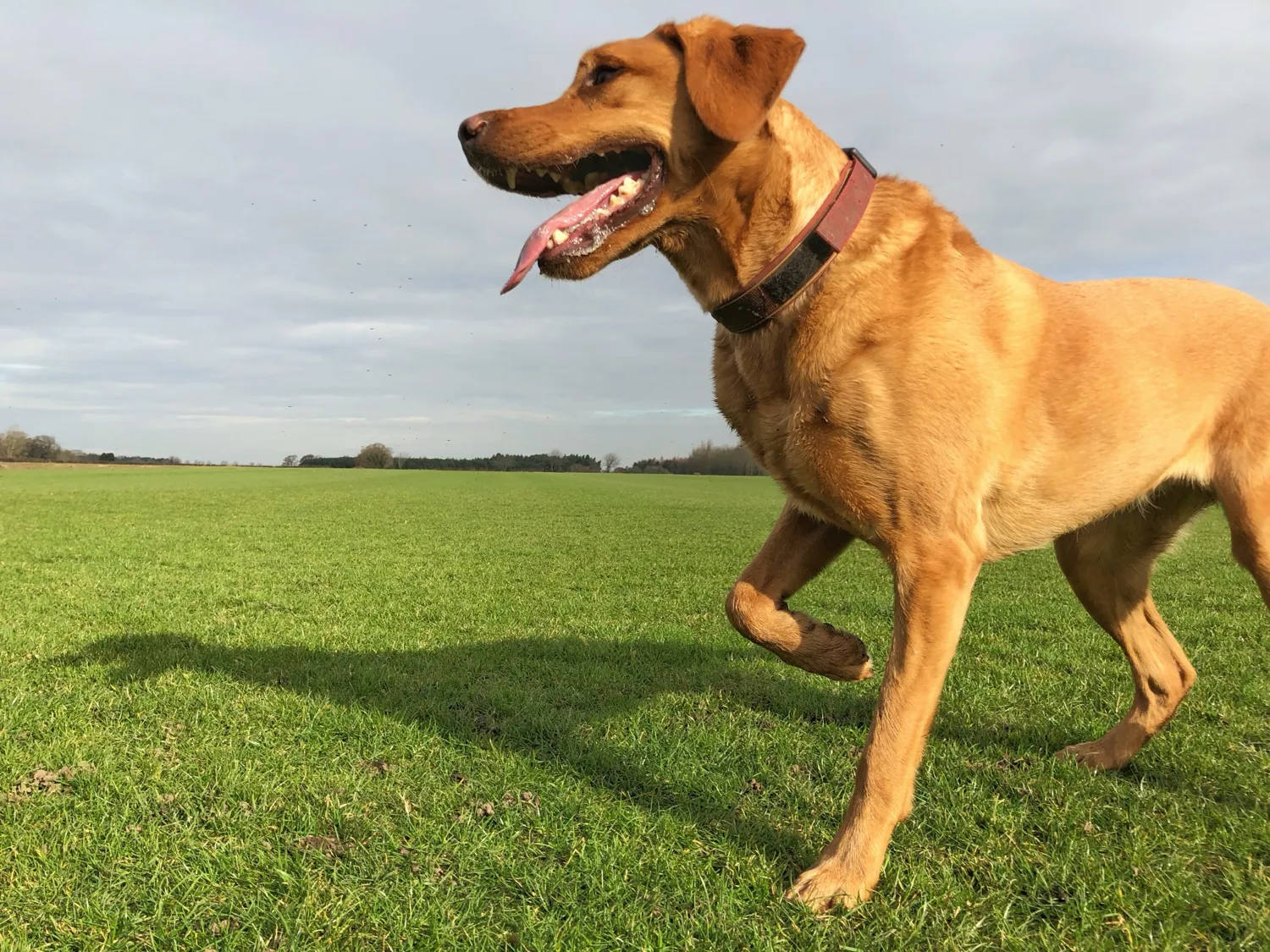
- Front leg limp: You may see a head bob. A classic rule is head up on the lame leg, head down on the sound. In plain terms: many dogs lift their head when the sore front foot hits the ground, and dip their head when the good front leg takes weight.
- Back leg limp: You may see the hips “hike” up on one side, bunny-hopping, or shorter steps behind.
2) Toe-touching vs. carrying the leg
- Toe-touching (partial weight bearing): Often points to mild to moderate pain, a sore paw, or a soft-tissue strain. It still can be serious, but many dogs will do this even with things like a sprain or early cruciate ligament injury.
- Carrying the limb (non-weight bearing): More concerning. Think fracture, dislocation, significant ligament injury, severe paw pain, or a foreign object.
- Dangling or oddly angled leg: Treat as an emergency. Do not try to “test it.”
3) Sudden vs. gradual
- Sudden onset after zoomies, a hike, or rough play: Commonly sprains, torn nails, pad injuries, or ligament injuries.
- Building for days or weeks: More consistent with arthritis, chronic tendon issues, nail bed infections, or slowly worsening injuries.
- Comes and goes: Sometimes mild strains or early orthopedic problems. Still worth documenting for your vet.
One more real-world note: some dogs mask pain when you are examining them, then limp more once they relax. If your gut says something is off, trust that.
When limping is a same-day problem
Call your vet (or an emergency clinic) the same day if you notice any of the following:
- Non-weight bearing at any point, especially if it is still happening by the next potty break or after a few hours of strict rest
- Swelling of a limb, paw, or joint, especially if it is new or increasing
- Crying out, snapping, or intense guarding when you touch or approach the area
- A dangling limb, obvious deformity, or a bone or joint looks out of place
- Bleeding that will not stop after 5 to 10 minutes of steady pressure
- Heat plus swelling over a joint (can suggest inflammation or infection)
- Weakness, wobbliness, or collapse, or your dog seems generally unwell
- Back pain signs such as a hunched posture, trembling, reluctance to move, or yelping when picked up
- A known bite, puncture, or trauma (hit by car, fall, dog fight)
- Possible tick illness signs (in tick-prone areas), like shifting leg lameness, fever, or sudden lethargy along with the limp
If your dog is a puppy, a senior, or has an underlying condition like diabetes or immune issues, err on the side of calling sooner.
A safe at-home check
Here is my vet-tech-approved approach: keep it calm, keep it brief, and stop if your dog escalates. Pain can make even sweet dogs panic.
Set up
- Choose a well-lit area and grab high-value treats.
- If your dog is small, check them on the floor so they do not jump off a couch or table.
- If needed, use a leash for gentle control. If your dog may bite, do not push it. Call a vet instead.
Step 1: Look first
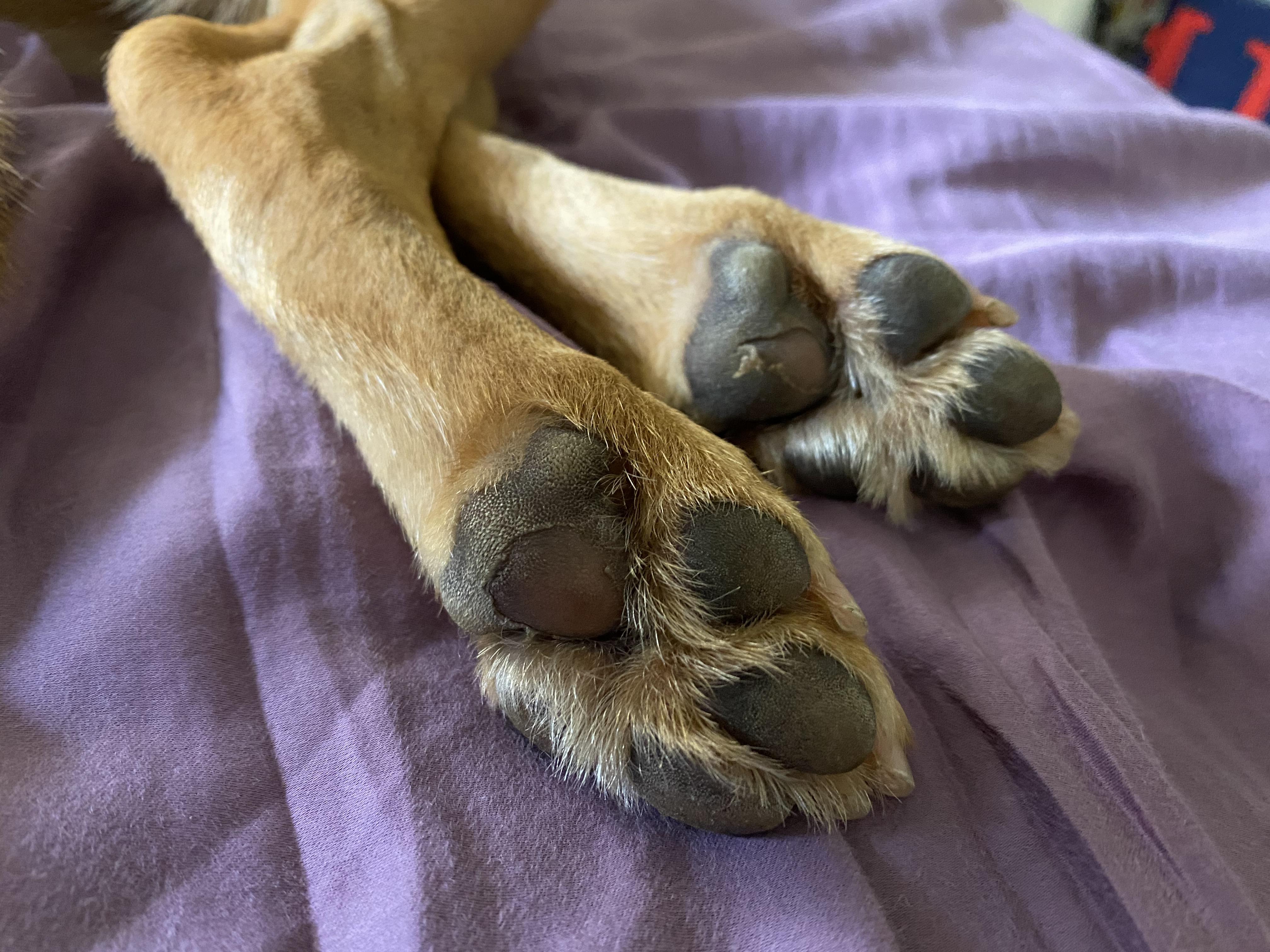
- Compare left to right: paw size, toe spacing, swelling, or redness.
- Check nails for cracking, bleeding, or a nail sitting at an odd angle.
- Look between toes for irritation, a stuck burr, or a “pimple” that could be an interdigital cyst.
Step 2: Feel gently from toes upward
Use light pressure and watch your dog’s face and body language.
- Start at the toes and pads.
- Move to the nails and nail beds.
- Then the wrist or ankle, forearm or lower leg, elbow or knee, and up to the shoulder or hip.
Stop immediately if your dog yelps, jerks away, stiffens, or shows the whites of their eyes. That reaction is useful information for your vet, and forcing it can make things worse.
Step 3: Move the joint only if relaxed
If your dog is comfortable, you can gently bend and straighten the joints once. Do not “test stability” or push through resistance. If anything feels stuck, grinding, clicking, or your dog protests, stop and call the vet.
Common causes you can sometimes spot
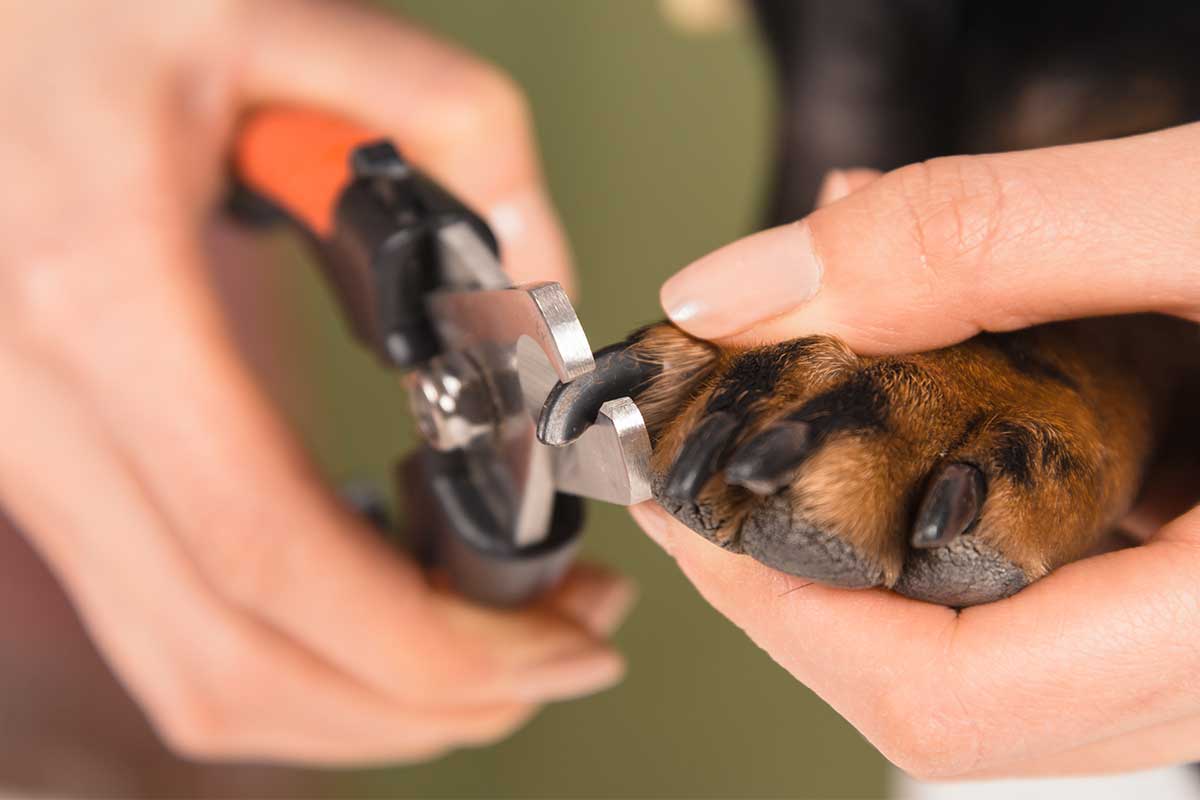
Torn or broken nail
Torn nails are dramatic. You may see blood, a split nail, or a nail that looks shorter than the others.
- What it looks like: Licking the foot, sudden limp, bleeding, flinching when the toe is touched.
- What to do now: Apply steady pressure with clean gauze for bleeding. Keep your dog from licking. If the nail is partially torn, do not pull it off. Nails are very painful and can get infected.
- Same-day? Often yes, especially if bleeding continues, the nail is dangling, or your dog is very painful.
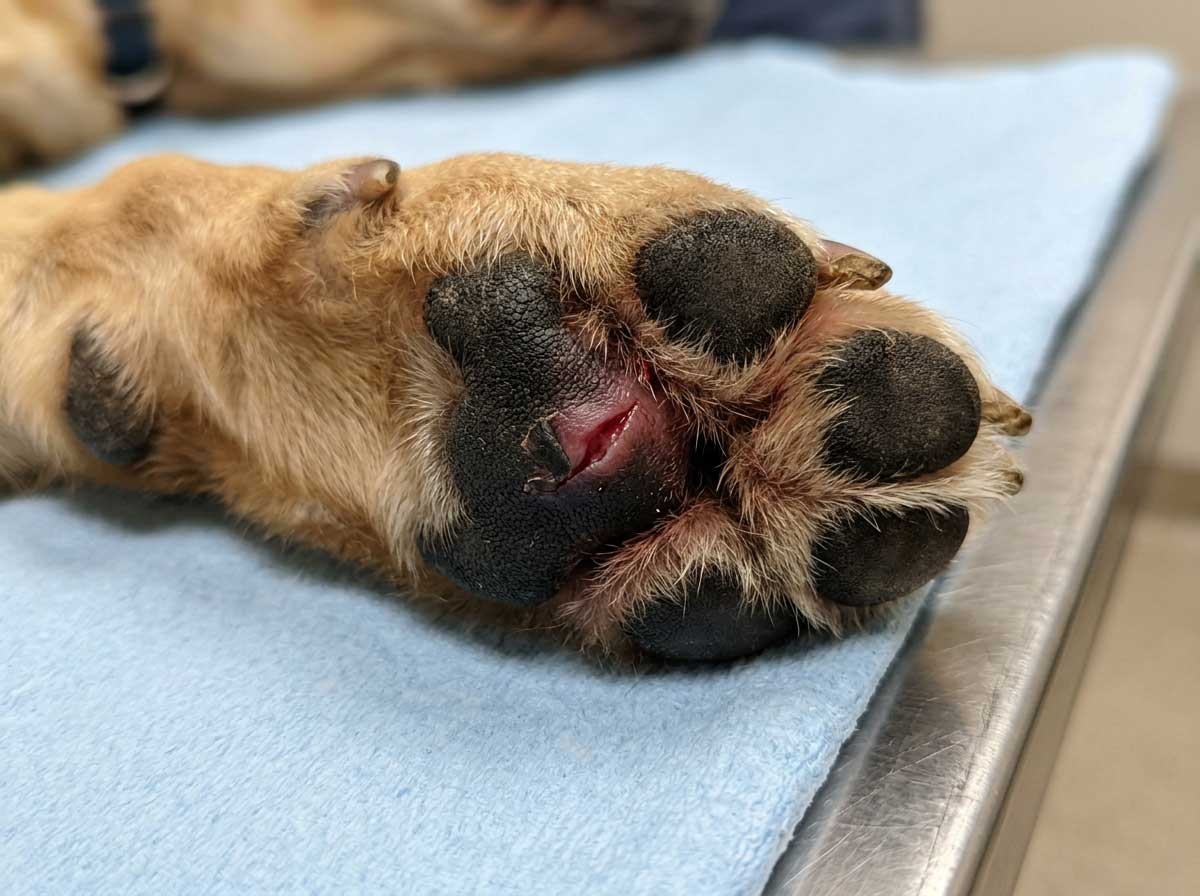
Cut pad or abrasion
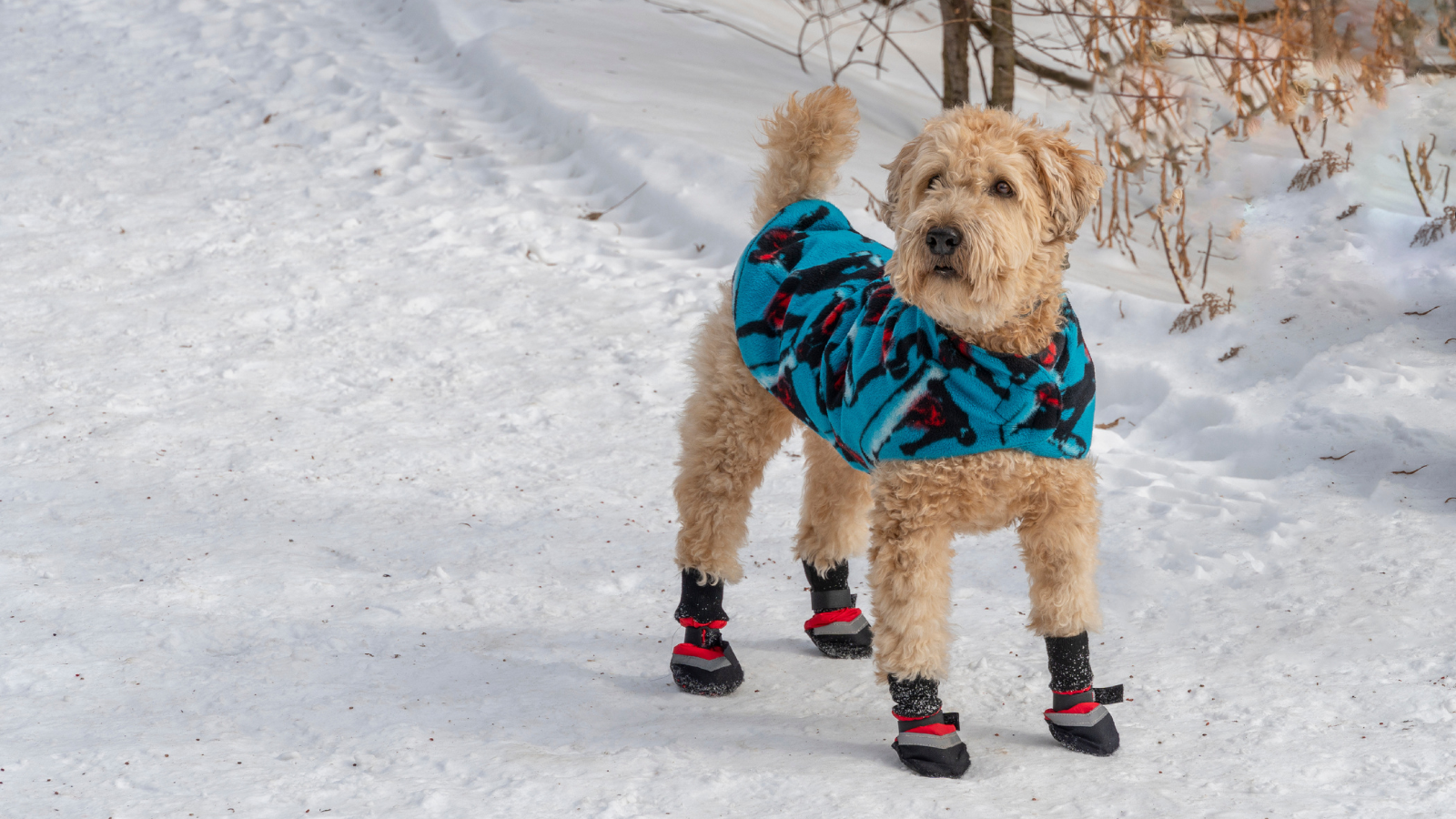
Sharp gravel, hot pavement, ice melt chemicals, and rough trails can all injure pads.
- What it looks like: Limping that worsens outdoors, visible flap of pad, licking, or a clear tender spot.
- What to do now: Rinse with clean water or saline, pat dry, and apply a light bandage only if you can keep it dry and not too tight. Many dogs need a cone to stop licking.
- Same-day? Yes if the cut is deep, gaping, contaminated, or bleeding persists.
Something stuck in the paw
Splinters, thorns, tiny pieces of glass, and foxtails can lodge between toes or in the skin. Foxtails are especially risky because they can migrate under the skin and cause serious infection. This is more common in regions where foxtails are widespread.
- What it looks like: Sudden intense licking, holding the paw up, swelling between toes, a draining tract, or your dog will not let you look.
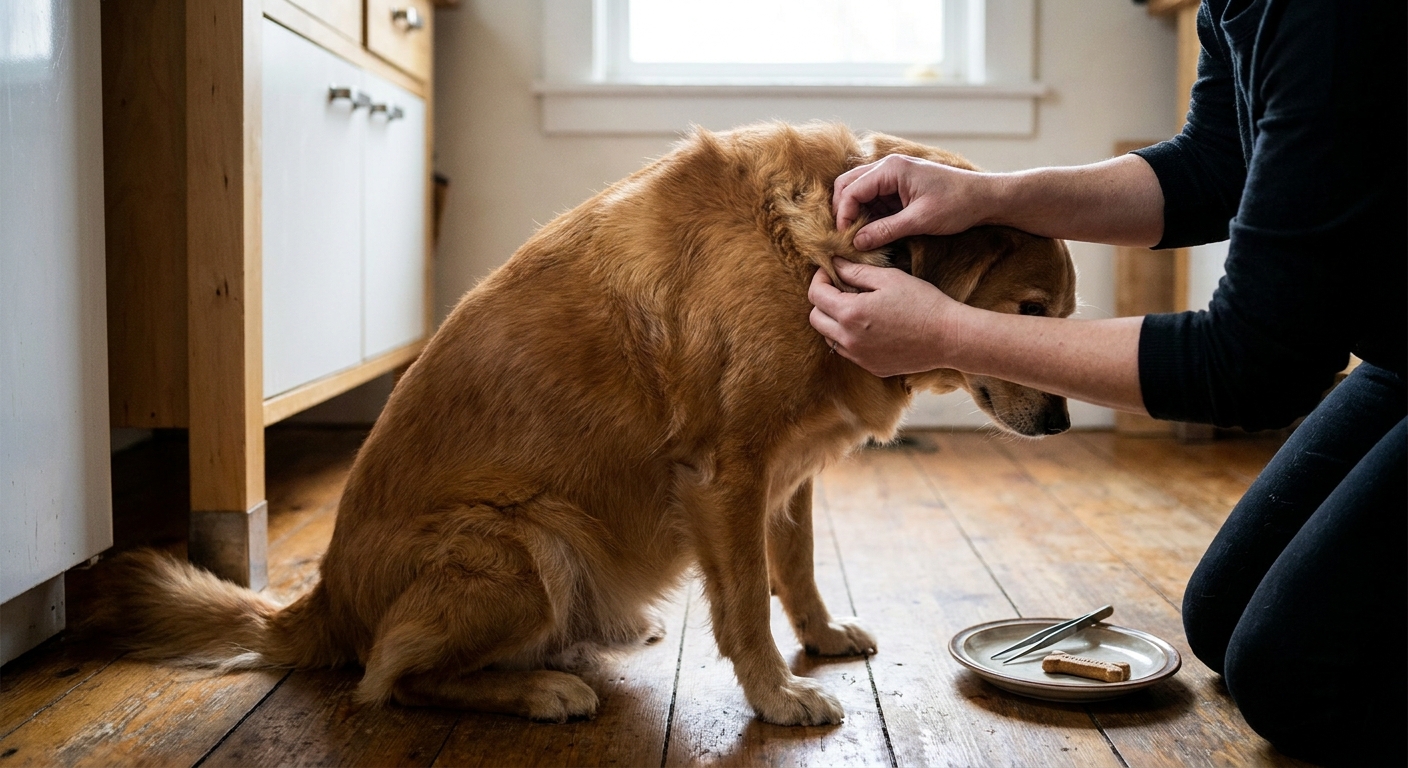
- What to do now: If you can clearly see a superficial object, you may be able to remove it with clean tweezers and rinse well. If you cannot see it, if it is embedded, or if there is swelling, stop and call the vet.
- Same-day? Yes if you suspect a foxtail, there is swelling, a puncture, or worsening pain.
Soft-tissue sprain or strain
A slip on hardwood, a leap off the couch, or an enthusiastic fetch session can strain muscles and ligaments.
- What it looks like: Limping after activity, toe-touching, stiffness after resting, mild swelling sometimes.
- What to do now: Strict rest. No running, jumping, stairs, or off-leash play. Leash potty breaks only.
- Same-day? If your dog is non-weight bearing, swelling is obvious, or pain seems significant. Also call promptly if it does not improve within 24 to 48 hours of true rest.
Possible cruciate ligament injury
In the back leg, a sudden limp after a pivot or jump can be a cruciate injury. Some dogs will still toe-touch. Others will not bear weight.
- What it looks like: Back leg limp, knee area may swell, difficulty rising, sitting with one leg out to the side.
- What to do now: Rest and vet evaluation. Avoid “seeing if they can walk it off.”
- Same-day? Often recommended, especially for large dogs or severe limps.
Sore back or neck
Not all limps start in the leg. Back pain can make a dog take short steps, limp intermittently, or refuse to jump.
- What it looks like: Arched back, reluctance to move, yelping when picked up, trembling, tight belly, dragging a toe, weakness, or knuckling over.
- What to do now: Restrict movement. Do not massage deeply or force stretches. If you suspect back or neck pain, minimize movement as much as you can while you arrange care.
- Same-day? Yes, especially if there is weakness, wobbliness, or any change in bladder or bowel control.
What swelling, heat, or crying means
- Swelling at a joint suggests inflammation, ligament injury, arthritis flare, or sometimes infection.
- Swelling in the paw or between toes often points to a foreign body, stinger, bite, or interdigital cyst.
- Heat plus pain can occur with sprains, infections, or immune-related inflammation.
- Crying when touched means pain is significant. It is a good reason to stop the exam and call your vet.
- Sudden severe pain without an obvious paw issue can be orthopedic, neurologic, or both. Either way, your dog deserves prompt assessment.
How to rest your dog now
Rest is not “take it easy.” Rest is boring, controlled, and extremely effective for a lot of minor injuries.
- Leash walks only for potty breaks, slow and short.
- No stairs if possible. Use a leash and go one step at a time, or carry small dogs.
- No jumping on or off furniture. Block access or use a crate or pen.
- Prevent licking with a cone or recovery collar if the paw is involved.
- Consider a sling (towel under the belly) for larger dogs with a back leg limp to reduce load while they potty. If it is hard to do safely, skip it and keep trips as short as possible.
If your dog seems worse after rest, not better, that is useful information for your vet and a sign to call.
What to note for the vet
If you can, jot this down or record a short video of your dog walking.
- Which leg you think is affected (front or back, left or right)
- Toe-touching or holding it up completely
- When it started and what your dog was doing right before (run, jump, hike, slip)
- Any swelling, heat, bleeding, or visible wound
- Whether your dog yelped, trembled, or refused food
- Any recent nail trim, grooming, new exercise routine, or rough play
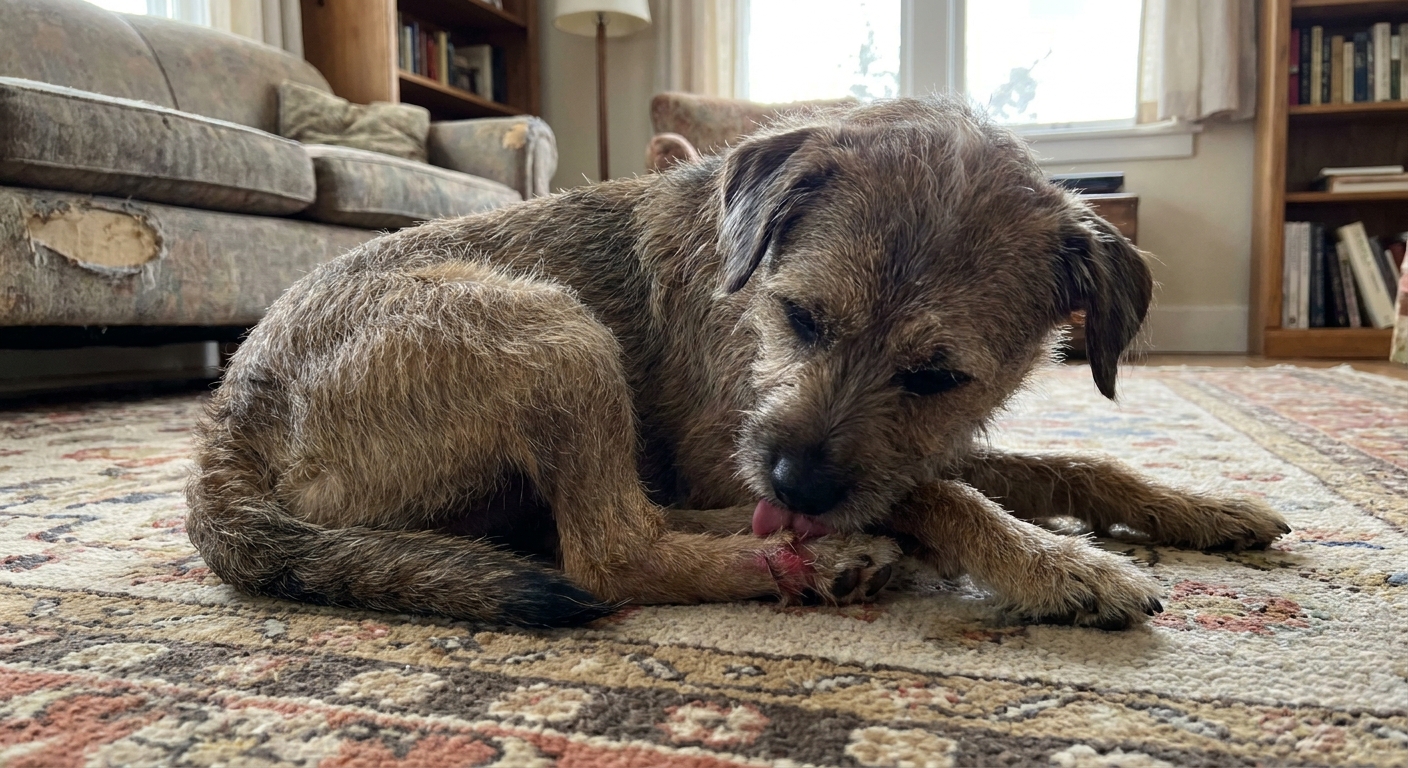
- Whether your dog is licking one spot repeatedly
- Whether it is getting better, worse, or staying the same with strict rest
If a mild limp persists longer than 48 hours even with real rest, or if it keeps recurring, schedule a vet exam. That pattern matters.
Do not give human pain medicine
I know the urge. You are watching your dog hurt, and you want to help. But many human medications are dangerous for dogs, even in small amounts.
- Ibuprofen and naproxen can cause stomach ulcers, kidney injury, and worse.
- Acetaminophen is not a safe DIY option. It is sometimes used by veterinarians in carefully calculated doses, so only give it if your vet specifically prescribes it and tells you the dose.
- Aspirin is not benign and can still cause serious side effects, especially combined with other meds.
The safest move is to keep the medicine cabinet closed and call your vet for dog-specific pain control and dosing guidance.
Quick FAQ
My dog is limping but still wants to play. Can I wait?
Many dogs will play through pain. If the limp is new, severe, or your dog is holding the leg up, call the vet the same day. If it is mild toe-touching and your dog is otherwise normal, strict rest for 24 hours is reasonable while you monitor closely, but call sooner if anything worsens.
Should I use ice or heat?
For a new injury with swelling, cold can be helpful. Use a cold pack wrapped in a towel for a few minutes at a time if your dog tolerates it. Skip it if it stresses your dog out. Heat is generally more appropriate for later stiffness, often after the first 24 to 48 hours, and only if your vet agrees it fits the situation.
My dog limps after exercise but seems fine the next day. Is that arthritis?
It could be early arthritis, a mild soft-tissue issue, or an orthopedic condition that flares with activity. A vet exam is worth it, especially if it keeps happening. In the meantime, reduce high-impact exercise and avoid slippery floors.
The bottom line
A limp is a symptom, not a diagnosis. Your job is not to figure out the exact injury at home. Your job is to notice the pattern, check safely for obvious paw and nail issues, and recognize red flags like a dangling limb, swelling, or significant pain.
When in doubt, take a short video, put your dog on strict rest, and call your vet. You are not overreacting. You are advocating for your best friend.