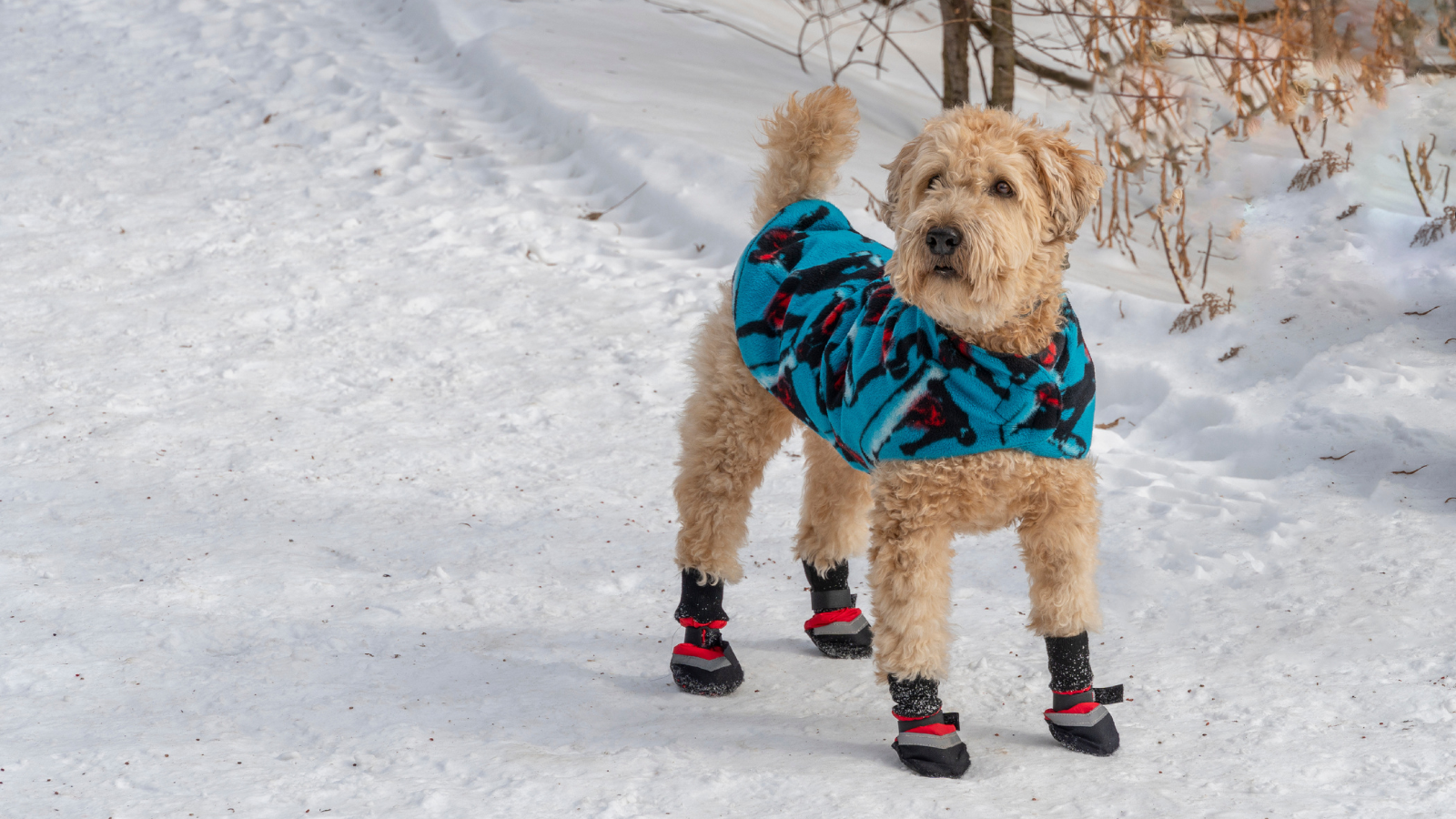
A practical, trainer-approved guide to preventing burns, cracks, and salt irritation with paw checks, walk timing, balms, and booties.
The first time I found a tick on a foster dog as a kid, I panicked, grabbed the nearest tissue, and immediately made it worse by smushing the poor thing into his fur. Later, as a vet tech, I learned the calmer, cleaner way to do it and the good news is it’s absolutely something most pet parents can handle at home.
This guide stays focused on safe removal and smart aftercare so you can get the whole tick out, clean up properly, and know what to watch for afterward.
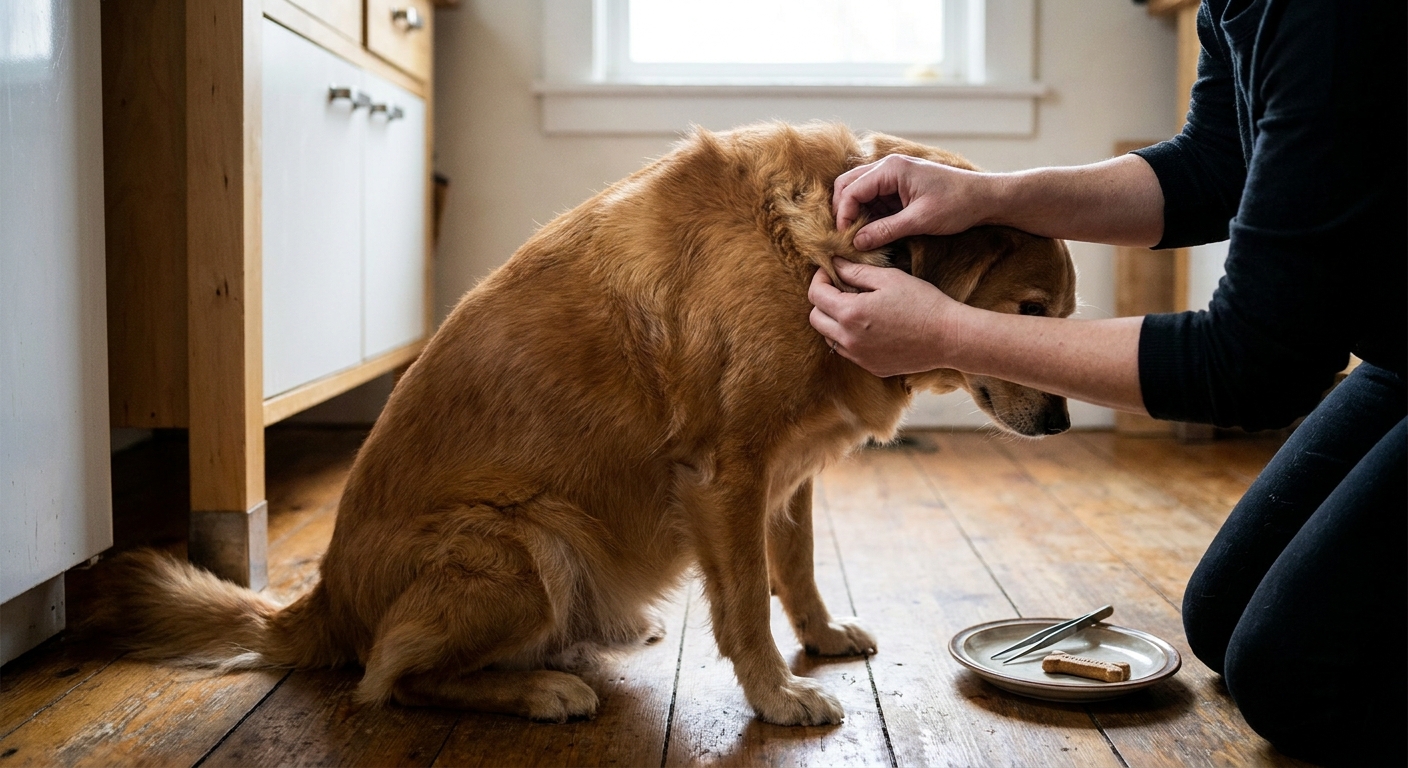
Before you start: what you need
Gather your supplies first. Ticks are easier to remove when you are not juggling a dog, a tool, and a bottle of rubbing alcohol all at once.
- Fine-tipped tweezers (the kind that come to a point) or a tick removal tool
- Disposable gloves (nice to have, not required)
- Antiseptic for skin cleaning: chlorhexidine solution or diluted povidone-iodine, or mild soap and water if that’s what you have
- Rubbing alcohol (for cleaning the tool, and sometimes for storing the tick for simple identification)
- A small container with a tight lid (pill bottle, small jar) or tape
- Treats, ideally soft and quick to chew
- Good light, and a comb if your dog has thick fur
A quick safety note: Skip “folk remedies” like petroleum jelly, nail polish, essential oils, or holding a hot match near the tick. The concern is that these methods can stress or irritate the tick, delay removal, and may increase the mess and risk at the bite site. Your best move is prompt, mechanical removal.
Find the tick and confirm it
Ticks like warm, hidden real estate. Common hiding spots include:
- Under the collar and around the neck
- In and around the ears (including along the ear edges)
- Between toes and around nail beds
- Armpits, groin, and under the tail
- Along the face, lips, and eyelids
If it’s a tick, you’ll usually feel a small bump that can look like a scab, a tiny seed, or a smooth “skin tag” at first. Once attached and feeding, ticks can swell and look like a small gray or brown bean.
One important pause button: dogs have nipples, skin tags, and little benign bumps. If you are not 100 percent sure it’s a tick, take a second look for tiny legs near the base. When in doubt, snap a clear photo and call your vet before you pull at a mystery bump.
Tip from my treat-jar life: If your dog is wiggly or worried, give a steady stream of tiny treats while you work, or ask a helper to calmly treat and hold. The goal is “still enough,” not “held down.”
Remove a tick with tweezers
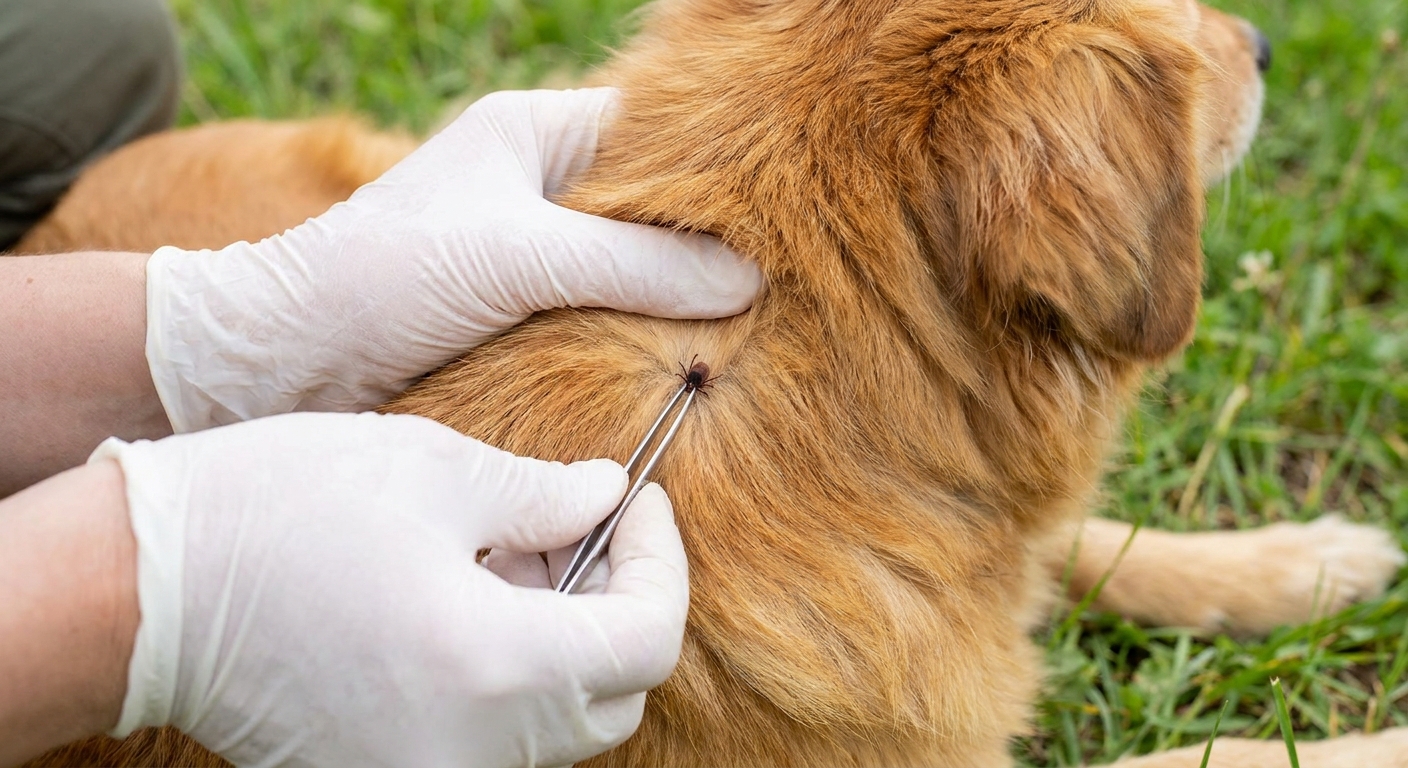
This is my go-to method when you can clearly see the tick.
- Part the fur so you can see where the tick’s mouthparts enter the skin.
- Grab the tick as close to the skin as possible. You are aiming for the head and mouthparts, not the swollen body.
- Pull upward with steady, even pressure. Think “slow elevator,” not “jerk and yank.”
- Check the tick to see if it came out in one piece.
- Put the tick in your container (more on what to do with it below).
What not to do: Don’t squeeze the tick’s body and don’t rip it out quickly. With tweezers, I avoid twisting because it can make it harder to keep a clean grip at the skin line. The big idea is slow, steady traction without crushing the tick.
Remove a tick with a tick tool
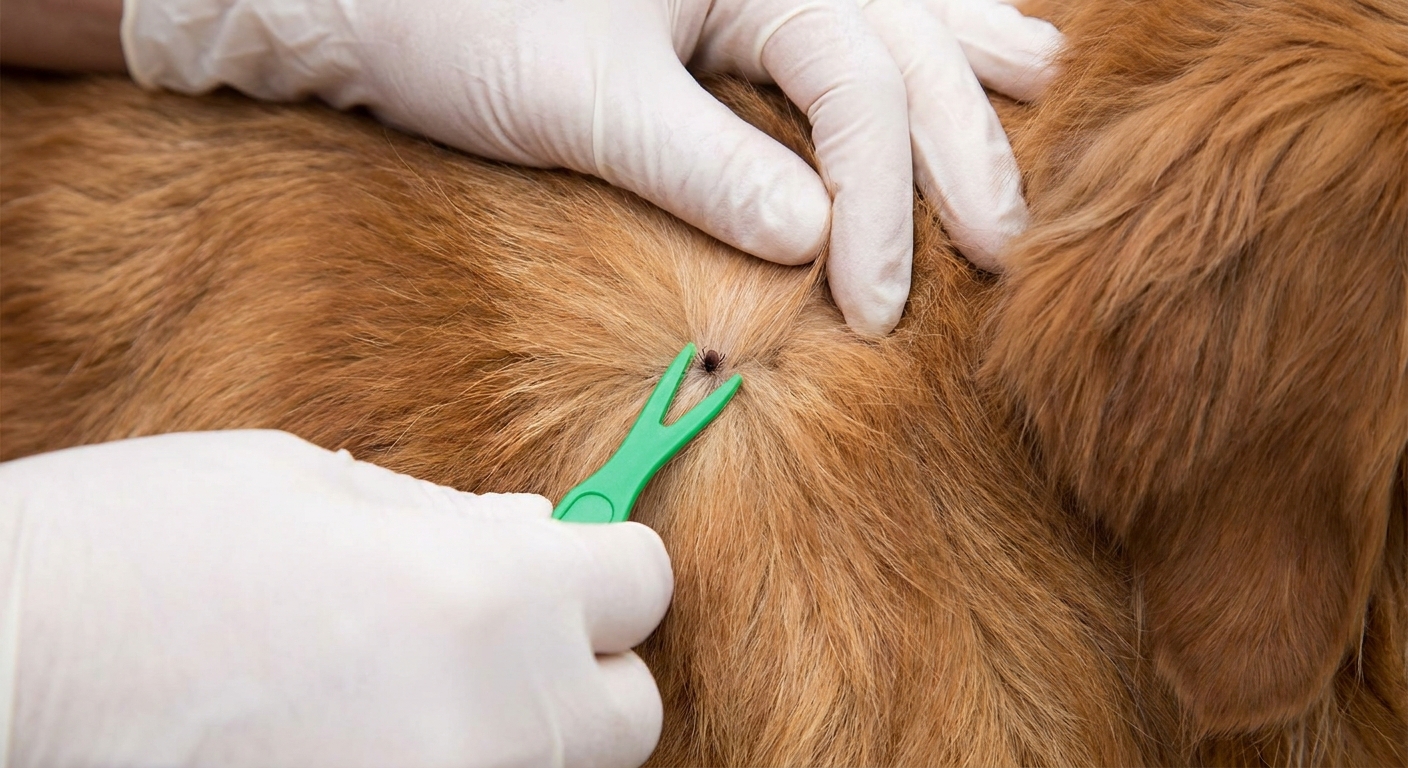
Tick tools vary a lot, and the right technique depends on the style you have.
- Read the package instructions. This matters because some tools are designed for a straight lift, while others (including common hook-style tools) specifically use a gentle twist or rotation.
- Slide the tool under the tick so the tick is seated in the notch or fork as close to the skin as you can get.
- Remove with slow, steady motion following that tool’s method. Depending on the design, that may be a steady upward lift, a slight rocking lift, or a gentle twist while lifting.
- Confirm the tick is out and place it into your container.
If you have a dog with a dense coat or you spend lots of time hiking, a tick tool can be easier than tweezers, especially on flatter, smaller ticks.
If mouthparts break off
It happens, even when you do everything right, especially with tiny ticks. If you can clearly see a small dark piece at the surface, you can try to remove it like a splinter using clean fine tweezers.
If you can’t easily grasp it, do not dig into the skin. That can cause more irritation and infection risk than the small fragment itself. Clean the area and monitor. Sometimes the skin will work small fragments out as it heals, but it is not guaranteed.
Call your vet if the site becomes increasingly red, swollen, painful, oozes, or your dog seems bothered by it.
Clean up after removal
Once the tick is out:
- Clean your dog’s skin with chlorhexidine, diluted povidone-iodine, or mild soap and water. Pat dry.
- Wash your hands even if you wore gloves.
- Disinfect tweezers or the tick tool with rubbing alcohol.
A small pink bump can be normal for a day or two, similar to a tiny bug bite. What we don’t want is expanding redness, heat, swelling, increasing inflammation, or discharge.
What to do with the tick
You have two good options:
- Save it (if your vet wants it): Place the tick in a sealed container and label it with the date and where you found it on your dog. For simple identification, a little rubbing alcohol is usually fine. If you think the tick may need lab testing, ask your vet or local health department how they prefer it stored. Some prefer the tick kept dry in a sealed bag or container, sometimes refrigerated.
- Dispose of it safely: Seal it tightly in a container or wrap it in tape before throwing it away. Avoid crushing it with your fingers.
Flushing ticks down the toilet is sometimes suggested, but sealed disposal is more reliable.
Aftercare: what to watch for
Most dogs do perfectly fine after a tick bite, especially when ticks are removed promptly. Still, tick-borne illnesses can take days to weeks to show up, so a little vigilance is smart.
People often ask about timing. While there is no magic cutoff that applies to every pathogen and every tick, the general risk of disease transmission increases the longer a tick is attached. That’s why prompt removal is always worth it, even if you are not sure how long it has been there.
Call your vet if you notice
- Expanding redness, increasing swelling, heat, or pain at the bite site
- Fever (warm ears can happen for many reasons, but true fever needs a thermometer and a vet call)
- Lameness, limping, stiffness, or shifting leg pain
- Unusual tiredness or low energy that is out of character
- Loss of appetite or vomiting
- Swollen joints or generalized soreness
- Enlarged lymph nodes (under the jaw, in front of shoulders, behind knees)
Also call if you are not sure the tick was fully removed, your dog is very young, elderly, immunocompromised, or if your dog seems painful at the bite site.
When a vet should do it
At-home tick removal is usually safe, but I recommend calling your vet if:
- The tick is attached on the eyelid, lip line, inside the ear canal, or genitals
- Your dog is snappy, highly anxious, or painful and you cannot safely hold them
- You see multiple ticks and your dog may need a full-body check and prevention plan
- The bite area is already very swollen, oozing, or infected-looking
If your dog may bite from fear or pain, do not gamble with your hands. A properly fitted basket muzzle can be a humane, safe option for some dogs, but if you do not already have one and know how to use it, this is a good moment to let the clinic team help.
Mistakes to avoid
- Waiting too long because you are nervous. Calm and prompt is best.
- Using heat or chemicals to “make the tick back out.”
- Yanking quickly or crushing the body.
- Leaving the collar on if the tick is under it. Take it off so you can see what you’re doing.
- Skipping aftercare. Cleaning and monitoring matter.
Quick FAQs
Does my dog need antibiotics after a tick bite?
Not always. Treatment depends on your dog’s symptoms, your location, the type of tick, and sometimes bloodwork. If your dog seems normal, your vet may recommend monitoring rather than immediate antibiotics.
How soon do symptoms show up?
It varies. Some tick-borne illnesses can cause signs within a week or two, while others take longer. That’s why watching for fever, lameness, and unusual tiredness for several weeks is a good idea.
Can I use my fingers if I do it carefully?
I do not recommend it. It’s easy to squeeze the tick’s body, and you also increase your own exposure risk. Tweezers or a tick tool is safer for everyone.
My dog has a bump after I removed the tick. Is that normal?
A small bump and mild redness can be normal for a day or two. If the redness expands, the area becomes painful, swollen, warm, or starts to ooze, call your vet.
A final treat-jar reminder
When you find a tick, your dog is taking their cues from you. Slow breaths, steady hands, a handful of treats, and a simple plan usually turns this from “panic moment” into a two-minute task.
And if you live in tick country, prevention is not optional. Ask your vet about a year-round tick preventive that fits your dog, do a full-body tick check after hikes and tall grass, and wash bedding if you find more than one tick. The goal is fewer surprises, not better panic management.
If anything about the tick, the bite site, or your dog’s behavior feels off afterward, trust that instinct and call your vet. I would always rather you be “overcautious” than miss early signs of illness.