A practical checklist of the most important dog cues for safety, calm behavior, and real-life manners, plus easy training steps and proofing tips.
I grew up in a house where new foster dogs rotated in like seasonal decorations. Some were shy, some were spicy, and a whole bunch were enthusiastic greeters who treated every visitor like a long-lost best friend. Later, as a vet tech, I watched far too many wonderful dogs get labeled “too much” and surrendered for behaviors that were absolutely fixable. Jumping is one of the biggest ones.
The good news: most dogs are not being “dominant” or “bad.” They are being dogs. If we teach a clearer greeting routine and make jumping stop working for them, the behavior often improves quickly for mild to moderate cases. For intense jumpers, adolescent dogs, or dogs with a long reinforcement history, it can take longer, but the path is the same.
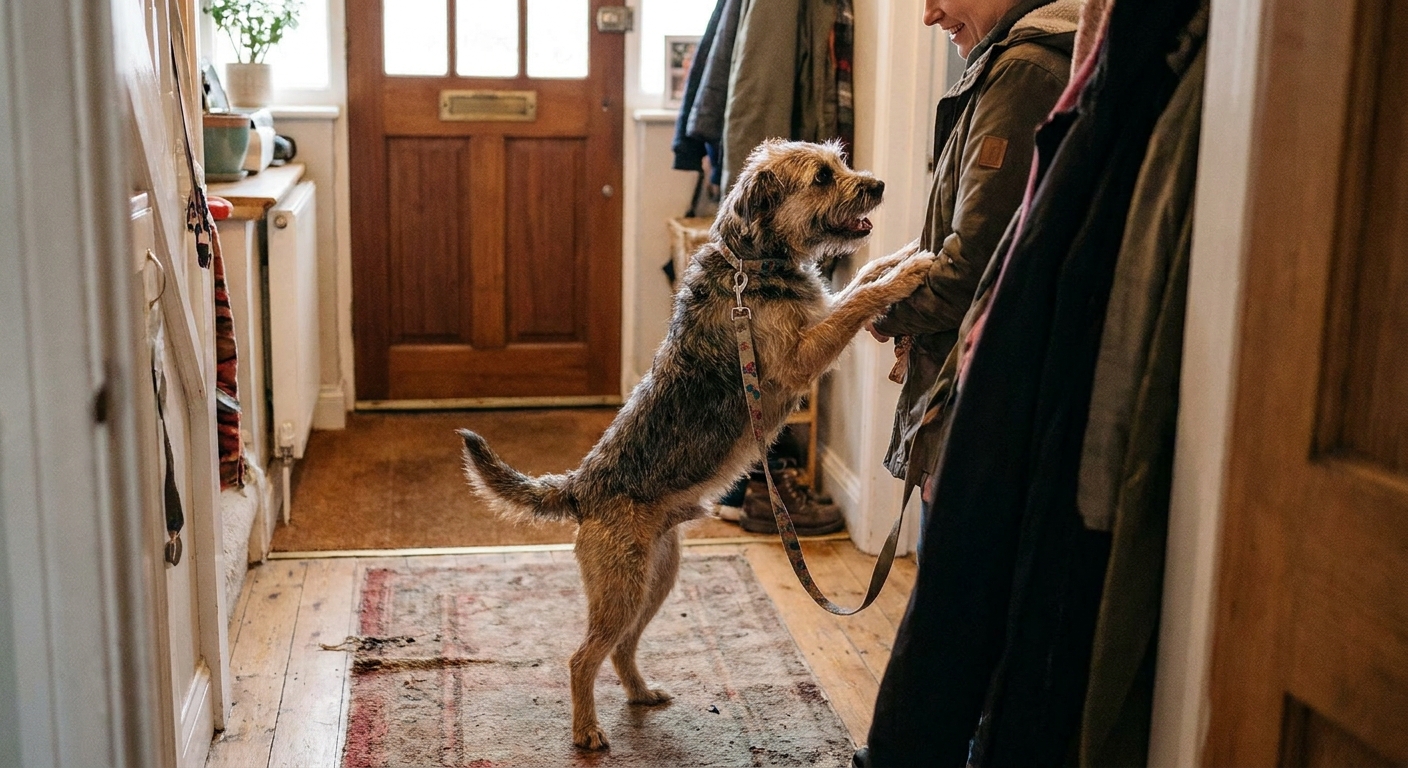
Why dogs jump during greetings
Jumping is a normal dog strategy. It happens because it gets results. Common reasons include:
- They want to investigate faces and hands. Many dogs try to get closer to your head, your breath, your voice, and whatever you are holding.
- Jumping has been rewarded before. Even “No, stop!” can be rewarding if your dog loves attention.
- Big feelings spill over. Excitement, frustration, and anticipation can all look like bouncing.
- They have not learned an alternative. “Don’t jump” is not a behavior. “Sit” or “go to mat” is.
Training is simply teaching a new greeting habit and making it easier for your dog to succeed than to fail.
Excitement or stress? How to tell
Most jumping at the door is rude excitement, but high arousal and uncertainty can also produce a mix of jumping, barking, and rushing forward. Instead of guessing what your dog “means,” look at the whole body and the context. The plan below still helps, but stress and fear call for extra distance, a slower pace, and more management.
Signs of excitement
- Loose, wiggly body and soft face
- Open mouth, normal blinking
- Approaches readily, may do play bows or spins
- Jumping increases when guests talk, lean in, or squeal
Signs of stress or fear
- Stiff body, weight shifted back, or “freeze then spring” movement
- Whale eye (white of eye showing), furrowed brow
- Lip licking, yawning, panting when not hot
- Hiding then rushing out, or barking and jumping in quick bursts
- Growling, snapping, or hard staring
If you see stress signals: skip face-to-face greetings, increase distance, use a leash or barrier, and feed treats for calm observation. For dogs who combine jumping with growling, snapping, or repeated fear reactions, bring in a qualified positive-reinforcement trainer. Safety first, always.
Your goal: paws on the floor
Instead of fighting the jump, we train what you want:
- Four paws on the floor earns attention, treats, and greetings.
- Paws off the floor makes attention disappear.
This works best when everyone is consistent, especially during the first couple of weeks.
Step 1: Manage the door
Jumping is most intense when your dog is already overexcited. Management is not “cheating.” It is how you prevent your dog from rehearsing the behavior you are trying to change.
Pick one setup you can use every time
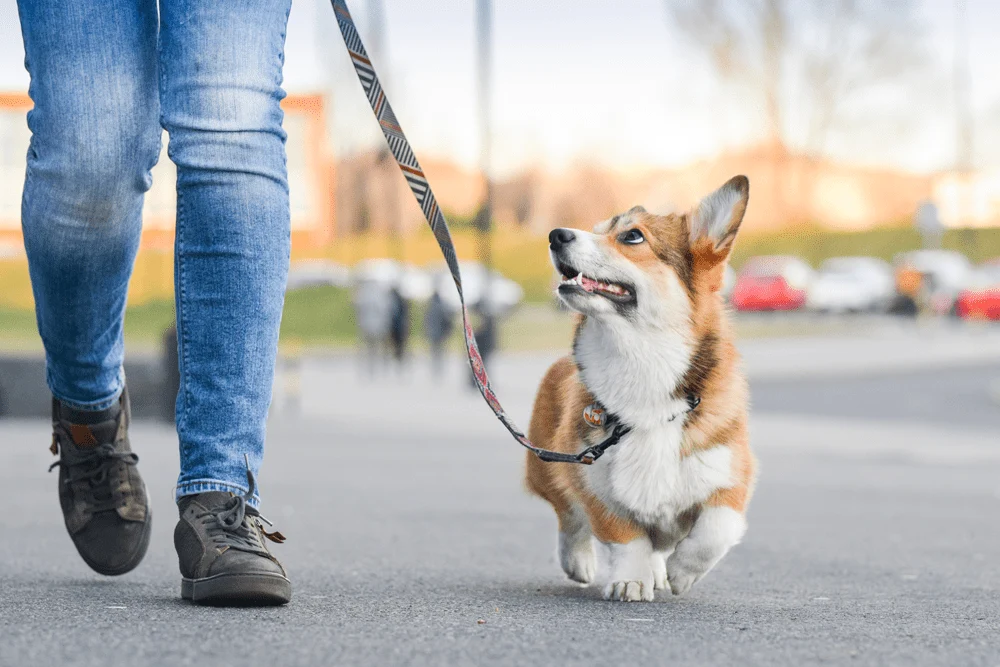
- Leash on before you open the door. Keep it short enough to prevent body-slams, but not so tight your dog feels trapped. Think guidance, not wrestling. Pair the leash with space, treat tosses, and a calm reset so you are not physically restraining a lunging dog at the threshold.
- Use a baby gate or closed interior door. Let your dog calm down before meeting guests.
- Crate or separate room with a chew or scatter of treats for high-intensity arrivals.
If your dog is a known jumper, do not start training with a wide-open door and a guest walking in at full speed. We want controlled repetitions, not chaos.
Quick safety note: If you have kids, older adults, or anyone unsteady in your home, management comes first. Put your dog behind a gate or in a separate room until you have calm. Also, kids should not be the training helper for greeting practice. Use capable adults for the early reps.
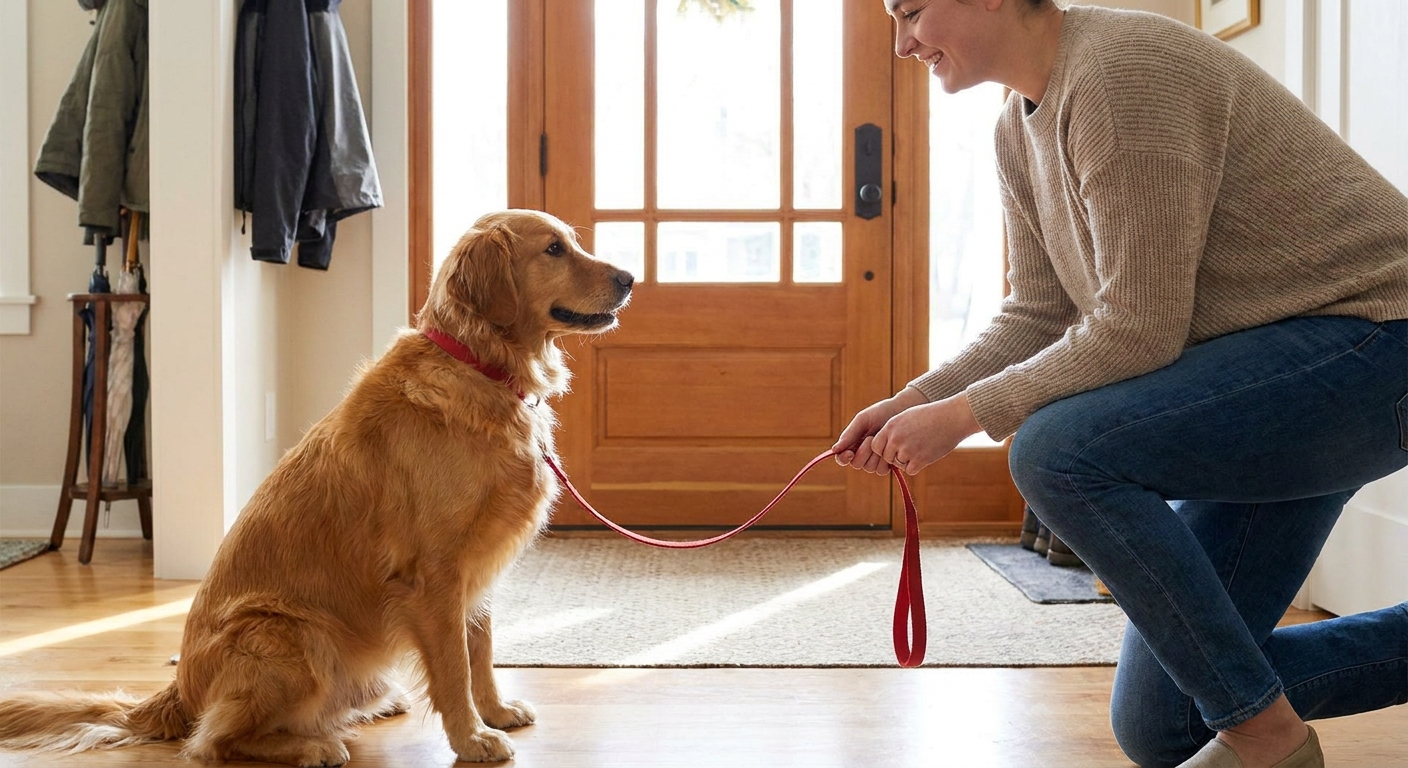
Step 2: Teach “paws down pays”
Before you involve visitors, teach your dog the core concept: calm body gets rewards.
Quick daily practice (2 to 5 minutes)
- Stand with treats ready. (I keep jars on my counters because I am realistic about my life.)
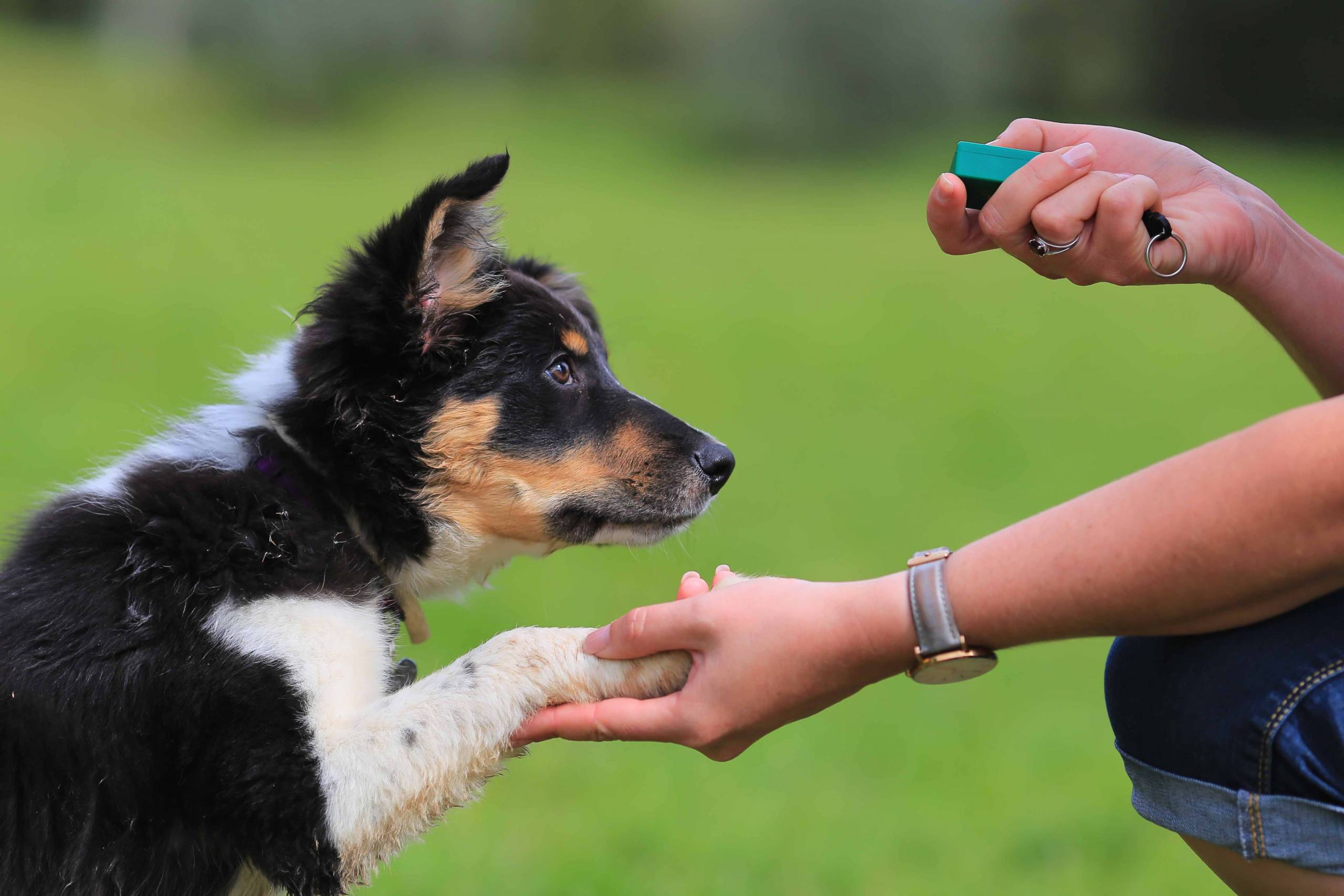
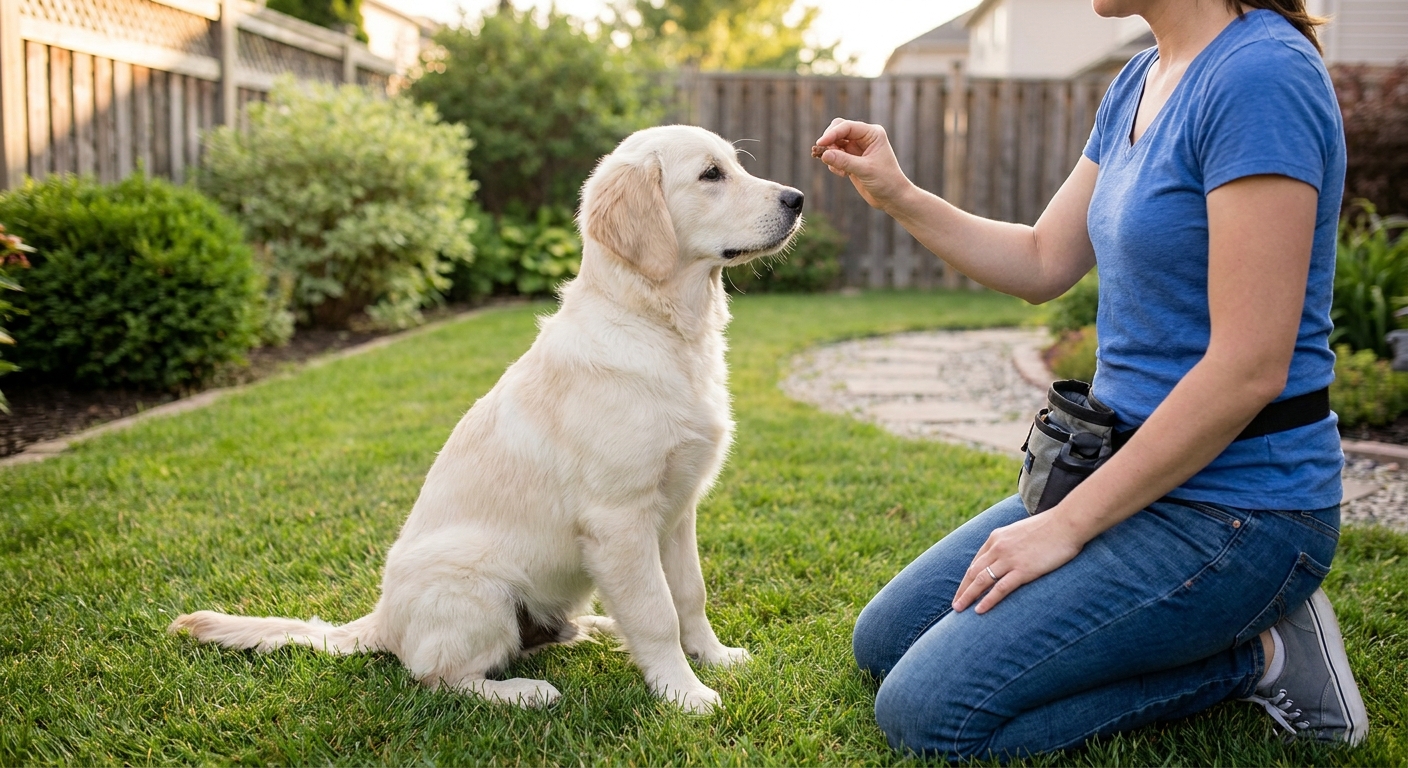
- Wait for four paws on the floor. The instant paws are down, say “Yes” (or click) and toss a treat on the floor.
- Repeat. You are building a reflex: paws down makes food appear.
Important: Tossing treats on the floor is magic here. It naturally keeps your dog’s head down and resets their body position.
Add gentle excitement
Once your dog gets it, practice with small triggers:
- You clap softly
- You take a step toward them
- You touch the doorknob
- You open the door a crack, then close it
Reward any moment your dog keeps paws down. If they jump, the game pauses and you wait for paws down again.
Step 3: Use a guest script
When it is time to add people, keep it simple. Your guest does not need to be a dog trainer. They just need a script.
The guest script (send this by text if you need to)
- Walk in calmly.
- Do not reach down or talk to the dog until four paws are on the floor.
- If the dog jumps, turn your body away and fold arms.
- When four paws are on the floor, quietly say hi and drop a treat to the floor.
That last part matters. Many dogs jump because the greeting is the reward. We are keeping the greeting, but putting it on your terms.
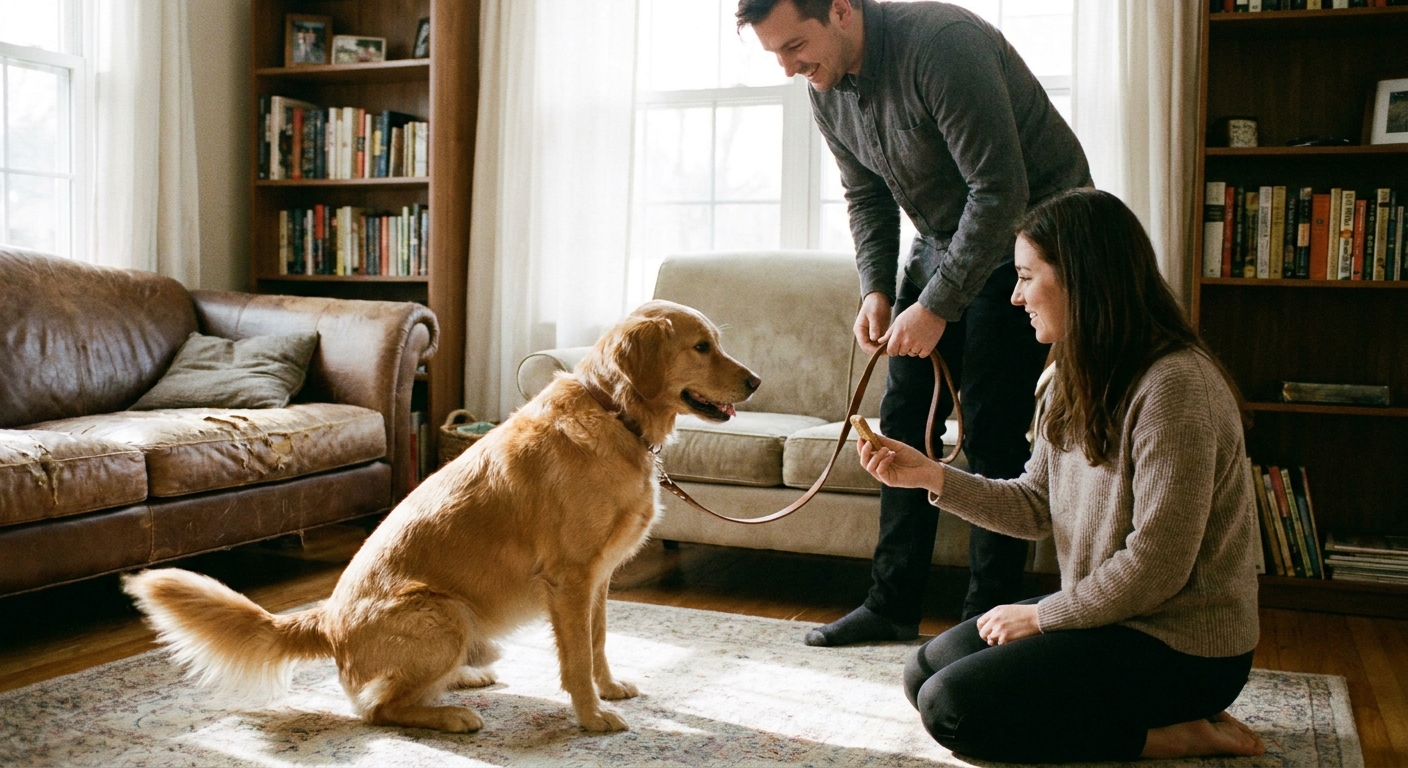
Option: go to mat
If your dog is the kind of jumper who struggles to hold a sit when excited, a go to mat routine can be easier. It gives your dog a clear place to put their body and buys everyone space.
- Keep a mat or bed 6 to 10 feet from the door.
- Practice: toss a treat onto the mat, mark “Yes” when your dog steps on it, then toss another treat on the mat.
- Build up to: dog runs to mat when you touch the doorknob.
- For real arrivals: dog goes to mat, guest enters, treats land on the mat while your dog stays there.
You can still greet, you are just greeting a dog who is anchored to a job.
When guests mess it up
This will happen. Someone will squeal “Oh my gooosh!” and pet your dog mid-air. Your job is not to glare at them. Your job is to protect the training.
In the moment
- Interrupt kindly: “He is learning polite greetings. Please pet only when his paws are on the floor.”
- Reset: Guide your dog a few steps away (on leash or behind a gate), wait for paws down, then try again.
- If it repeats: Put your dog behind a barrier with treats for a minute while guests settle.
Make success easier next time
- Meet guests outside first, then enter together.
- Have guests toss treats on the floor as they step in.
- Ask guests to ignore your dog for the first 30 seconds.
Remember: your dog is not trying to be obnoxious. They are following the reinforcement history you and the world accidentally created.
If your dog jumps on you
Dogs do not categorize well. If jumping works on you, it will show up on other people too.
- Before greeting: pause at the door or after you come home, and wait silently.
- Mark and reward the instant four paws are on the floor.
- Keep greetings low-key for a couple of weeks. You can be thrilled to see your dog without turning it into a hype party.
If your dog jumps during play, swap in a quick cue like “sit” or “touch,” reward, then continue playing. They learn that keeping paws down makes fun continue.
Two-week routine
You do not need marathon sessions. You need lots of tiny wins. Here is a routine I use with first-time dog owners because it fits real life.
Week 1: Build the habit
- Daily (5 minutes total): 2 to 3 mini-sessions of “paws down pays” indoors.
- Door practice (1 minute, 3 times a day): touch the knob, open and close the door slightly, reward paws down.
- Arrivals: manage every real greeting with leash or barrier. No unplanned door rushes.
Week 2: Add real greetings
- Daily (5 minutes total): continue “paws down pays,” now with mild excitement like you moving quickly or picking up keys.
- 3 planned greetings this week: recruit a calm friend or neighbor for a scripted practice. Keep it short. One to two minutes is enough.
- Increase difficulty slowly: different hats, bags, or higher-energy friends only after your dog succeeds with calm guests.
How to know you are improving: your dog recovers faster. Maybe they jump once, then immediately plant their feet and look for the treat. That is progress. That is learning.
Common sticking points
“My dog jumps so fast I cannot reward in time.”
Start farther away. Put your dog behind a gate or on leash and reward calm before the guest gets close. Distance is your friend.
“My dog gets mouthy when excited.”
Use treat tosses on the floor, and offer a toy to carry before guests arrive. If mouthing is frequent or painful, pause greetings and work on arousal control with a trainer.
“My dog only jumps on certain people.”
Those people are probably more exciting, taller, squeakier, or more likely to pet the dog mid-jump. Use management and have those guests do the treat-toss routine first.
“My dog is big and it feels unsafe.”
Totally valid. Use a barrier and leash for all greetings until training is solid. For very strong dogs, practice with one adult handler and one calm guest. If anyone is at risk of being knocked down, get professional help sooner rather than later.
“My dog is polite at home but jumps on walks.”
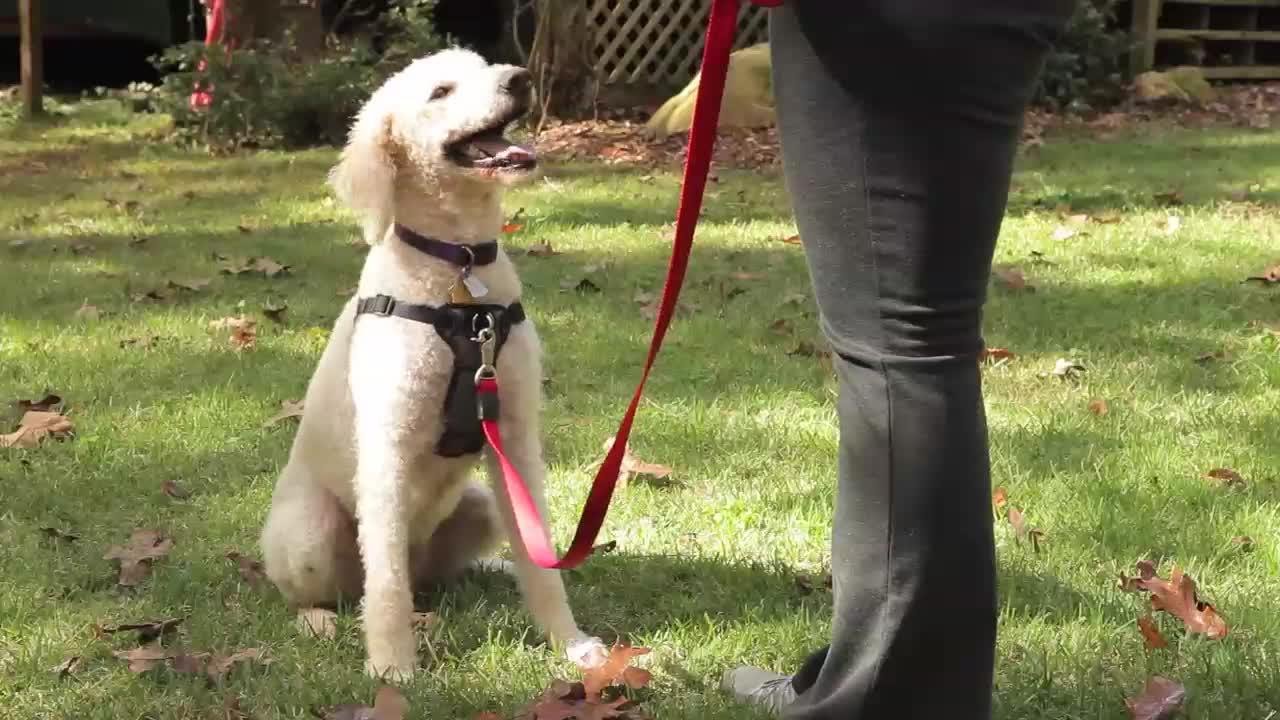
That is normal. The outside world is harder. Use the same rule everywhere: greetings only happen when paws are on the ground. On leash, ask for a sit or a quick “touch” before someone pets, or simply keep moving and reward your dog for choosing to stay grounded. If a stranger cannot follow the rules, your dog does not need to greet them.
What not to do
- No kneeing the chest. It can injure your dog and can turn greetings into a rough game.
- No yelling. Many dogs read it as “wow, we are all excited together.”
- No leash jerks. They can increase frustration and make greetings worse.
- No forcing a sit as punishment. Sits are great, but we want your dog choosing calm to earn rewards, not being manhandled into position.
When to get help
Jumping is usually a training issue, but reach out for professional support if:
- Your dog’s jumping comes with growling, snapping, or hard staring
- Your dog seems fearful of guests or startles easily at the door
- Someone in your home could be injured by being knocked down
- You have tried consistent management and rewards for two weeks with no improvement
Look for a trainer who uses positive reinforcement and can coach you through real-life setups in your home.
Polite greetings are a skill
Some dogs are born mellow little librarians. Others are joyous, spring-loaded greeting committees. Either way, the path is the same: prevent the practice jumps, reward four paws on the floor, and make your greeting routine predictable. With a couple weeks of steady reps, many dogs start choosing the behavior that pays. Some will need more time, especially if they are young, powerful, or have practiced jumping for years.
And if you catch me with treats in my pockets at all times, no you did not.