
Your dog does not need to be a tiny furry robot who follows directions 24/7. But in their first year, many puppies can learn a handful of core cues that make life safer, calmer, and a whole lot more fun to share. (And if your dog is past puppyhood, you can still teach every single one of these.)
Below are the 10 commands, plus a few real-life upgrades, I recommend prioritizing early. They are built around positive reinforcement, short sessions, and skills you will actually use in the real world.
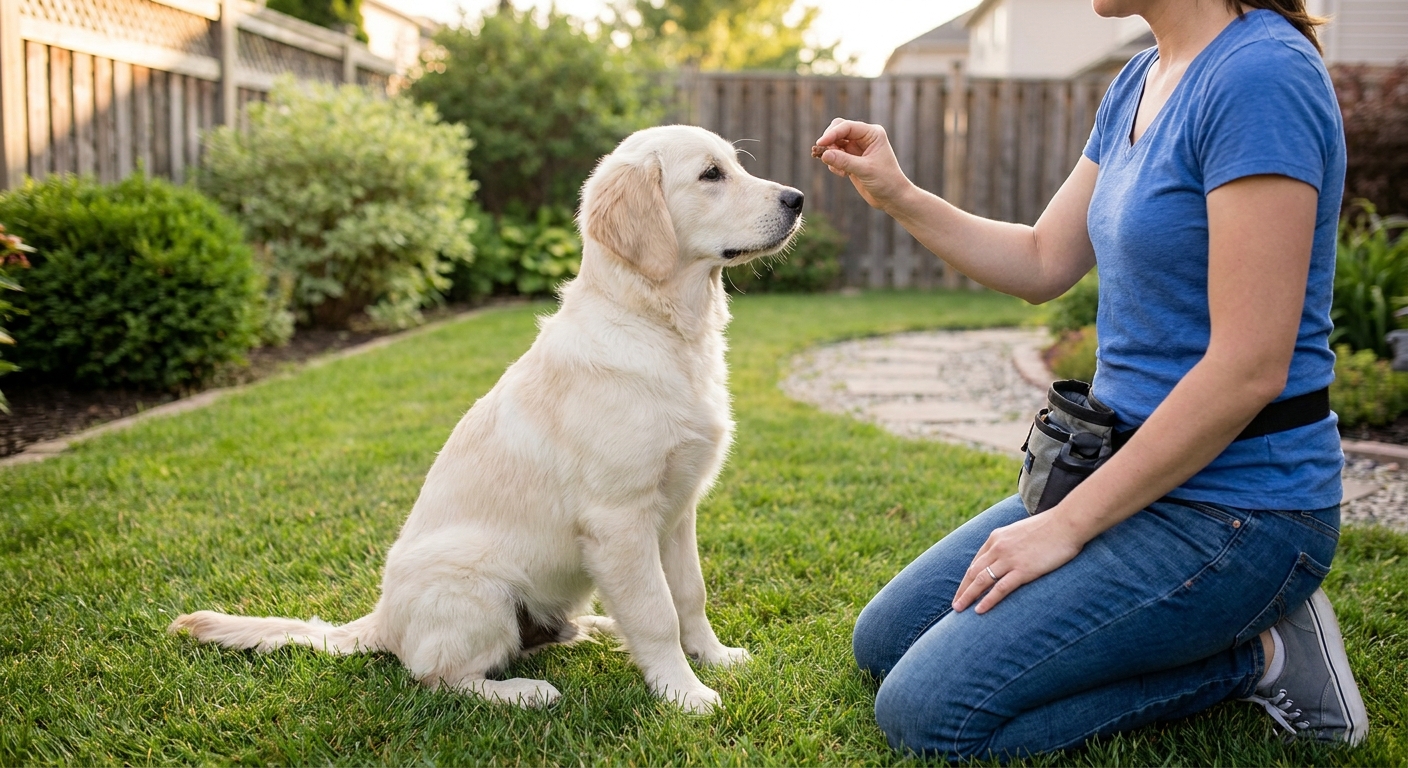
Before you start: simple rules that make training easier
- Keep sessions short. 1 to 3 minutes for young puppies, 3 to 5 minutes for older pups, multiple times a day.
- Pay well. Use tiny soft treats, kibble for easy reps, and mix in toys or praise if your dog loves them.
- Say the cue once. Repeating it often teaches your dog they do not need to respond until the third ask.
- Reward position, not hype. Treat when your dog is in the right spot, then calmly reset.
- Increase difficulty slowly. Add distractions, distance, and duration one at a time.
- Training is not a test. If your puppy is struggling, make it easier and help them win.
Quick note on words: “Commands” are really cues. Your dog is not being “obedient,” they are learning a shared language with you. The exact word you use does not matter. Consistency does.
Quick note on “marking”: A marker word (like “Yes!”) or a click tells your puppy the exact moment they earned the reward. The treat comes right after.
Proofing: why it falls apart outside
Most cue struggles are not stubbornness. They are generalization problems. Your puppy does not automatically know that “Sit” in the living room also means “Sit” on the sidewalk near a trash can and a squirrel convention.
When you practice, think in three separate sliders:
- Duration: how long your dog holds the behavior
- Distance: how far away you are
- Distractions: how exciting the environment is
Raise only one slider at a time, and your puppy will progress much faster.
1) Name response (Look at me)
If I could pick only one skill for a young dog, it is this. A puppy who snaps their attention to you when you say their name is easier to redirect, safer near distractions, and faster to train for everything else.
How to teach it
- Say your puppy’s name once in a cheerful tone.
- The instant they glance at you, mark and treat.
- Repeat 5 to 10 times, then take a break.
- Practice in every room, then in the yard, then on calm walks.
Troubleshooting
- If your puppy ignores you: you are too close to the distraction, too far from your puppy, or your reward is not exciting enough. Create more distance from the distraction or upgrade the treat.
- If your puppy thinks their name means “come here”: that is super common. Pair name response with eye contact, not movement, and teach “Come” separately below.
2) Sit
Sit is useful, but it is also a gateway skill. It helps your pup learn to control their body, pause before greeting, and offer calm behavior to earn what they want.
How to teach it (lure method)
- Hold a treat at your puppy’s nose.
- Slowly lift the treat up and slightly back over their head.
- As their head follows, their butt will usually drop. The moment it does, mark and treat.
- After a few successful reps, say “Sit” right before you move your hand.
Real-life uses
- Before clipping the leash
- Before greetings
- Before you set the food bowl down
3) Down
Down is a calm, grounded position. It is great for settling at coffee shops, relaxing at your feet while you work, and teaching impulse control.
How to teach it
- Start with your puppy in a sit or stand.
- Place a treat at their nose, then slowly move it straight down to the floor.
- Drag the treat forward along the floor so their body follows into a down.
- The moment elbows touch the ground, mark and treat.
- Add the cue “Down” right before your hand motion once the pattern is clear.
Troubleshooting
- If your puppy pops up: reward faster for partial progress at first (like a head dip), then build toward full down.
- If your puppy backs away or crawls off: practice near a wall or in a corner so it is harder to scoot backward, or lure under your bent knee (make a little tunnel with your leg) so your puppy naturally folds down without you pushing on their body.
4) Stay (plus a release word)
I teach stay as “hold this position until I release you.” The release word is the secret sauce, because it tells your dog exactly when they are done.
Pick a release word
Common options: “Free,” “OK,” or “Break.” Choose one and use it consistently.
How to teach it
- Ask for Sit or Down.
- Pause for one second. Mark and treat while your puppy is still in position.
- Say your release word and toss a treat a foot away so they get up.
- Gradually increase time to 2 seconds, 3 seconds, 5 seconds, and so on.
- Only after duration is solid, add a tiny step back (distance), then return and reward.
Common mistake
Try not to end every stay by immediately asking for “Come.” Many dogs start to predict the recall and pop up early. Mix it up: return to your puppy, reward in position, pause, then release. Sometimes you can add “Come” after the release word so “stay” does not feel like a spring-loaded trap.
5) Come (recall foundation)
Recall saves lives. It is also one of the hardest behaviors, because the world is interesting and you are competing with squirrels, smells, and other dogs.
How to teach it
- Start indoors. Say “Come!” in a happy voice and take a couple quick steps away from your puppy.
- When they follow, mark, then deliver a “party” reward: 3 to 5 treats one at a time, plus praise.
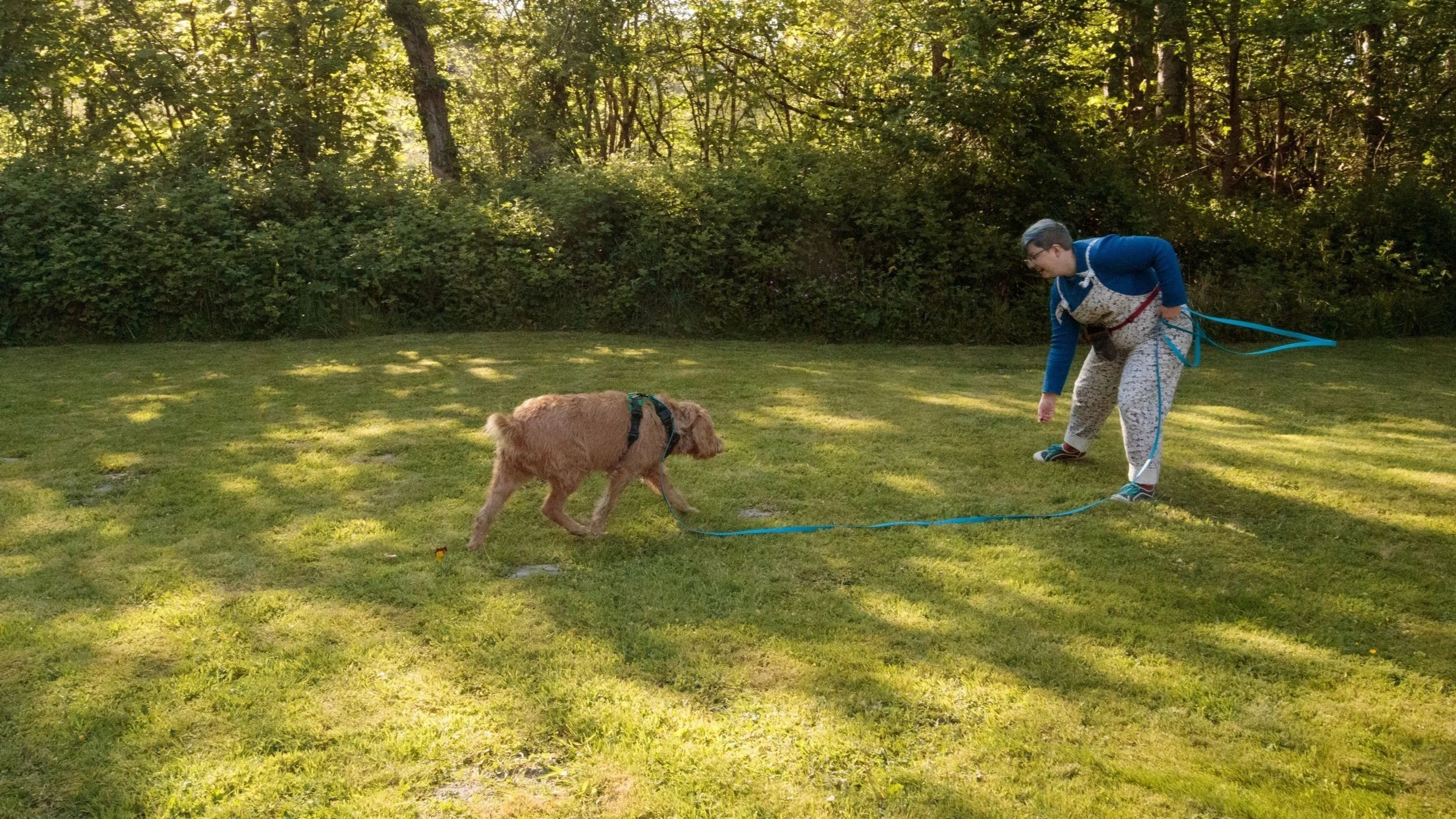
- Practice short distances. Then move to a hallway. Then the yard on a long line.
- Play recall games: ping-pong between family members, or hide and seek behind a doorway.
Make it stronger
- Never punish your dog for coming to you. Even if they just did something ridiculous.
- Do not end fun every time. Call them, treat, and then sometimes let them go back to playing.
- Use a long line outdoors. It gives freedom while preventing rehearsing “nope.”
6) Leave it
Leave it means “disengage from that thing.” It is for dropped chicken bones, pill bottles, suspicious sidewalk snacks, and the cat’s food dish.
How to teach it (treat in hand)
- Put a treat in your closed fist and present it to your dog.
- Let them sniff and paw. Say nothing or calmly say “Leave it.”
- The instant they pull their nose away, mark and give a different treat from your other hand.
- Repeat until they quickly disengage when they hear the cue.
- When they are successful, progress to an open palm, then a treat on the floor with your foot ready to cover it.
Important detail
The treat you are asking them to “leave” is not the reward at first. You are teaching your puppy that looking away makes better stuff happen.
Real-life tip
“Leave it” works best when you can reinforce quickly. Carry treats on walks so you can pay your dog for making a great choice.
7) Drop it
Drop it prevents tug-of-war over stolen socks and helps keep your dog safe if they grab something dangerous. I teach it as a trade, not a battle.
How to teach it (trade game)
- Offer a low-value toy your dog likes.
- Let them take it, then show a high-value treat right at their nose.
- When they open their mouth to take the treat, say “Drop it”, mark, and feed.
- Give the toy back right away. This teaches your dog that dropping does not mean losing forever.
Do not do this
- Do not chase your dog around the house for stolen items. That is a very fun game for them.
- Do not pry their mouth open unless it is an emergency. It can increase guarding in some dogs.
Safety note
If your dog grabs something that could be toxic, sharp, or a choking hazard, prioritize safety over training. If you cannot trade them off quickly, contact your veterinarian, an emergency vet, or a pet poison helpline for guidance.
8) Loose leash walking (Let’s go)
Loose leash walking is not one single command. It is a skill: staying near you with slack in the leash. I like using “Let’s go” as the cue that we are moving together.
Pick a side
Choose a default side (left or right) and be consistent. It does not matter which one, it just keeps your puppy from guessing.
How to start
- Begin in a boring area with minimal distractions.
- With treats in your hand, take 1 to 3 steps. If the leash stays slack, mark and treat at your chosen side.
- If your puppy hits the end of the leash, stop moving. Wait for them to turn back or create slack, then reward and continue.
- Gradually build up the number of steps between treats.
What to reward
Feed for the leash being loose, but also watch for check-ins. Any time your puppy chooses to glance at you or drift back to your side, mark and pay. That is the habit you want.
Gear helps (but it is not magic)
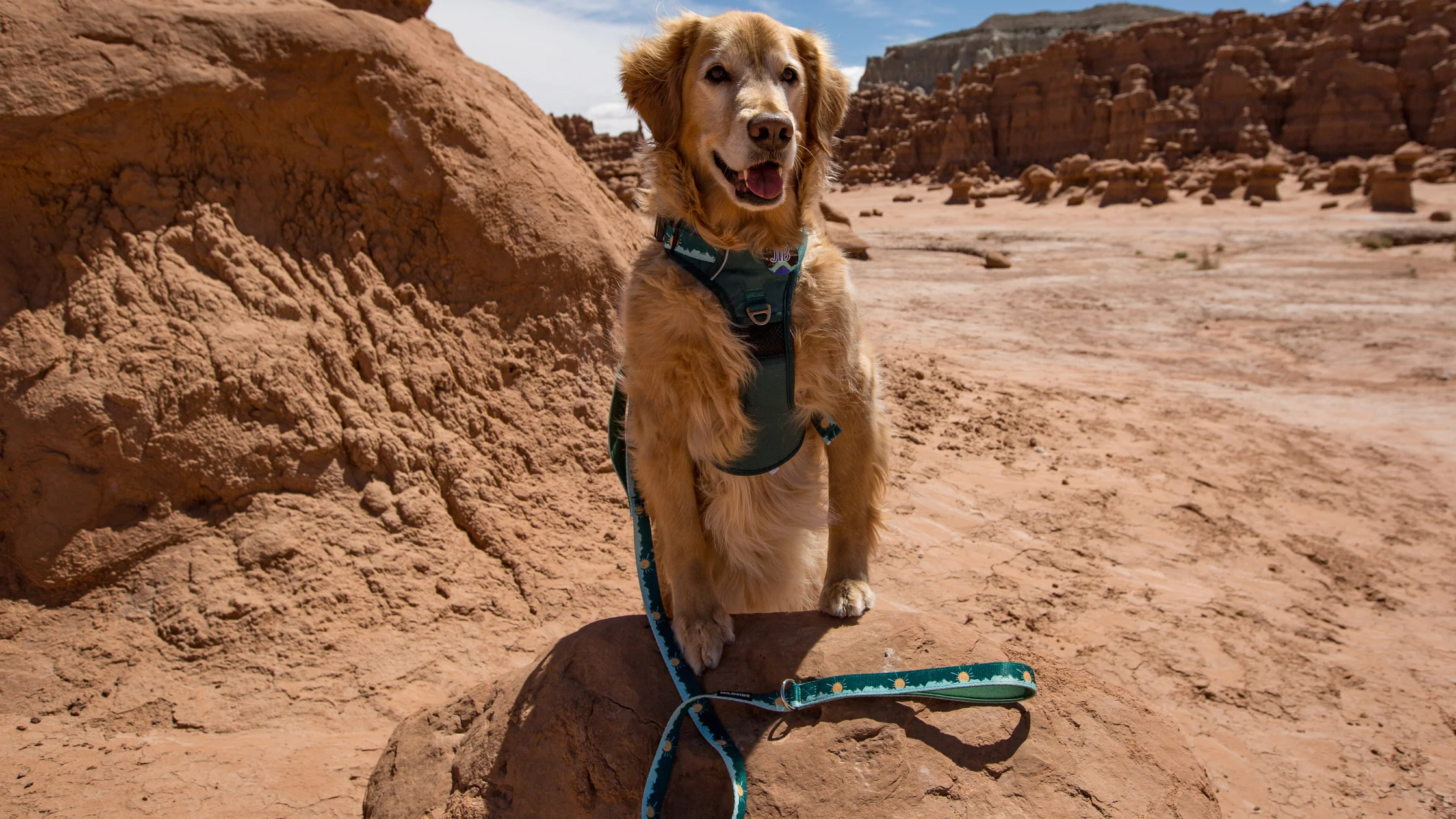
A front-clip harness can reduce pulling for many dogs while you train. Fit matters. A poorly fitted harness can rub or restrict movement, so ask your vet, trainer, or a good pet store staffer to help you adjust it if you are not sure.
9) Place (go to mat)
Place is my favorite “house manners” cue. It gives your dog a clear job when the doorbell rings, when guests arrive, or when you need to cook without a puppy underfoot.
How to teach it
- Set a bed or bath mat on the floor.
- Toss a treat onto the mat. When your puppy steps onto it, mark and treat again on the mat.
- After a few reps, add the cue “Place” right before they move toward the mat.
- Build duration by feeding several small treats while they remain on the mat, then use your release word.
Level up
- Add distance: send them from a few steps away.
- Add distractions: you open the fridge, knock on the table, or walk to the door.
10) Wait (doors, car, gates)
Stay is “hold position.” Wait is “pause until I tell you we can go.” I use “Wait” for threshold safety so dogs do not blast through doors into the street.
How to teach it (doorway version)
- Start at an interior door first, where the stakes are low.
- Approach the door with your dog on leash.
- Ask for “Wait” and reach for the handle.
- Crack the door an inch. If your dog surges forward, close it gently.
- When your dog pauses and the leash stays slack, mark and treat.
- Open the door wider in tiny increments. Then release with “Free” and go through together.
Safety note
For dogs who are door dashers, pair training with management. Use a baby gate, x-pen, or leash indoors so you are not gambling with traffic.
How to practice all 10 without burnout
You do not need a 60-minute daily obedience bootcamp. In fact, most puppies learn better with sprinkles of training throughout the day.
- Morning: Name response, sit, down (2 minutes)
- Breakfast: Sit and wait for the bowl, then release
- Midday: Place on a mat while you answer emails (5 treats total over 2 minutes)
- Walk: 30 seconds of loose leash practice, one recall game on a long line
- Evening: Drop it and leave it with toys and safe household items (2 to 3 minutes)
Bonus first-year skills (not “commands,” but crucial)
If you have bandwidth, these are the skills that make vet visits, grooming, and daily life dramatically easier:
- Handling practice: tiny treats while you briefly touch paws, ears, tail, and collar, then stop. Keep it light and predictable.
- Cooperative care cues: simple behaviors like “Touch” (nose to hand) or “Chin” (rest chin in your palm) can help with brushing, nail trims, and exams.
- Socialization: calm, positive exposure to the world (surfaces, sounds, people, friendly dogs) at your puppy’s pace. Quality matters more than quantity.
Common questions from puppy parents
What if my dog is over one and does not know these yet?
You are not behind. Adult dogs learn these cues every day, including rescues with rough starts. Go at your dog’s pace, keep sessions short, and focus on real-world rewards.
When should I start training a puppy?
As soon as they come home, usually around 8 weeks. Training at this age looks like tiny games: responding to their name, following a treat, brief sits, and lots of rewarding calm.
Do I need to teach heel?
Not necessarily. A formal heel is great for sport and high-distraction situations, but most families do better aiming for loose leash walking first.
My puppy knows the cue at home but not outside. Why?
Distractions change the difficulty. Your puppy is not being stubborn. They are telling you the environment is too hard right now. Step back: increase distance from the distraction, use better treats, and practice in easier outdoor spots first.
When to get extra help
If your puppy is showing intense fear, escalating reactivity, or aggression, or if you are seeing signs of resource guarding (stiffening, hard stare, growling over items), it is worth bringing in a credentialed positive reinforcement trainer early. As a former vet tech, I also recommend looping your veterinarian in if behavior changes suddenly, since pain and illness can affect learning and tolerance.
With the right support, most “big” problems are much easier to address before they become habits.