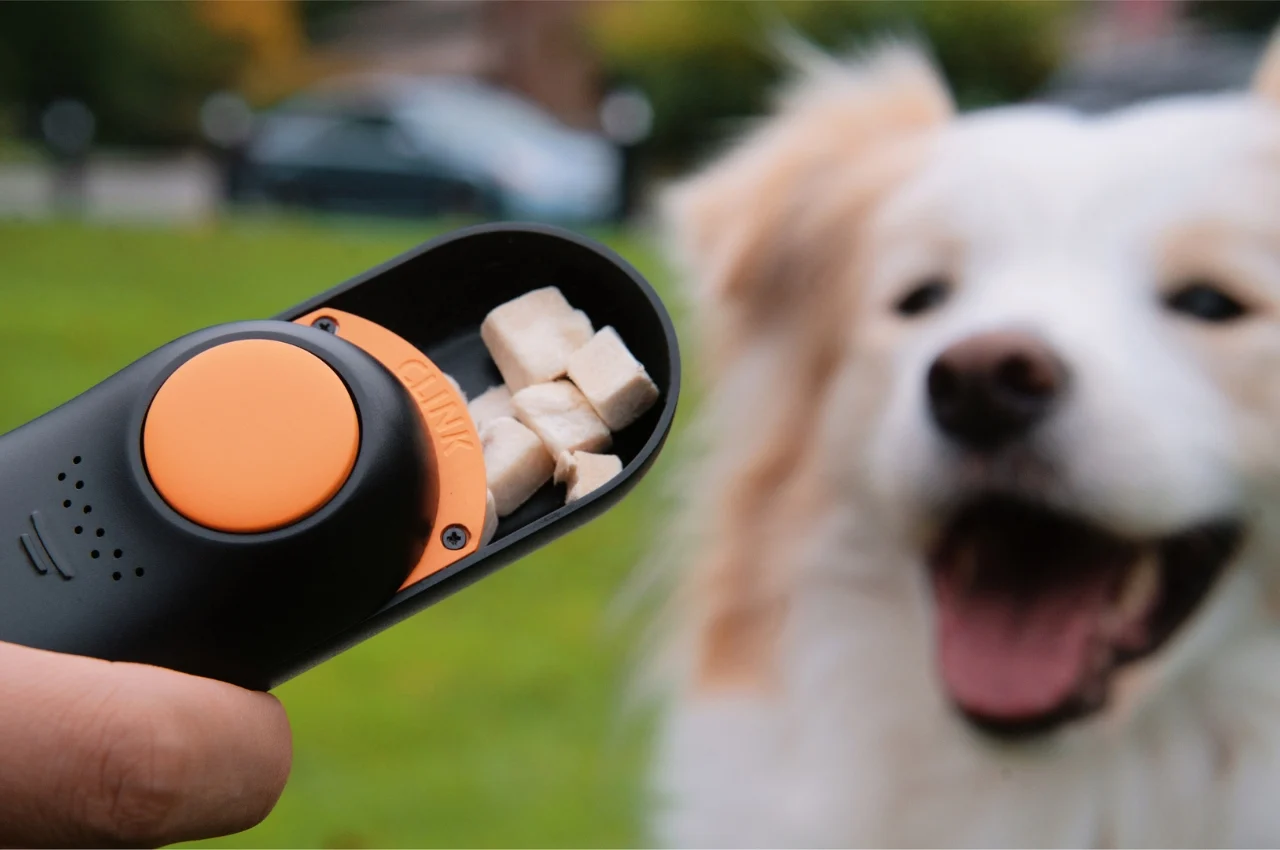
If you have ever wondered why one trainer swears by a clicker while another happily teaches everything with a treat in hand, you are not alone. Both clicker training and lure-and-reward fall under the same big, science-based umbrella: positive reinforcement. The difference is how they communicate with your dog in the moment.
Think of this as choosing the right tool for the job. A clicker is like a highlighter for behavior. Luring is like a set of training wheels that helps your dog find the right position faster. Many dogs benefit from both, often in the same session.
What clicker training is
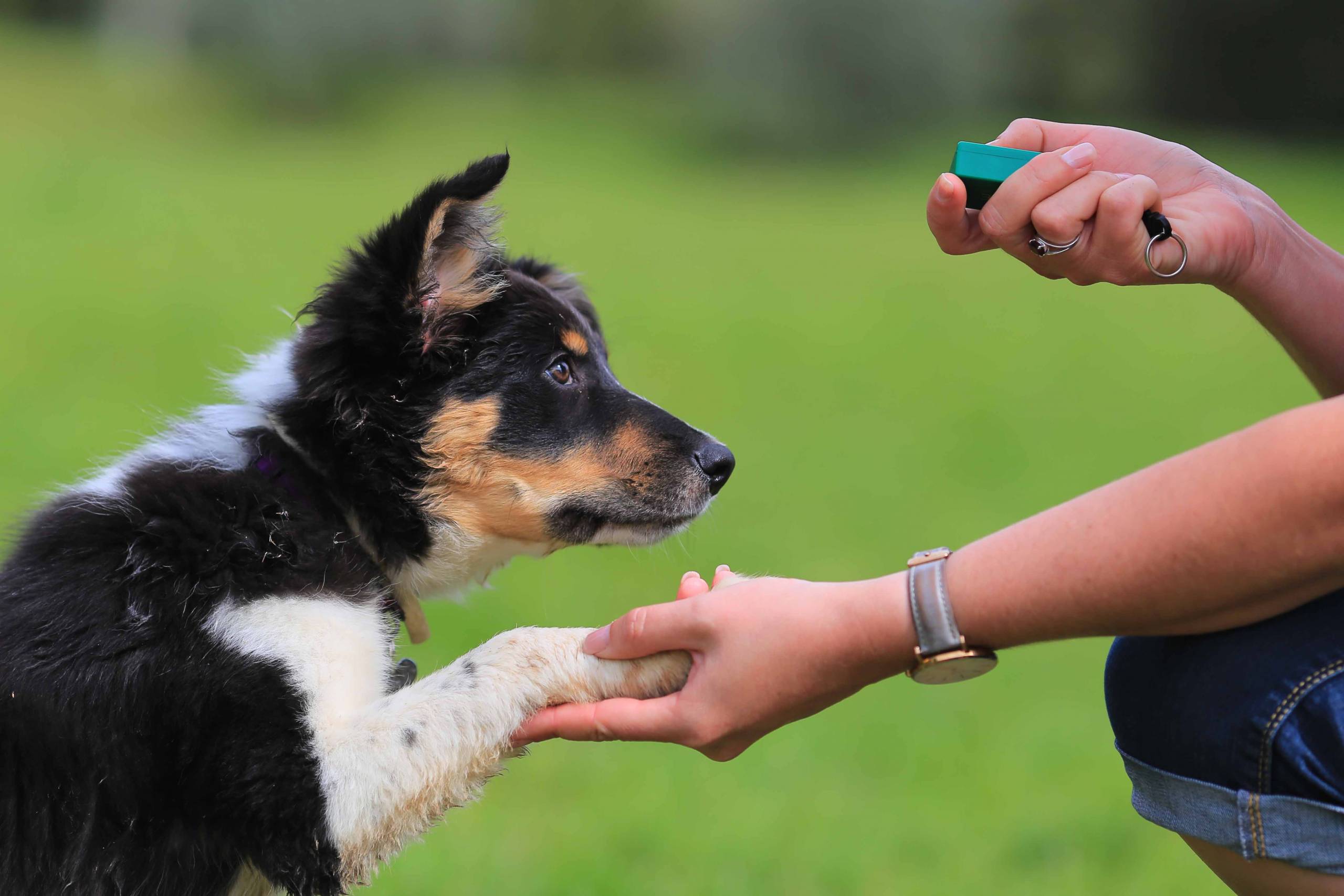
Clicker training uses a small device that makes a consistent click sound. That click becomes a marker, meaning it tells your dog, "Yes, that exact thing you did right there will earn a reward."
The click itself is not the reward. It is a promise that the reward is coming. The reward is still usually food, play, sniffing, or anything your dog genuinely loves.
How it works
- Charge the clicker: click, then immediately give a treat. Repeat until your dog perks up at the click.
- Mark the behavior: your dog offers the behavior (like sitting), you click the moment it happens.
- Deliver the reward: treat comes after the click as quickly as possible, ideally within about a second.
Clicker training shines when timing matters, especially for shaping more complex behaviors a step at a time.
What lure-and-reward is
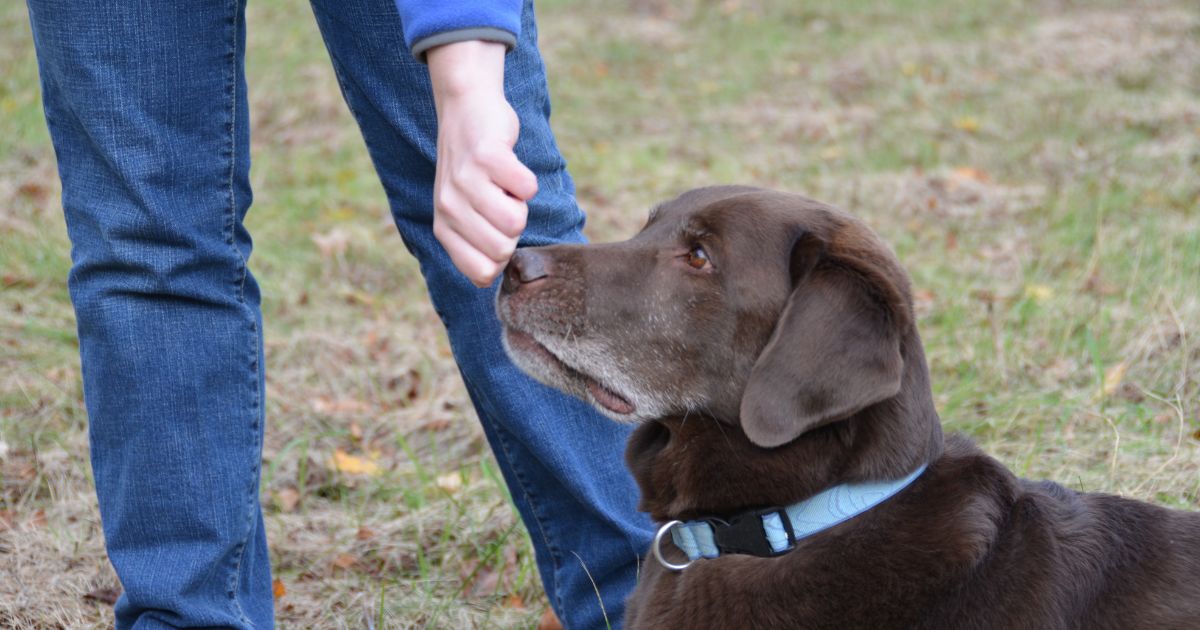
Lure-and-reward means you use something your dog wants, usually a treat, as a guide to help them move into position. Once your dog completes the behavior, you reward them.
Luring is wonderfully beginner-friendly. It is also how many of us naturally communicate with dogs. Follow this cookie is a pretty universal language.
How it works
- Show the lure: treat at your dog’s nose.
- Guide the movement: move the treat so your dog follows into a sit, down, or heel position.
- Reward: once the behavior happens, the dog gets the treat.
The key is what happens next: you gradually fade the lure so your dog learns to respond to your cue, not to the visible snack.
Clicker vs. lure
The simplest way to compare them is this:
- Clicker training: you mark the exact moment your dog does something right, then reward.
- Lure-and-reward: you use the reward to help your dog do the right thing, then reward.
Neither is more positive than the other. Both can be kind, force-free, and effective. The best choice depends on your dog, your skills, and what you are teaching.
Pros and cons of clicker training
Pros
- Crystal-clear communication: the click is consistent and precise, which helps dogs learn faster when timing is tricky.
- Excellent for shaping: you can build complex behaviors in small steps (think: go to mat, weave legs, close a cabinet).
- Less reliance on a visible treat: because the marker is separate from the reward, many dogs avoid the stare at the cookie problem.
- Great for sensitive dogs: a calm click and treat can feel less socially pressuring than lots of verbal excitement for some pups.
Cons
- Hands can feel busy: clicker in one hand, treats in the other, leash somewhere in the mix.
- Timing matters: clicking late can accidentally reinforce the wrong thing (like clicking as your dog pops up from a sit).
- Not every dog loves the sound: some noise-sensitive dogs find the click startling at first. You can muffle it in your pocket or use a softer marker like a tongue click.
- Requires consistency from humans: it is a skill, and there is a learning curve.
Pros and cons of lure-and-reward
Pros
- Fast for basic positions: sit, down, stand, and spin are often easiest to teach with a lure.
- Beginner-friendly: most people can start luring correctly within minutes.
- Helps dogs who are stuck: if a dog is confused or not offering behaviors, a lure can get momentum back.
- Perfect for puppies: young dogs benefit from the clarity of being guided into place.
Cons
- Can create lure dependence: if the treat is always visible, some dogs will only perform when they see it.
- Can reduce thinking: some dogs go into follow the hand mode instead of learning to problem-solve.
- Risk of sloppy form: luring too quickly can lead to crooked sits or rushed downs.
- Harder for some advanced skills: luring can be awkward for behaviors that require tiny increments or distance from the handler.
Which is more effective?
In practice, both are effective when used well. Where people run into trouble is not the method, but the mechanics.
Here is my trainer take after years of coaching humans (the real trainees) through both:
- If you are teaching simple foundation behaviors quickly, lure-and-reward often wins for speed.
- If you are teaching precision, duration, distance, or creativity, clicker training often wins for clarity.
- If your dog is very food-motivated and gets grabby at hands, clicker training can reduce frustration because the food is not constantly in their face.
- If your dog is timid or not engaging, luring can help them participate without needing to guess.
How to choose
Choose clicker training if…
- You want to teach tricks, sports foundations, or complex behaviors step-by-step.
- Your dog offers lots of behaviors naturally and likes to problem-solve.
- You are working on calmness and want clean, quiet feedback.
- You want a marker that cuts through distractions (once conditioned).
Choose lure-and-reward if…
- You are teaching a puppy or a newly adopted dog the basics.
- You need an easy starting point and want quick wins.
- Your dog is hesitant to offer behaviors and needs guidance.
- You are working in a tight space where shaping would take longer than necessary.
Choose a hybrid if…
- You want speed and clarity. Lure to get the first few reps, then switch to clicking the behavior and fading the lure.
- You are teaching loose leash walking: lure briefly for position, then click for checking in, walking with slack, and choosing you over distractions.
Mechanics that matter
Two tiny details make a huge difference, no matter which method you use:
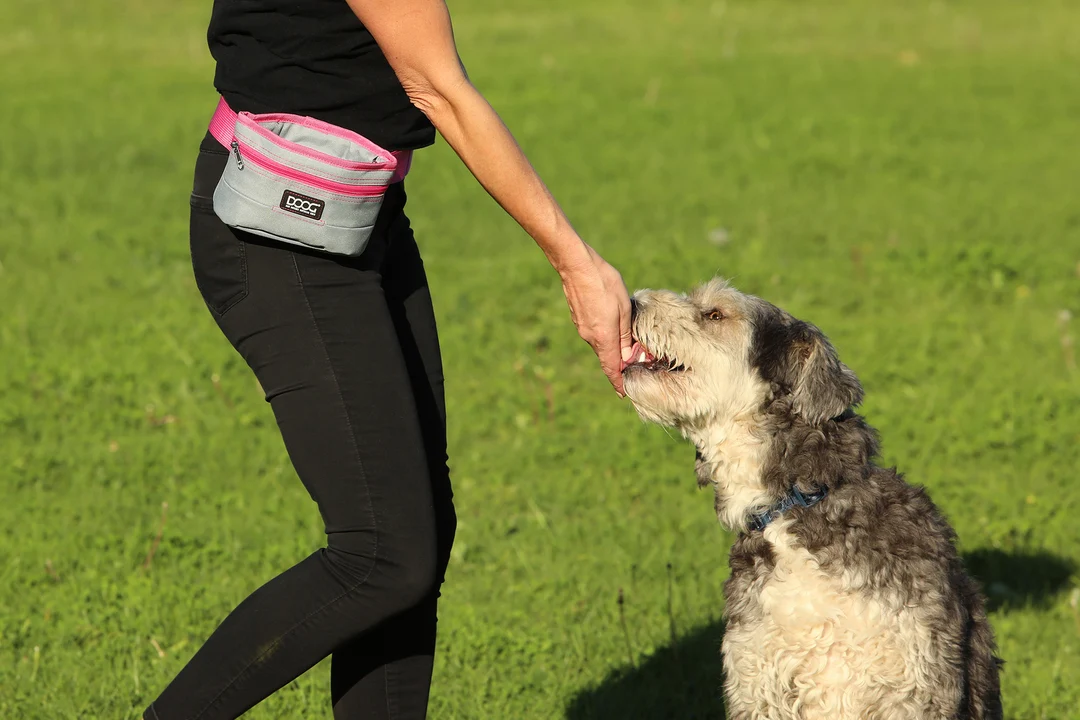
- Reward placement: where you deliver the treat helps shape position. Want a straighter sit? Deliver the treat right between your dog’s front paws. Want a tighter heel? Deliver the treat right next to your leg, not out in front.
- Clean reset: after you reward, pause for a beat and let your dog reset before the next rep. Rapid-fire cues can create frantic, sloppy reps.
When not to lure
Luring is a great tool, but it is not always the best starting point. If your dog is over-aroused, mouthy, or snatching treats, putting food right at nose level can ramp that up.
In that case, start by reinforcing calm treat-taking (treat to the floor, open palm delivery, or gentle treat tosses away from your body) and keep sessions short. Once manners improve, luring becomes much smoother and safer.
Common mistakes and fixes
Clicker training mistakes
- Mistake: Clicking and then fumbling for food for 5 to 10 seconds.
Fix: Have treats ready in a pouch or pocket. Click should predict fast reinforcement. - Mistake: Clicking when your dog is not actually doing the target behavior.
Fix: Decide what you are clicking for before you start. If needed, record a short video of your session to check timing. - Mistake: Using the clicker to get your dog’s attention.
Fix: The click marks behavior, it does not call the dog. Use a name cue or kissy noise to re-engage, then click the moment they look back.
Lure-and-reward mistakes
- Mistake: The treat becomes a permanent remote control.
Fix: Fade the lure quickly. After a few successful reps, try the same hand motion with an empty hand, then reward from the other hand or your pouch. - Mistake: Moving the lure too high or too fast, causing jumping or nibbling.
Fix: Slow down and keep the lure close to the dog’s nose. Reward polite manners and pause if teeth hit skin. - Mistake: Not adding a cue at the right time.
Fix: Add your verbal cue after your dog is predictably doing the motion. Say the cue once, then lure, then reward. Over time, reduce the lure.
Teach sit two ways
Option A: Lure-and-reward sit
Hold a treat at your dog’s nose.
Slowly lift the treat up and slightly back toward their forehead. Many dogs will tuck into a sit.
If your dog backs up or jumps, lower the lure, slow down, and keep the treat closer to the nose instead of pulling it up and away.
The moment their butt hits the floor, say "Yes" (or click if you are using a marker) and give the treat.
Repeat a few times, then start using the same motion with an empty hand and reward from your other hand.
Option B: Clicker sit (capturing)
Hang out with your dog in a calm space. Treats in a pouch, clicker in hand.
Wait. When your dog sits on their own, click the instant the butt hits the floor. It does not have to be perfectly centered in front of you at first. You are teaching the idea that sit makes the click happen.
Deliver the treat.
After several reps, your dog will start offering sits more often. Then you can add the cue "Sit" right before you expect it.
Both work. Capturing is often calmer, while luring is often faster. Your dog gets to vote with their engagement.
Verbal marker or clicker?
Absolutely valid. A cheerful, consistent "Yes!" can do the same job as a clicker for many families. The main advantages of a clicker are that it is more consistent (we humans change our tone constantly) and more precise (it is always the same sound).
Also, the click is short and non-emotional, which can be easier for some dogs in noisy environments or when the handler gets chatty or unintentionally adds extra emotion to a marker word. If your dog is noise-sensitive, a verbal marker might be the kinder option.
Safety and wellness notes
Training should not hurt. If your dog seems uncomfortable sitting, lying down, or taking treats, it is worth checking in with your veterinarian. Dogs with orthopedic pain, dental disease, nausea, or anxiety may look stubborn when they are actually struggling.
Also, be mindful of treat calories. Use tiny, soft treats, and subtract from meals if needed. My rule of thumb is: pea-sized is plenty for most training reps.
Quick decision guide
- New puppy learning basics: Start with lure-and-reward, add a marker (click or "Yes"), fade the lure quickly.
- Adolescent dog easily distracted: Clicker (or marker) can sharpen communication, with occasional luring to reset.
- Shy rescue dog: Gentle luring to build confidence, then click or mark brave choices like looking at you or stepping onto a mat.
- Trick training and sports skills: Clicker training for shaping, lures as a shortcut when appropriate.
FAQ
Will my dog obey without treats if I start with luring?
Yes, if you fade the lure and teach the cue properly. Treats do not have to disappear forever, but they should become intermittent and paired with real-life rewards (sniff breaks, toys, praise, permission to greet).
Is clicker training better for stubborn dogs?
Often, stubborn dogs are confused, under-motivated, or over-aroused. Clicker training can help because it clarifies exactly what earns reinforcement, but you still need good rewards, short sessions, and realistic criteria.
Can I use a clicker and lure at the same time?
You can, but be intentional. A common combo is: lure the first rep or two to show the idea, then switch to clicking the behavior as your dog does it, and keep the treat out of sight between reps.
What if my dog is afraid of the clicker?
Muffle it in your pocket, try a softer clicker, or switch to a verbal marker. You can also recondition the sound by clicking quietly and tossing a treat away from you so your dog feels less pressure.
Do I have to carry a clicker forever?
No. Many people use the clicker heavily in the learning phase, then switch to a verbal marker, then rely more on real-life rewards and occasional treats to keep the behavior strong.
The bottom line
If you want my honest, day-to-day answer: the best method is the one that keeps your dog engaged and keeps you consistent. Luring is an easy on-ramp. Clickers are fantastic for clarity and precision. Most families do best when they learn both and then mix them like tools in a well-stocked kitchen.
If you are not sure where to start, begin with a lure for a couple of quick wins, add a marker (click or "Yes"), and aim to fade the visible treat within a few short sessions. Your dog will learn faster, and you will feel more confident with every rep.