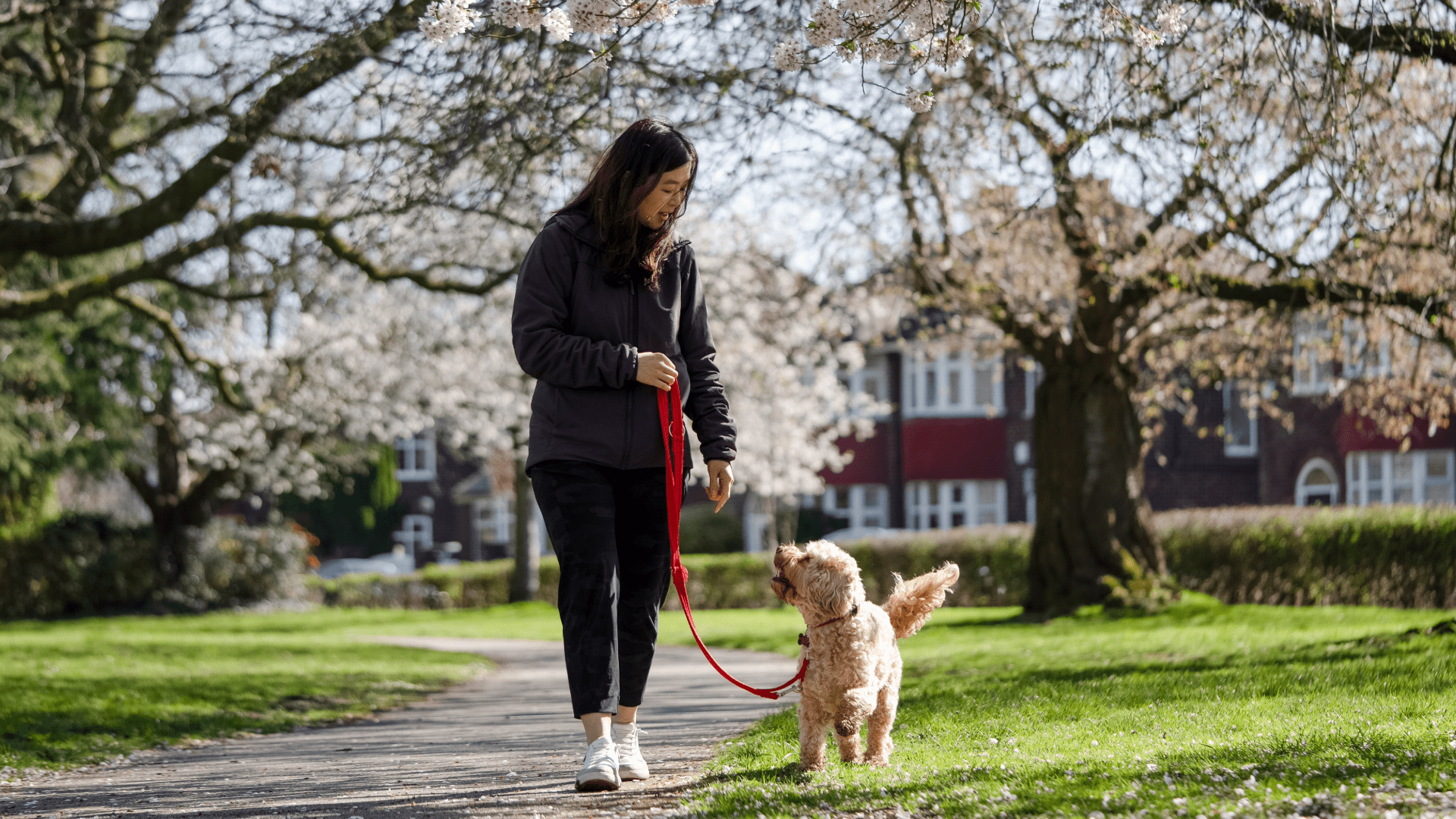
Loose leash walking isn't about forcing your dog to stay glued to your knee. It's about teaching one simple skill: when the leash is loose, we move forward. When the leash is tight, we pause, reset, and try again. That's it. No yanking, no wrestling match, no “my dog is stubborn” spiral.
As a trainer and former vet tech, I'll tell you the truth I wish every new dog parent heard on day one: pulling is normal dog behavior. Dogs walk faster than we do, the world smells amazing, and most dogs accidentally learn that pulling works because it gets them where they want to go. Our job is to gently flip that lesson.
What it looks like
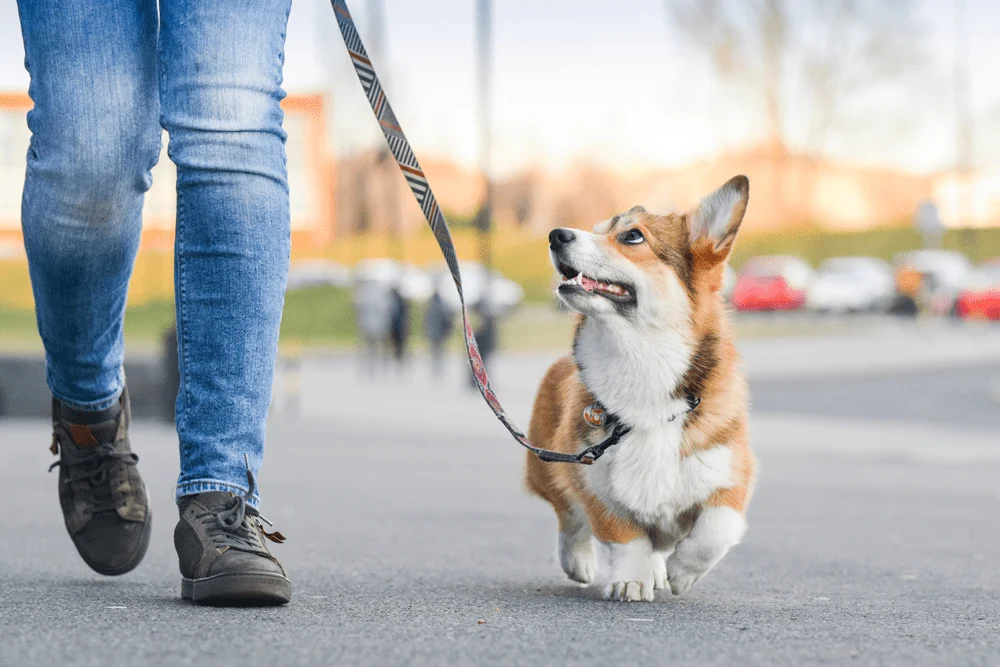
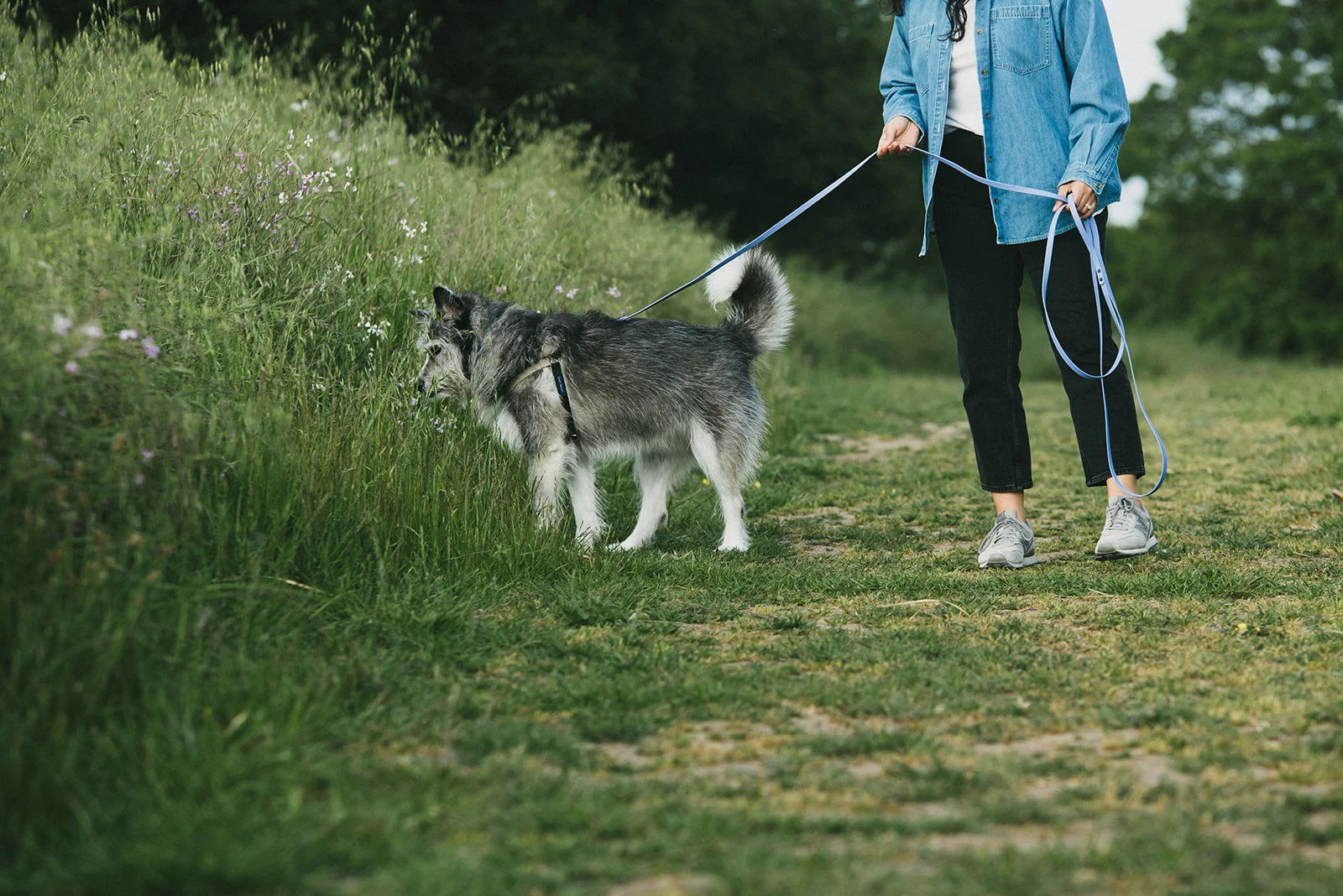
A loose leash walk means the leash makes a relaxed J shape most of the time. Your dog can be slightly ahead, beside you, or occasionally sniffing as long as they aren't dragging you. It's different from a formal “heel,” which is a focused position right at your side and takes more precision.
- Loose leash walking: everyday walking skill, relaxed, flexible position.
- Heel: structured, sport-style position, higher focus, shorter duration.
If you want one forever skill, prioritize loose leash walking first. You can always layer on a fancy heel later.
Why dogs pull
Most pulling boils down to one of these:
- They're rewarded by forward motion. Every time your dog hits the end of the leash and still reaches the bush, the squirrel trail, or the park, pulling gets reinforced.
- They're over-aroused. Excitement, anxiety, frustration, or “OMG DOG FRIEND” energy makes impulse control evaporate.
- They need more enrichment. A dog who's been bored all day is going to treat the walk like a full-contact sport.
- They're uncomfortable or in pain. Medical discomfort (orthopedic pain, skin irritation, harness chafing, nail overgrowth, GI upset, and more) can change behavior on walks.
The big takeaway: you can't out-muscle pulling long-term. You win by changing the consequences. Loose leash equals access to the environment. Tight leash equals a pause and a reset.
Best gear
Gear won't train your dog for you, but the right setup can make training easier and safer while you teach the skill.
My go-to kit
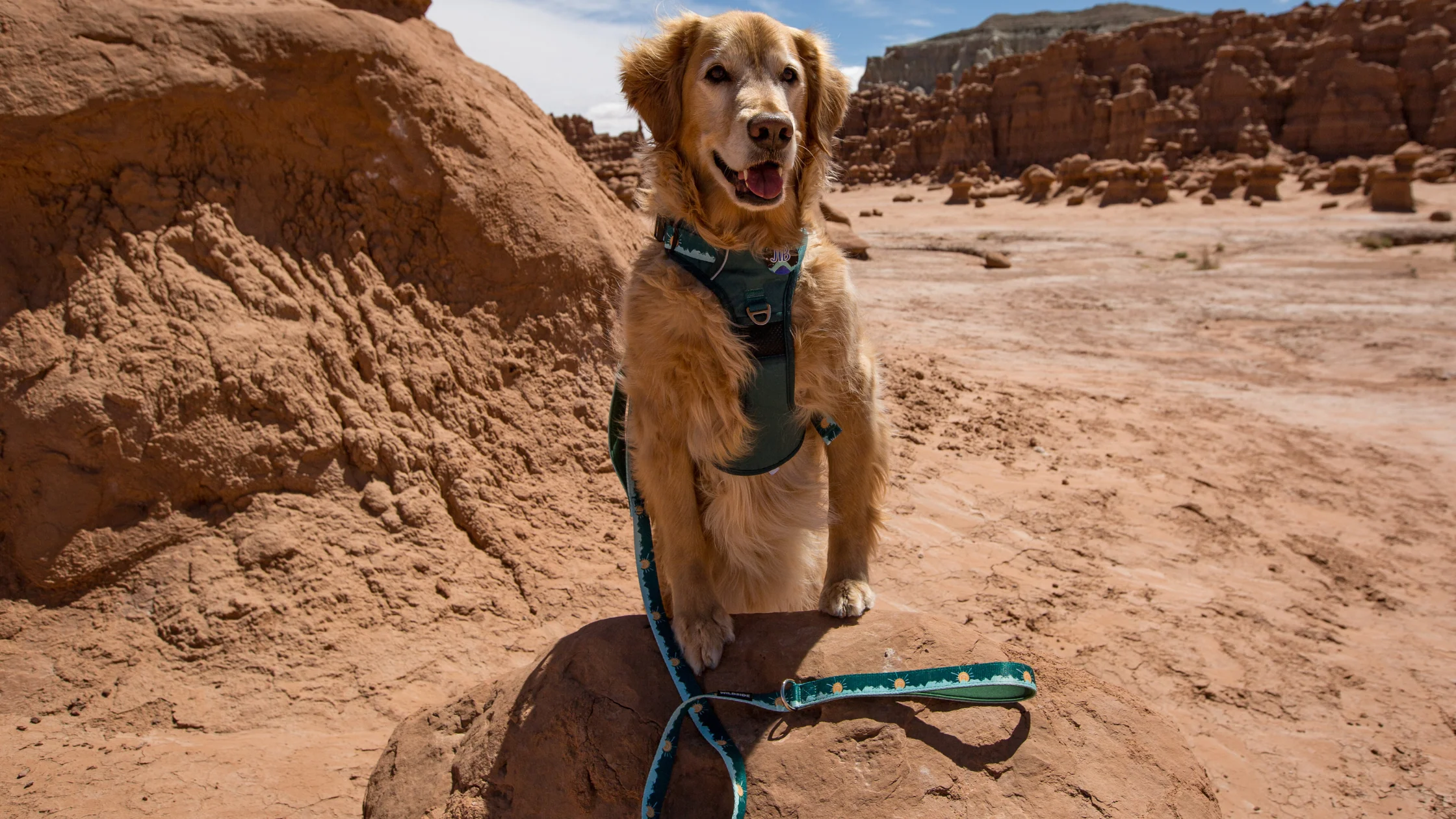
- Front-clip harness (Y-shaped if possible): can reduce pulling leverage for many dogs and helps you guide the chest instead of the neck.
- Standard 6-foot leash: long enough for comfort, short enough for control.
- Treat pouch (or pockets): you need fast access to rewards.
- High-value treats: soft, smelly, pea-sized.
What to avoid (most of the time)
- Retractable leashes: they often create constant tension, which can teach constant pulling, and the thin cord can cause injuries.
- Choke chains and prong collars: they may suppress behavior through discomfort without teaching a new skill, and they can increase stress, frustration, or reactivity in some dogs.
- Head halters: can be helpful for strong pullers when introduced slowly and used correctly, but many dogs need a careful conditioning plan to reduce pawing and avoid neck strain.
Fit matters: A harness shouldn't rub the armpits, shift dramatically when the dog turns, or restrict shoulder movement. If you're seeing hair loss, redness, or constant scratching at the straps, swap styles.
Before you train
Loose leash walking is easier when your dog's tank isn't overflowing with energy and stress.
Two-minute reset
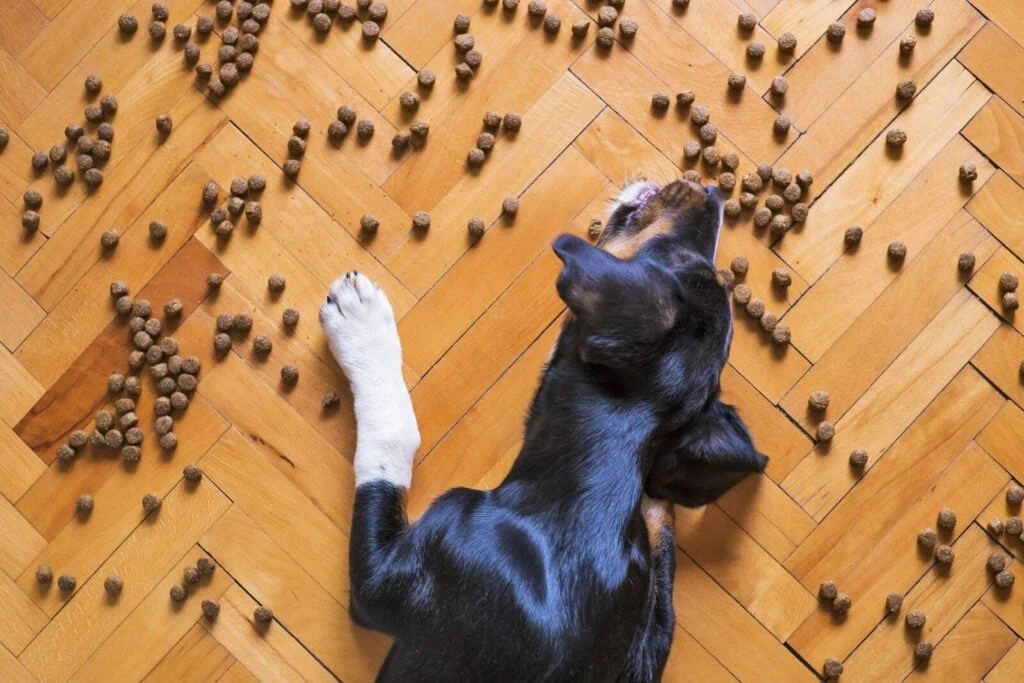
- Scatter feeding: toss 10 to 20 treats in the grass or on a snuffle mat to lower arousal and engage the nose.
- One easy cue: “touch” (nose to hand) or “find it” (treat on the ground) to get the brain online.
- Start calm: if the leash clips on and your dog instantly launches, wait for a split second of stillness, then clip. Calm makes the walk happen.
Teach it step by step
Here's the training plan I use most with clients. It's simple, but it isn't always easy. Consistency is what makes it work.
Step 1: Leash pressure game
We want your dog to feel light leash pressure and choose to come back toward you instead of pulling harder.
- In a quiet room, hold the leash with a bit of slack.
- Let your dog drift to the end until there's gentle tension.
- The moment they turn even slightly back toward you, mark (a click or a “yes”) and feed a treat by your leg.
- Repeat until your dog whips back happily when they feel tension.
This is the foundation for real walks. It turns “tight leash” into a cue to reconnect.
Step 2: Reward the zone
Pick a side you want your dog to generally walk on. Any time they're in that zone with a loose leash, pay them.
- Take one step. If the leash stays loose, mark and treat.
- Gradually take two steps, then three.
- If your dog forges ahead and tightens the leash, pause. Wait for them to reorient back to you, then mark and treat.
Keep sessions short. Think 3 to 5 minutes, a few times a day.
Step 3: Driveway to sidewalk
Dogs often don't generalize well. “We can do it in the kitchen” doesn't mean “we can do it past the neighbor's cat.” Change locations slowly.
- Practice in your hallway, then front entry, then porch, then driveway.
- Only add the sidewalk when you can get 5 to 10 loose-leash steps in your driveway.
- Reward more often outside. The environment is competing with you.
Outdoor drills
Once you're outside, these are my favorite practical drills because they work in real life, not just in training fantasies.
1-2-3 treat
This gives your dog a predictable rhythm so they stop scanning for chaos.
- Say “one, two, three” as you walk.
- On “three,” deliver a treat by your leg.
- Repeat as you pass distractions like driveways, bikes, or barking yards.
Over time, you can fade it to “1-2-3” only when needed.
Let's go U-turn
When something appears that will trigger pulling or lunging, don't wait for the explosion.
- Say “let's go!” in a cheerful voice.
- Turn 180 degrees and move away, feeding treats as you go.
- When your dog relaxes, you can arc back toward your route.
This is management and training. It prevents rehearsal of the bad moment and teaches your dog that turning with you pays.
Sniff breaks as reward
Sniffing isn't “being naughty.” It's a biological need and a powerful reinforcer. For many dogs, it can also be decompressing.
- Ask for 3 to 5 loose-leash steps.
- Then say “go sniff” and walk with your dog to a bush on a loose leash.
- After 10 to 20 seconds, cue “let's go” and continue.
Used this way, sniffing becomes part of your training plan instead of the thing your dog drags you toward.
When your dog pulls
In real life, you need an instant, repeatable script. Pick one of these approaches and stick with it for a few weeks so your dog can understand the rule.
Option A: Stop like a tree
- The second the leash tightens, stop moving.
- Keep your arms close to your body and stay quiet.
- When your dog turns back or steps toward you and slack appears, mark and treat.
- Move forward again.
This is simple and effective, but it can feel slow at first. That's normal.
Option B: Penalty yards
- When the leash tightens, say “oops” (or any neutral word).
- Turn and walk 5 to 10 steps the other direction.
- Reward your dog for catching up with a loose leash.
- Try again toward your original goal.
This removes the reward of reaching the thing they were pulling toward.
Important: Avoid jerking the leash. We want your dog to learn from consequences, not from pain or surprise.
Handling tips
- Hold the leash safely: don't wrap it around your hand. If you need extra security, hold the handle in one hand and use the other hand as a guide on the leash, keeping a soft bend in your elbows.
- Keep your body predictable: reward by your leg, not out in front, so your dog learns that the sweet spot is near you.
- Waist leashes: they're convenient, but use them only if your dog won't lunge or yank you off balance. For many strong pullers, it's safer to hand-hold while you train.
- Walking two dogs: treat this as an advanced setup. Train each dog on loose leash skills separately first, then combine only when both are reliable.
Troubleshooting
Perfect until we leave
That's a distraction jump. You're asking for too much too fast. Reduce the challenge.
- Do 2 to 3 minutes of training just in the driveway and end the session.
- Use higher-value treats outside.
- Try walking at quieter times for a week to build skills.
Only pulls going home
Many dogs pull toward home because it's predictable and exciting in its own way (food, couch, toys). Flip the script.
- Practice reinforcement on the return trip too, not just the outbound leg.
- Add random sniff breaks on the way home.
- Do a few short out-and-back loops so the pattern isn't always straight home.
Zigzags and trips me
Zigzagging is often under-trained leash communication plus a dog who's trying to gather information fast.
- Use a 6-foot leash and keep a consistent side with treats delivered by that leg.
- Reinforce “touch” to bring them back into your lane.
- Give structured sniff breaks so they don't feel the need to sample everything at once.
Lunges at dogs or people
This isn't basic pulling. It's often reactivity or overexcitement and needs extra space and a plan.
- Increase distance immediately and use the “let's go” U-turn.
- Feed continuously while the trigger is in view at a safe distance.
- Avoid crowded routes while you build skills.
If lunging is intense, frequent, or scary, work with a qualified positive reinforcement trainer. For bite risk, consult a trainer who'll also coordinate with your veterinarian.
Pulls like crazy on a harness
Harnesses don't cause pulling, but some styles make it easier to lean. Try:
- A front-clip attachment instead of back-clip.
- A Y-shaped harness that doesn't restrict shoulders.
- More reinforcement for position and more sniff breaks as rewards.
When to end the session
Sometimes the most productive move is calling it early.
- If your dog is over threshold (can't take treats, scanning hard, exploding at tiny things), do a U-turn and head home with easy rewards.
- If you're getting frustrated, end on a small win: ask for a “touch,” reward it, then go inside.
- Short, successful reps beat one long walk where everyone practices being stressed.
2-week plan
If you feel overwhelmed, follow this and keep it boring. Boring is where skills grow.
Days 1 to 3: Indoors
- 2 short sessions per day teaching leash pressure and rewarding your chosen side.
- Goal: your dog reorients to you quickly when the leash tightens.
Days 4 to 7: Porch and driveway
- 1 to 2 mini sessions outside (3 to 5 minutes), plus your normal potty breaks.
- Goal: 10 to 20 steps with a loose leash in low-distraction areas.
Days 8 to 14: Sidewalk loops
- Choose a quiet route and keep walks short.
- Use “1-2-3 treat” past driveways and triggers.
- Add sniff breaks as rewards.
- Goal: fewer pulling episodes, faster recovery when pulling happens.
Progress marker I love: It's not “my dog never pulls.” It's “my dog pulls, then quickly fixes it because they know the game.”
Fading treats
You don't have to treat every step forever. At first, pay a lot because you're competing with the whole outdoors. As your dog improves, start spacing rewards out.
- Move from treat-every-step to every 2 to 3 steps.
- Then switch to a variable schedule: reward randomly, especially for great choices around distractions.
- Keep real-life rewards in the mix, like “go sniff,” greeting a friend, or continuing toward the park, as long as the leash stays loose.
Safety and health
- Puppies: keep walks age-appropriate. Lots of short skill sessions beat one long march.
- Senior dogs: consider arthritis and footing. If pulling suddenly appears, pain should be on your radar.
- Heat and humidity: pulling often gets worse when dogs are uncomfortable. Walk early, bring water, and keep sessions short.
- If pulling is new and sudden: schedule a veterinary check. Behavior changes can be medical.
FAQ
How long does it take?
Most dogs show noticeable improvement in 1 to 3 weeks with consistent practice, but reliable loose leash walking around big distractions often takes 2 to 3 months. The speed depends on your dog's history, environment, and how consistently pulling stops working.
Should I let my dog sniff?
Yes. Sniffing is enriching, and for many dogs it can be calming. The trick is teaching that sniffing happens on a loose leash, either naturally as you walk or as a reward with a cue like “go sniff.”
Is a no-pull harness OK?
Front-clip harnesses can be very helpful as long as they fit well and you still train. Avoid harnesses that cause rubbing, restrict shoulder movement, or twist your dog's body uncomfortably.
My dog is too strong. What do I do today?
Use management while you train: a front-clip harness, shorter routes, quieter times of day, and more sniff breaks. If you feel unsafe, work with a certified positive reinforcement trainer for hands-on help.
Mindset shift
Loose leash walking isn't about winning a power struggle. It's about building a habit through repetition and rewards. Every loose step is a deposit in the “calm walking” bank.
If you're in the thick of it, I promise you're not alone. I've trained this skill with everything from tiny terriers to strong adolescent shepherd mixes. Start small, reward generously, and keep the rule consistent: loose leash makes the walk happen.