Spot separation anxiety early and help your dog feel safe alone using gentle, practical desensitization and daily routines that actually work.
There are a few sounds that can turn even a normally confident dog into a shaking, drooling, trying-to-climb-into-you little creature. Thunder. Fireworks. Construction booms. A car backfiring at just the wrong moment. If your dog panics when the sky rumbles or the neighborhood lights up, you are not alone, and your dog is not being “bad” or stubborn.
I grew up in a house that was basically a revolving door of foster dogs. Noise fear showed up a lot, especially in dogs with unknown backgrounds. Later, as a vet tech, I saw how often these issues spiraled into full-blown phobias because families were given the wrong advice, or no plan at all. The good news is you can do a lot with smart setup, supportive handling, and a little practice on ordinary days. And the earlier you start, the better. Noise fears often get worse over time without help, especially with repeated fireworks seasons.
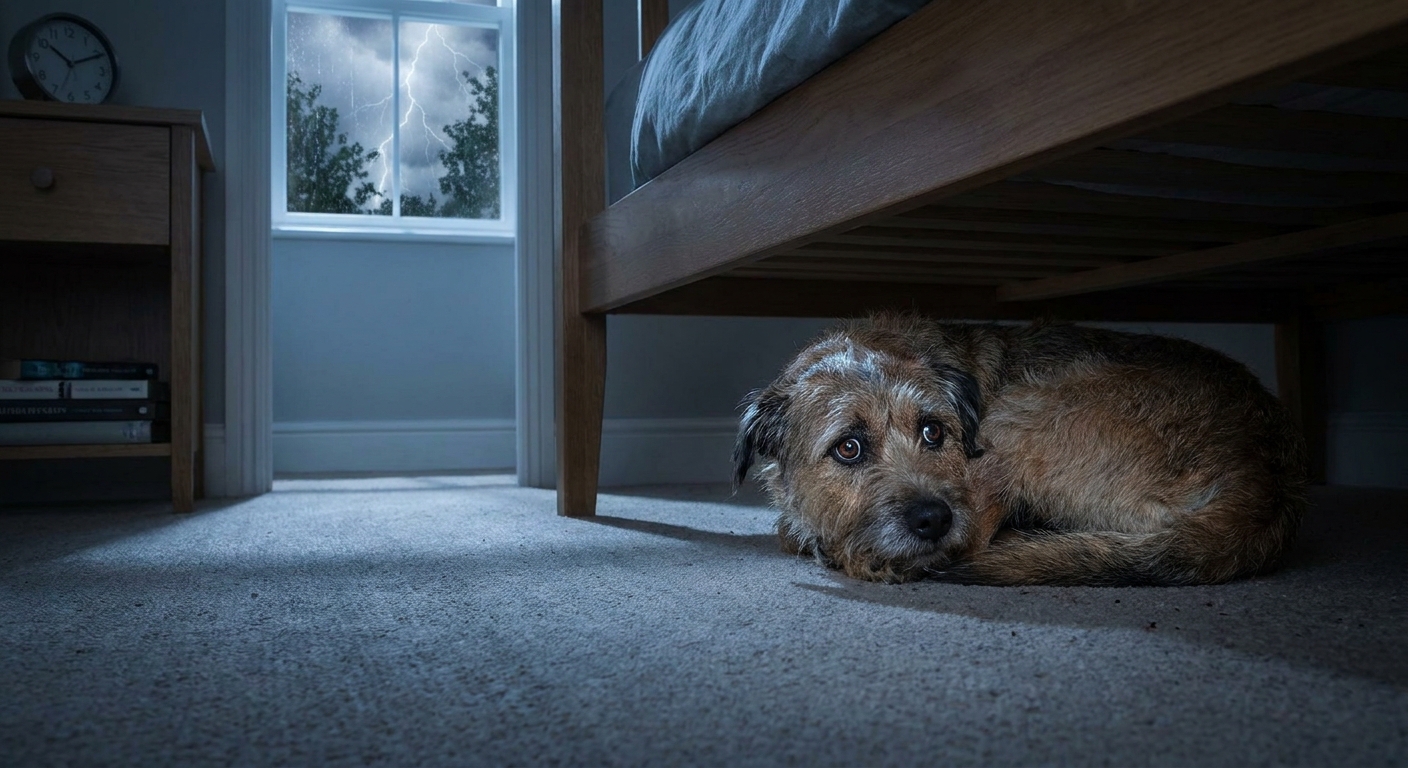
Noise fear vs separation anxiety: why it matters
Thunderstorm and fireworks fear is usually about the sound and sensations of the event, not about you leaving. It can look similar to separation anxiety because both can involve panting, pacing, whining, drooling, destructive behavior, or attempts to escape.
Here is a quick way to separate them:
- Noise fear tends to happen during storms, fireworks, gunshots, or sudden booms. Your dog may start reacting before you hear anything because they notice low, distant rumbles, flashes, or shifts in weather like pressure changes.
- Separation anxiety happens when the dog is separated from a specific person or attachment figure. The trigger is the absence, not the noise.
It can also be both. For example, a dog might be okay alone on a normal day, but panic if fireworks start while they are home by themselves. Either way, the plan below focuses on noise fear and phobia management.
What fear looks like (and when it is an emergency)
Signs of noise fear range from mild to severe:
- Seeking you out and leaning on you
- Trembling, tucked tail, ears pinned back
- Panting, drooling, yawning, lip licking
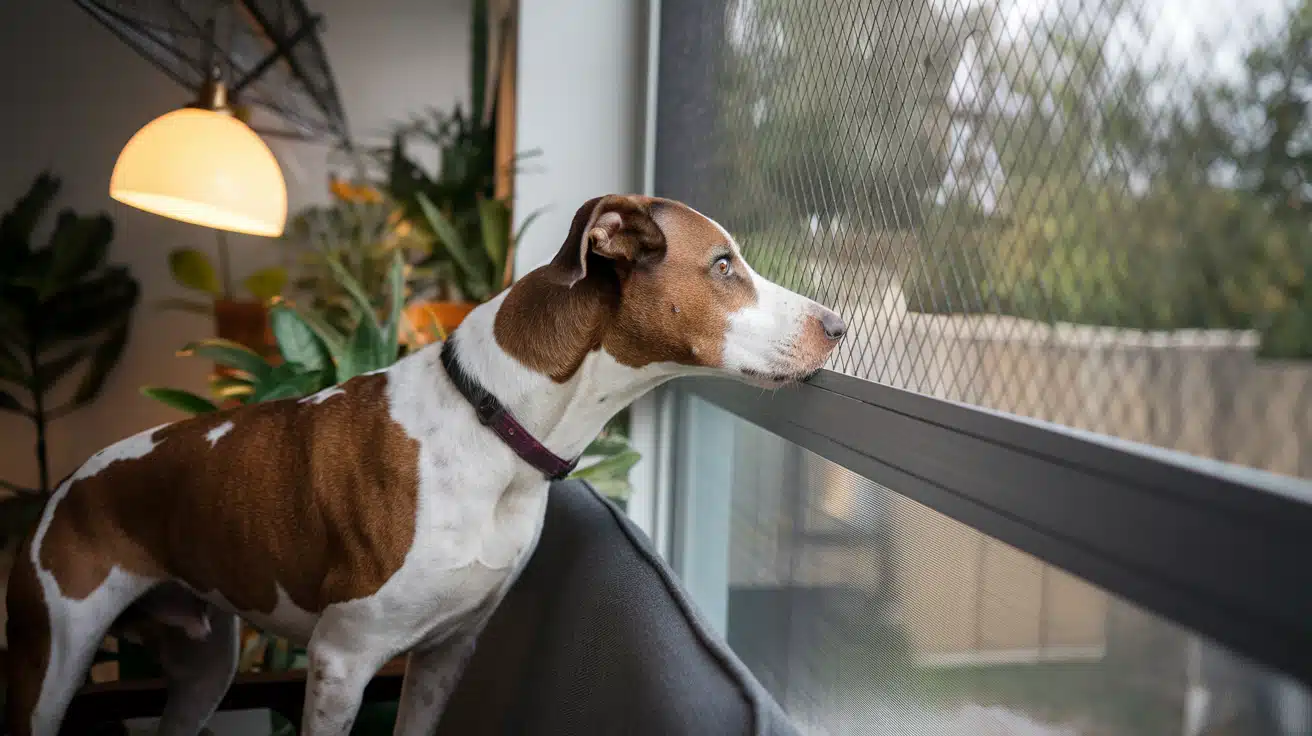
- Pacing, inability to settle, scanning windows
- Hiding in closets, bathrooms, bathtubs, under beds
- Barking, howling, frantic digging
- Trying to escape through doors, fences, crates, or windows
- Loss of appetite or refusing treats
Seek urgent veterinary help if your dog collapses, has trouble breathing, has blue or pale gums, has continuous vomiting, has a seizure, or becomes so frantic they are injuring themselves. During heavy fireworks seasons, emergency vets see lacerations, broken teeth, torn nails, and heatstroke from escape attempts. Safety comes first.
Your “before” plan: set your dog up for success
Noise events are easier when you plan like you would for a toddler who hates loud noises. You want a predictable safe spot, soothing sound, and a clear script for what you will do.
1) Build a quiet, dark den
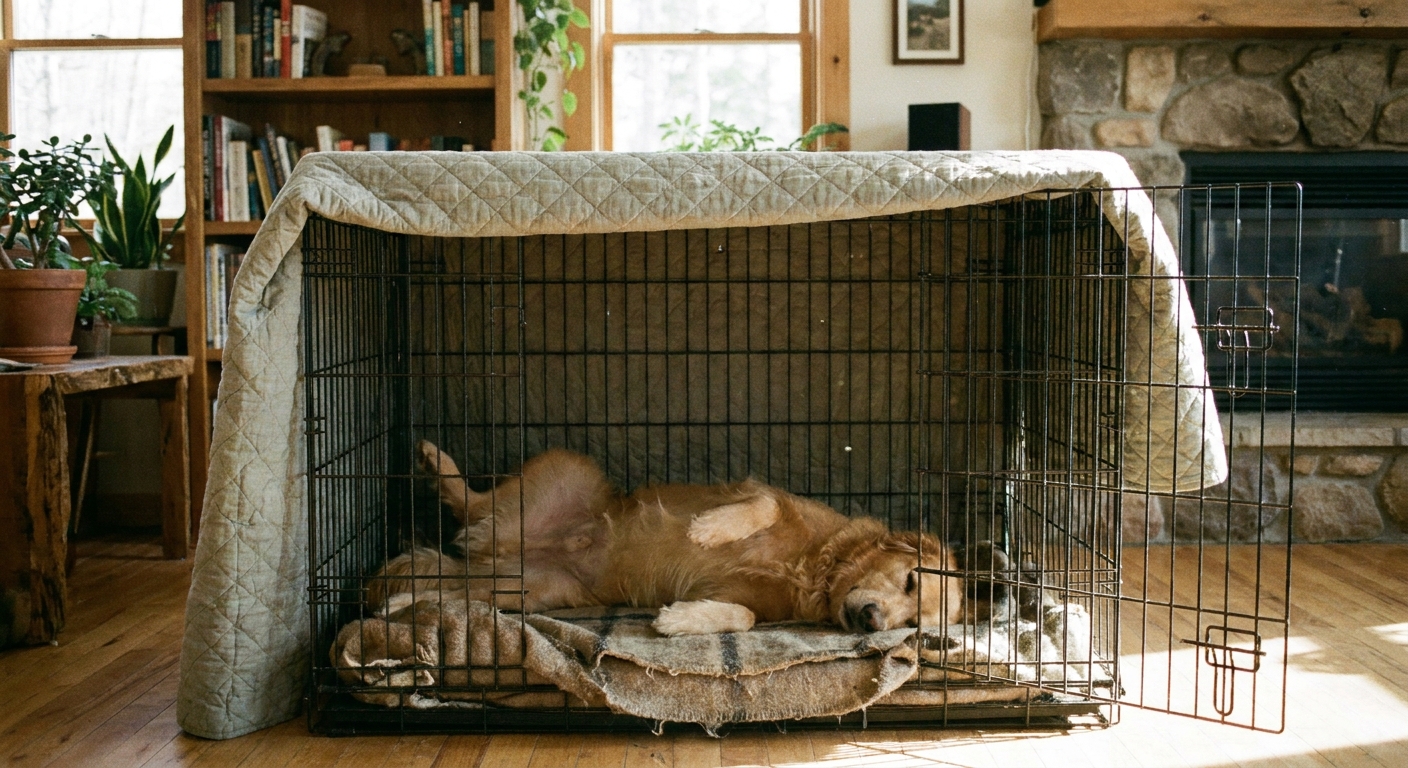
Many dogs cope best in small, enclosed spaces. Think: interior bathroom, closet, laundry room, or a covered crate if your dog already likes their crate.
- Choose an interior spot away from windows (flashes can be scary).
- Make it cozy with a bed, blankets, and a few safe chews.
- Keep it available year-round so it is not only “the scary room.”
- Do not shut them in unless they choose it and are calmer there. Some dogs panic if confined.
2) Mask the sound
Sound masking will not erase fireworks, but it can take the edge off.
- White noise (fan, air purifier, white noise machine)
- Calm music or audiobooks with steady volume
- Close windows and curtains to reduce both noise and flashing light
One practical tip from my treat-jar life: practice turning on your “storm soundtrack” on random calm days too. You want it to predict relaxing time, not panic time.
3) Prep enrichment that is easy to eat
When dogs are truly terrified, many will not eat. That is okay. But having options ready helps you catch the moments when they can take food and build a positive association.
- Stuffed frozen Kong or similar chew toy
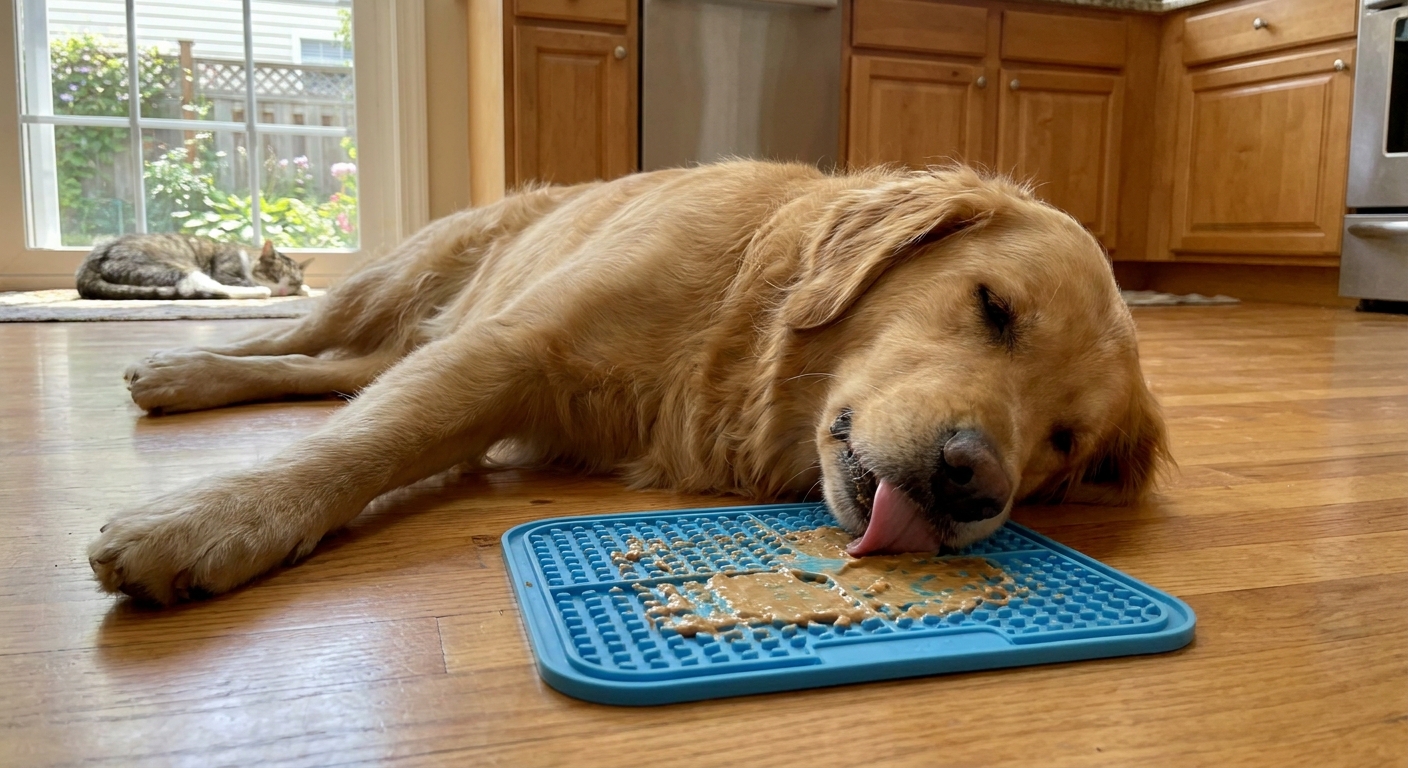
- Lick mat with plain yogurt or canned food (if your dog tolerates it)
- Scatter feeding in the den (sniffing is naturally regulating for many dogs)
- Long-lasting chews your dog handles safely
Quick guardrails: if you use peanut butter, make sure it is xylitol-free. If dairy upsets your dog, skip yogurt. If your dog gulps or guards chews, stick with softer lick-based options and supervision.
4) Make your dog “escape-proof” before big nights
- ID check: collar tag readable, microchip info up to date.
- Leash protocol: potty breaks on leash even in a fenced yard if fireworks are likely.
- Doors secured: remind guests, use baby gates, keep the front door routine tight.
Dogs who never bolt on normal days can bolt when panicked.
What to do during thunder or fireworks
Your goal in the moment is not training obedience. It is reducing distress and preventing panic practice.
1) Get ahead of the first boom if you can
If you know storms are coming or fireworks are scheduled, set up early. Turn on sound masking, close curtains, offer a potty break on leash, and guide your dog toward their den with treats.
2) Stay calm, but do not ignore fear
One of the most persistent myths is that comforting will “reinforce” fear. Fear is an emotion, not a behavior your dog is choosing for rewards. If your dog seeks you out, it is okay to offer calm support.
- Sit near them
- Speak softly
- Offer gentle petting if they want it
- Keep your own movements slow and predictable
If your dog does not want to be touched, respect that. Some dogs prefer proximity without contact.
3) Let your dog choose the safe spot
Encourage the den, but do not force it. Forcing a terrified dog into a crate or small room can increase panic and create a new fear of the crate itself.
4) Use “find it” if your dog will eat
Scatter a handful of small treats in the den or on a snuffle mat and say “find it.” Sniffing is naturally regulating for many dogs, and it gives them something to do besides listen for the next boom.
5) Keep it boring afterward
When the event ends, keep the lights low, maintain sound masking for a bit, and let your dog decompress. Many dogs stay jumpy for hours after.
If you cannot be home
Not everyone can rearrange life around storms or fireworks. If you will be away, set your dog up like you would for a nervous toddler: safe, contained, and with the scary parts reduced.
- Keep your dog indoors, never out in the yard “to get used to it.”
- Use an interior room with curtains closed and sound masking on, and leave the den available.
- Leave safe enrichment if your dog is likely to use it, and skip anything they could destroy and swallow.
- If your dog is severe, consider a trusted sitter or daycare that can follow your plan.
- A camera can help you check in, but do not rely on it as a safety net if your dog is known to panic and injure themselves.
Practice on ordinary days: the gentle training plan
Management helps tonight. Training helps next time. The most effective long-term approach is usually a combination of desensitization (very low exposure) and counterconditioning (pairing the noise with something your dog loves).
Step 1: Choose good audio and a tiny starting point
Use a high-quality recording of thunder or fireworks. Start at a volume so low your dog shows zero signs of stress. If your dog is already scanning the room or refusing food, the volume is too high.
One important reality check: recordings help, but they do not perfectly mimic real life. Real storms and fireworks also bring vibration, pressure changes, and flashes. Go slowly and keep expectations realistic.
Step 2: Pair the sound with great stuff
Turn the sound on, feed tiny high-value treats one after another, then turn the sound off and stop the treats. The pattern should be: sound predicts snacks.
Step 3: Keep sessions short
Think 1 to 3 minutes, then done. Do this a few times a week when your dog is relaxed and you have bandwidth.
Step 4: Increase difficulty slowly
Only increase the volume when your dog is consistently loose-bodied and happily eating at the current level. If you see signs of stress, drop back.
Step 5: Add real-life elements later
Once the sound itself is easier, you can carefully add:
- Flashes of light (briefly turning a lamp on and off at a distance)
- Moving to different rooms
- Playing the sound while your dog enjoys a lick mat in their den
For dogs with severe panic, work with a qualified positive reinforcement trainer. Timing and pacing matter a lot.
Common mistakes that make noise fear worse
- Punishing or scolding: This increases stress and can make your dog associate you with the scary event.
- Forced exposure: Dragging a dog outside to “see there is nothing to fear” often backfires. Flooding can worsen phobias.
- Crating a panicked dog: Dogs can break teeth and nails trying to escape a crate during fireworks.
- Waiting until the boom to start a plan: Once adrenaline is high, learning and eating are harder. Prep early.
- Assuming your dog will outgrow it: Many dogs worsen over time without support, especially with repeated fireworks seasons.
When to talk to your vet about anxiety help
If your dog is trembling, drooling, trying to escape, or cannot recover for hours, it is time to ask your veterinarian about medical support. Medication is not a last resort or a failure. For many dogs, it is the bridge that makes training possible.
Two safety notes I say all the time in clinic:
- Do not give human medications, including sleep aids or pain relievers, unless your veterinarian specifically tells you to. Some are dangerous for dogs, even at small doses.
- If medication is discussed, ask about options that reduce anxiety, not just ones that sedate or limit movement. You want your dog to feel safer, not simply quieter.
Your vet may discuss options such as:
- Situational meds given before storms or fireworks
- Daily anti-anxiety medication for dogs with frequent events or generalized anxiety
- Supplements that may help mild cases (effects vary)
Ask your vet how early to give meds, what side effects to watch for, and what to do if the event starts unexpectedly. Also mention any health conditions, especially heart disease, liver disease, or seizure history.
Tools people ask about
Pressure vests
Some dogs relax with a well-fitted pressure wrap or vest. Others do not care. Introduce it on calm days with treats, and never put it on for the first time mid-panic.
Ear protection
Dog earmuffs can help certain dogs if they are conditioned slowly and the fit is safe. Many dogs will not tolerate them without training.
Pheromone diffusers and sprays
These can be a helpful add-on for mild to moderate anxiety, especially when combined with a den and sound masking. They are rarely enough for severe phobia on their own.
CBD and hemp products
People ask about CBD constantly. The evidence is mixed, product quality can vary, and dosing is not one-size-fits-all. If you want to try it, talk with your veterinarian first, especially if your dog takes other medications.
What to skip
Avoid any trainer or product that promises to “stop fear instantly” using corrections, startling noises, or punishment. Fear needs safety and gradual change, not intimidation.
Quick checklist for storm and fireworks nights
- Potty break on leash before it starts
- Close curtains, dim lights
- Turn on fan or white noise and calming audio
- Open access to the den
- Offer lick mat or stuffed toy if your dog will eat
- Stay nearby and supportive
- Do not punish, do not force exposure
- If your dog is extreme, follow your vet’s medication plan
FAQ
My dog suddenly became afraid of thunder. Why now?
Noise fear can appear after a single scary event, after repeated exposure, or as dogs mature. It can also be worse during illness or pain. If this fear is new or intense, it is worth a veterinary check to rule out medical contributors and to discuss anxiety support.
Should I give treats during fireworks even if my dog is scared?
If your dog will take food, yes. You are not rewarding fear. You are changing the emotional association by pairing the scary sound with something good. If your dog refuses food, focus on comfort and safety instead.
My dog hides in the bathtub. Is that okay?
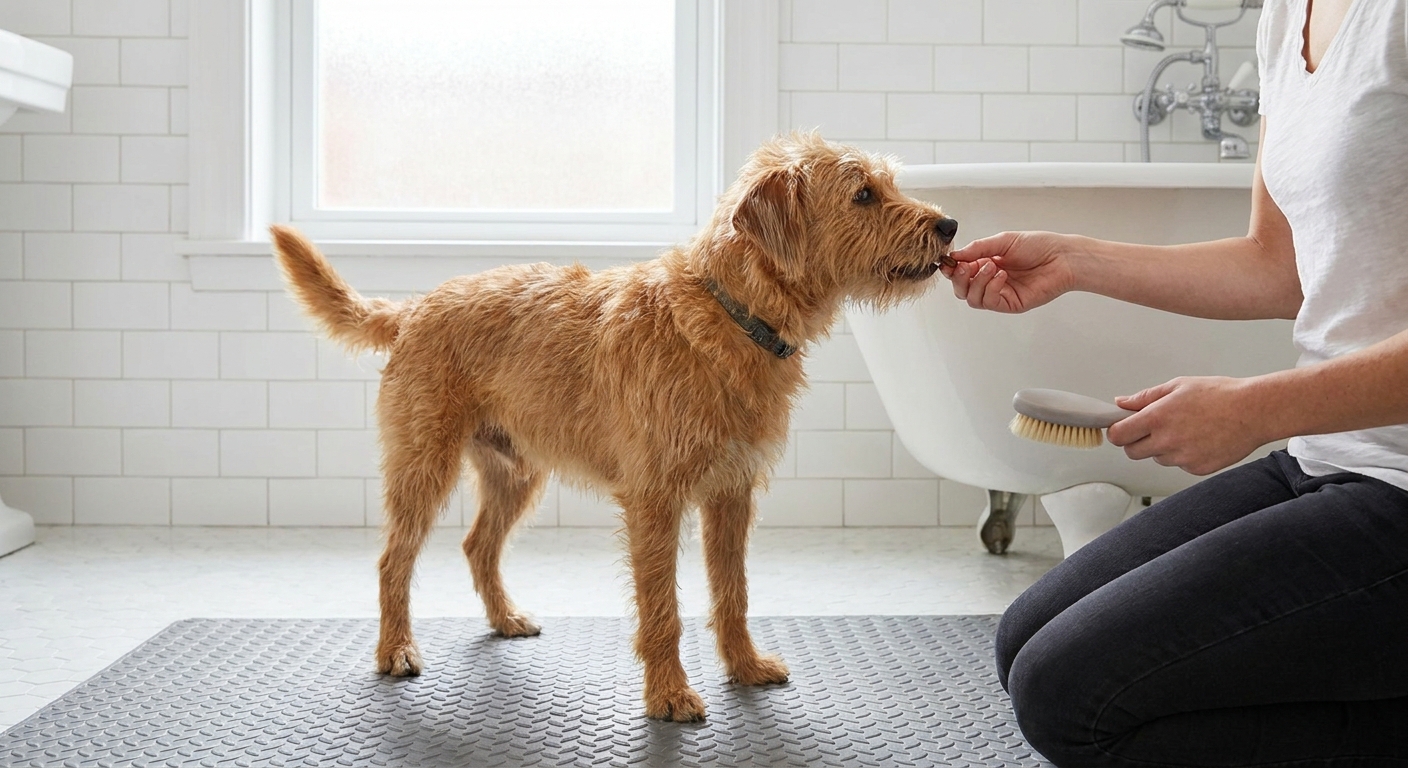
Often, yes. Bathrooms are usually interior and away from windows, which helps with both flashes and outside noise. They can also feel nicely enclosed for some dogs, even if the room itself is not perfectly quiet. Add a non-slip mat and a bed or blanket if your dog will tolerate it, and keep the door open if possible so they do not feel trapped.
How long does training take?
It depends on severity and how often your dog is exposed. Mild cases can improve noticeably in a few weeks of consistent practice. Severe phobias often need a longer plan, plus veterinary medication support and professional guidance.