A practical, vet-tech-informed guide to dog poop colors, textures, and warning signs. Learn what’s normal, what’s not, and when to seek urgent care.
In my house, there’s a jar of treats on every counter and at least one dog hair stuck to my shirt at all times. There is also, without fail, one dog who treats our yard like a salad bar.
If your dog eats grass, you’re in very good company. It’s a very common dog habit that makes people nervous because it looks so odd. The good news is that for many dogs, occasional grass nibbling is normal. The important part is knowing when it’s just a quirky behavior and when it’s your dog trying to tell you something.
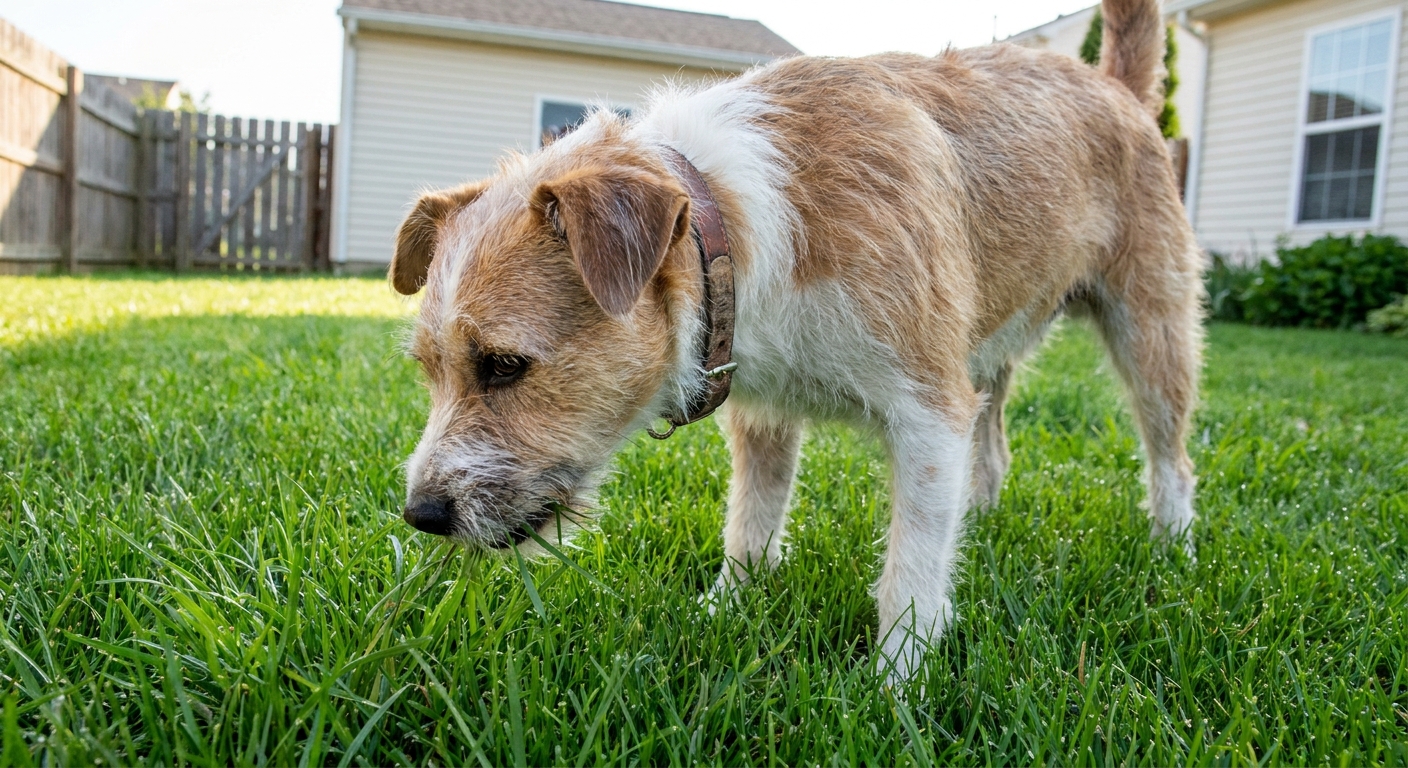
Is it normal for dogs to eat grass?
Yes, it can be completely normal. Plenty of healthy dogs occasionally graze, lick, or chew grass and never get sick afterward.
What makes grazing tricky is that it can mean different things for different dogs. Sometimes it’s a one-off snack. Other times it’s a clue that your dog feels nauseated, is dealing with tummy upset, is under-stimulated, or has learned the habit because it gets a reaction.
Why dogs eat grass
1) It’s simply interesting
Grass is smelly, textured, and full of exciting outdoor “news” from other animals. Many dogs mouth grass the same way they mouth sticks, pinecones, or leaves. It’s sensory enrichment, not automatically a deficiency.
2) Boredom or excess energy
I see this a lot in bright, busy dogs who need more to do, like many young, high-drive pups. If your dog heads straight for the lawn every time they go outside, especially after a day with less exercise or less attention, plant nibbling can be a self-made activity.
3) They feel nauseated
Some dogs graze when they feel queasy, and some of those dogs vomit afterward. The grass may irritate the stomach and trigger vomiting, which is why it gets associated with “they’re trying to make themselves throw up.”
Important detail: not all dogs vomit after eating grass, and not all dogs who vomit after eating grass were nauseated beforehand. It’s a clue, not a diagnosis.
4) Reflux or an empty stomach
A pattern I hear from owners: grass eating tends to happen early in the morning, late at night, or right before breakfast. In some dogs, an empty belly and extra stomach acid may correlate with nausea-like feelings that lead to grazing.
5) Diet change or mild digestive disruption
Switching foods, adding a new chew, getting into table scraps, or even a stressful change in routine can lead to mild GI upset. Grass eating may show up alongside softer stool, gurgly stomach sounds, lip licking, or a reduced appetite.
6) It has become a habit that gets reinforced
If grass eating reliably leads to a fun chase, a big reaction, or immediate access back inside, your dog may learn: “Eating plants makes things happen.” Dogs repeat what works.
7) They like the taste
Some dogs genuinely seem to enjoy certain grasses, especially young, tender spring growth. Think of it like a crunchy snack.
8) Pica or an underlying issue
If your dog is eating grass constantly, trying to eat lots of non-food items, or this is a sudden personality-level change, it can be part of pica or a medical or behavioral issue. Your vet can help you rule out problems like parasites, dietary intolerance, pancreatitis, or chronic GI disease, and your trainer can help if it looks compulsive or anxiety-driven.
Normal vs concerning
Use the pattern, the intensity, and what happens afterward to guide you. Here’s how I break it down with families.
Usually normal
- Occasional nibbles during a walk or quick yard break
- No change in appetite, energy, water intake, or stool
- No repeated vomiting or signs of abdominal pain
- Your dog is easily redirected and moves on
More concerning
- Sudden, frantic grazing or trying to eat any plant they can reach
- Repeated vomiting, vomiting that continues after the stomach is empty, or vomiting multiple times in a day
- Diarrhea, especially watery, frequent, bloody, or accompanied by lethargy
- Gagging, retching, drooling, or persistent lip licking and swallowing
- Refusing food (especially if your dog is normally food-motivated)
- Restlessness, praying position, hunched posture, or sensitivity when the belly is touched
- Potential exposure to lawn chemicals (fertilizer, weed killer) or unknown plants
If your dog is eating grass and acting otherwise normal, you can usually monitor at home. If grazing comes with the red flags above, it’s time to take it more seriously.
What to watch for after
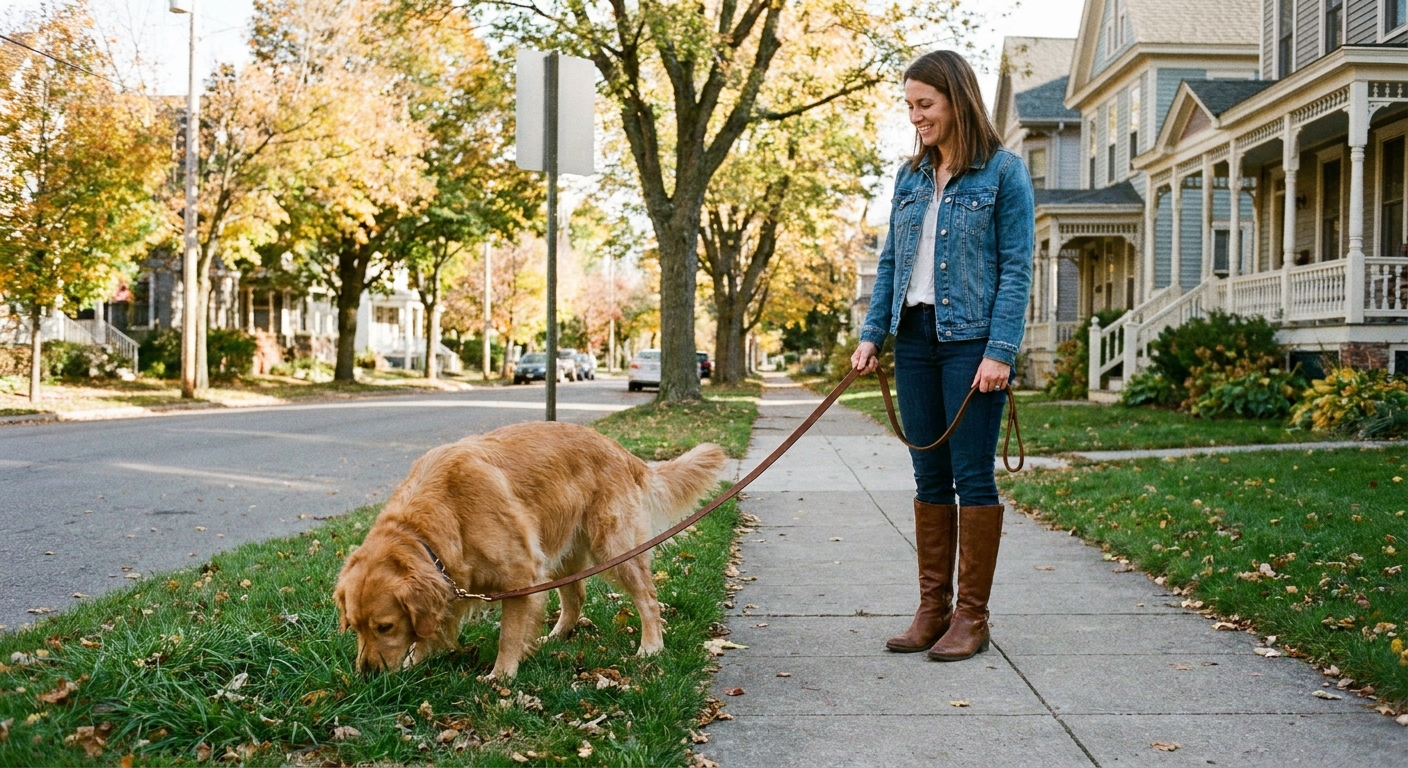
Grass eating is less about the grass itself and more about the what next. After your dog grazes, keep an eye out for the next 12 to 24 hours.
- Vomiting: A single vomit can happen. More than once, or repeated retching, is a bigger concern.
- Diarrhea: Any diarrhea that persists, becomes frequent, or includes blood should prompt a vet call.
- Energy level: Normal zoomies and naps are fine. Lethargy or weakness is not.
- Appetite and thirst: Skipping one meal can happen with mild nausea, but ongoing refusal to eat or reduced drinking needs attention.
- Choking or gagging: Long blades can get caught in the throat or irritate the back of the mouth. Persistent gagging, pawing at the mouth, or trouble swallowing needs urgent help.
Is it dangerous?
Grass itself usually is not the main danger. The risks tend to be what comes with grass:
- Lawn chemicals like herbicides, pesticides, and fertilizers
- Intestinal irritation that may lead to vomiting or diarrhea
- Foreign material hidden in grass (small sticks, mulch, and in some regions and seasons, foxtails)
- Contamination from other animals’ feces, which can spread parasites or bacteria in high-dog-traffic spots
I’m extra cautious about letting dogs graze on public lawns or unknown areas for this reason. Even if the grass looks fine, you cannot always know what was sprayed or what’s been left behind.
Also, not all greenery is dog-safe. If your dog is sampling random yard plants or landscaping, treat that as higher risk than plain grass and call your vet if you are unsure what they ate.
If you know your dog has been grazing in an area treated with chemicals, call your veterinarian or a pet poison helpline right away for guidance.
How to reduce grazing
You do not need to scold your dog for eating grass. Punishment can create stress around walks and often makes the behavior sneakier. Instead, focus on management and replacement behaviors.
Use a simple leave it
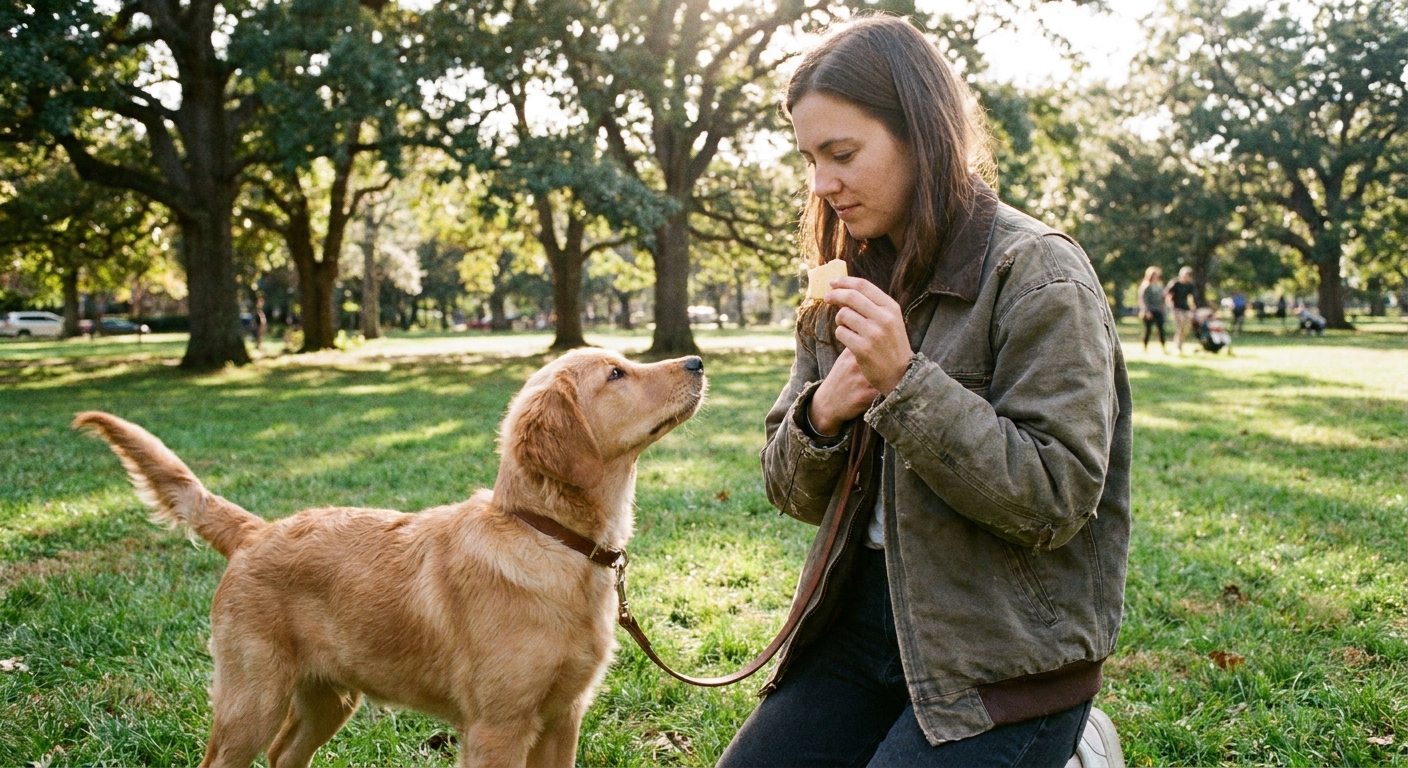
Teach a cue like leave it and pay well when your dog chooses you over the lawn. I keep this easy: say the cue once, then reward the moment your dog disengages from the grass. You’re building a habit of opting out.
Bring better options
For dogs who mouth grass out of boredom, a short sniffy walk plus a few training treats can go a long way. Try:
- Scatter a few treats in the grass you choose and cue find it to redirect safely
- Practice quick games: sit, touch, hand target, or a 5-second heel
- Offer a chew outlet at home (appropriate chew for your dog’s size and chewing style)
Add enrichment
Grass grazing is often a symptom of I need something to do. Add one or two small upgrades:
- Food puzzle or snuffle mat for one meal
- Short training session (3 to 5 minutes) once or twice daily
- Decompression walk where your dog can sniff without being rushed
Limit salad bar access
If your dog is in a phase of compulsive plant eating, management is kind:
- Leash up for potty breaks for a few days
- Walk in lower-temptation areas (sidewalks, gravel, mulched strips)
- Consider a basket muzzle only with proper conditioning if your vet or trainer agrees and the behavior is intense
Talk to your vet about patterns
If the grass eating happens mostly on an empty stomach, or you notice a clear link to vomiting, bring that pattern to your veterinarian. Sometimes small routine changes can help, like timing of meals, addressing reflux, or ruling out GI issues. Do not start supplements or medications without guidance.
When to call the vet
If you are ever unsure, calling your vet for advice is a smart move. I would especially call if any of the following are true:
- Your dog vomits more than once or cannot keep water down
- There is diarrhea that is severe, persistent, or contains blood
- Your dog seems painful (hunched posture, tense belly, restlessness, whining)
- Your dog is lethargic, weak, or not acting like themselves
- Grass eating becomes sudden and compulsive, as if they cannot stop
- You suspect exposure to lawn chemicals or your dog may have eaten an unknown plant
- Your dog is a puppy, senior, or has a chronic condition (these dogs can dehydrate faster)
- You notice choking, gagging, repeated swallowing, or pawing at the mouth
I would also book a non-urgent vet visit if the behavior becomes a daily pattern for several days, or if vomiting, diarrhea, appetite changes, or weight loss persist beyond 24 to 48 hours.
Trust your gut. This is weird for my dog is a valid reason to get help.
Quick FAQ
Do dogs eat grass because they have a nutrient deficiency?
Usually, no. Most dogs on a complete and balanced diet still eat grass sometimes. If you are worried about diet quality, discuss it with your veterinarian, but grass eating alone is not strong evidence of a deficiency.
Is it okay to let my dog eat grass?
Occasional nibbling in a chemical-free area is often harmless, but I still recommend gently discouraging it. You cannot control what has been sprayed on lawns, what other animals have left behind, or what plant your dog might grab next.
Why does my dog eat grass and then vomit?
They may have been nauseated first, or the grass may have irritated the stomach and triggered vomiting. Vomiting can also be coincidental. If it happens repeatedly, treat it as a medical pattern rather than a quirky habit and check in with your vet.
My dog suddenly wants to eat every plant. What does that mean?
A sudden change is a bigger red flag than a long-standing habit. It can signal GI upset, nausea, pain, anxiety, or a compulsive pattern. If your dog is urgently seeking plants or cannot be redirected, contact your veterinarian.
The bottom line
Most grass eating is just a normal dog behavior, like sniffing everything and insisting the couch is their couch. What matters is intensity and the symptoms that follow. If your dog is otherwise acting fine, you can redirect, add enrichment, and keep an eye on them. If plant eating comes with repeated vomiting, diarrhea, lethargy, pain, weight loss, or a sudden compulsive drive to eat greenery, it is time to call your vet.
And if you see me out on a walk, yes, I am the person carrying high-value treats to trade for whatever my dog thinks is growing in that ditch.