Spot separation anxiety early and help your dog feel safe alone using gentle, practical desensitization and daily routines that actually work.
If I had a dollar for every shoe I watched a foster puppy proudly parade around like a trophy, I could probably buy a very nice, very chew-proof couch. Destructive chewing is a common reason dogs get labeled as “bad” when they are really just doing normal dog things in the wrong places.
The good news: you can stop shoe and furniture chewing without yelling, chasing, or playing tug-of-war with a table leg. You just need a plan that matches why your dog is chewing, plus a little management while the new habit sticks.
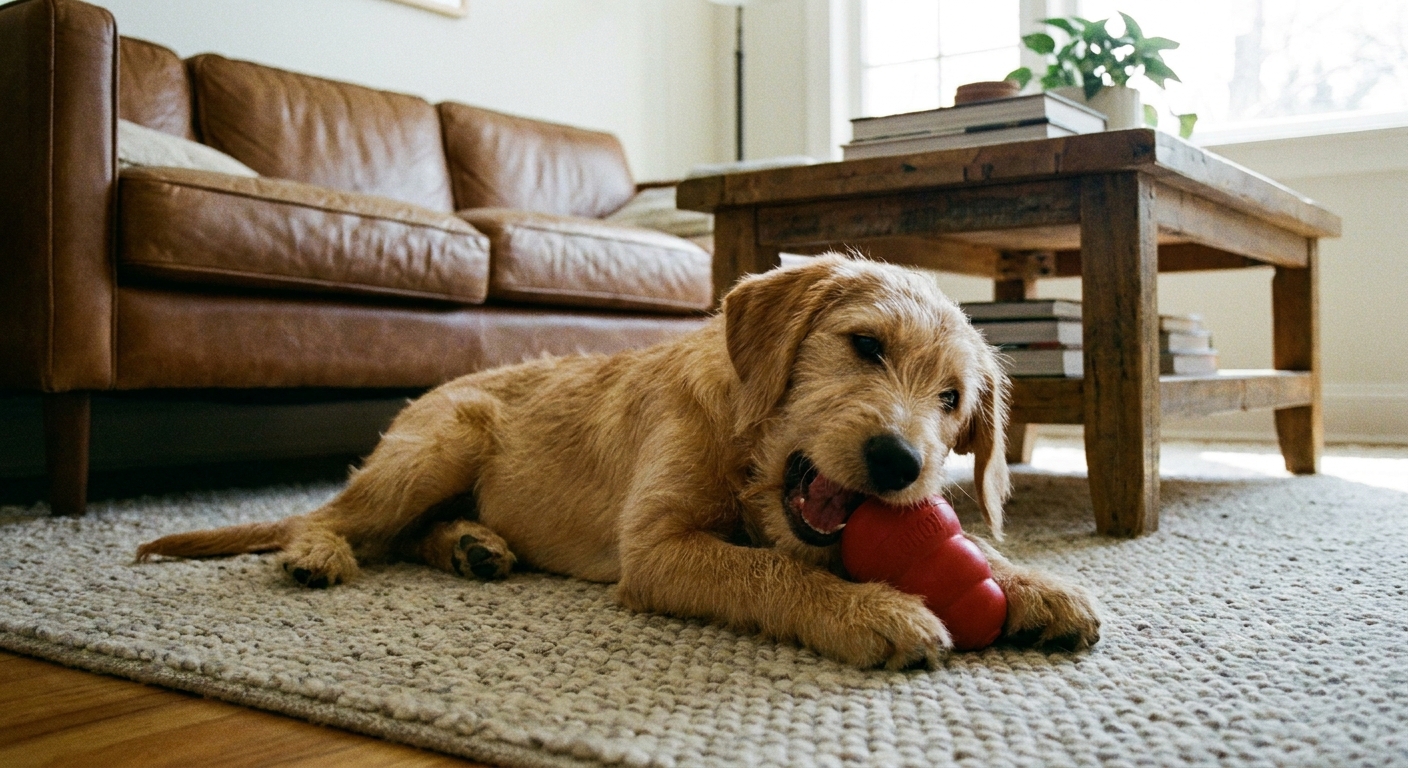
First, figure out why they chew
Chewing is a behavior with a purpose. If we solve the purpose, the shoe situation often improves quickly.
1) Puppy teething (often under 6 to 8 months)
Teething puppies chew because their mouths hurt and their brains are exploring the world with their teeth. You’ll often see:
- Chewing ramps up in waves, especially after naps
- Preference for edges, corners, and things with “give” (couch piping, table legs)
- General chewing whether you’re home or not
Key need: safe, satisfying chew outlets plus prevention, because puppies cannot make great choices yet.
2) Boredom or under-enrichment (any age, common in adolescents)
This looks like “my dog makes their own fun.” You’ll often see:
- Chewing in the evening witching hour or when the house is busy
- Grabbing shoes or pillows to initiate a game
- Chewing increases on days with less enrichment
Key need: more appropriate outlets for chewing, sniffing, foraging, and problem-solving, plus practice choosing the right items. More running helps some dogs, but many mouthy dogs improve fastest when you add brain work and nose work.
3) Alone-time chewing (possible separation anxiety or confinement stress)
If chewing happens mostly or only when your dog is alone, treat that as a different category. You might notice:
- Damage clustered near exits, windows, or your scent items (shoes, remotes, couch cushions)
- Drool on objects, frantic digging at doors, or broken teeth and torn gums
- Other signs of distress: whining, pacing, accidents, panting
Key need: an alone-time plan and safer management. If you suspect panic, it’s worth talking with a qualified behavior professional and your vet. Punishment can make anxiety worse and often increases destruction.
Management: stop the habit loop
Training is essential, but management is what keeps your home intact while training works. Every time your dog chews a shoe, the behavior gets reinforced because chewing feels good.
In trainer-speak, you will sometimes hear illegal chews (things you do not want chewed) and legal chews (approved chew items your dog is allowed to destroy). Your goal is to make illegal chews unavailable and legal chews easy to choose.
Put temptations away
- Shoes: use a closed closet, a lidded bin, or a baby gate to block the entryway.
- Kids’ toys: store in bins with lids. Dog-safe toys and kid toys often feel identical to dogs.
- Remote controls, glasses, controllers: keep on higher shelves for a few weeks while you retrain.
Block furniture targets
- Use gates or an exercise pen to limit access when you cannot supervise.
- Rearrange temporarily: turning a chair, moving a table, or blocking a couch corner with a storage ottoman can break the “chew routine.”
- Cover high-value corners: a tightly fitted couch cover or a folded blanket tucked in can reduce temptation during training.
If your dog keeps returning to the exact same spot, clean it well. Lingering saliva and “my own chew marks live here” scent can pull them back in. An enzymatic cleaner made for pet messes can help reduce that return-to-the-scene effect.
Management is not “letting them win.” It is keeping your dog from practicing the exact behavior you’re trying to eliminate.
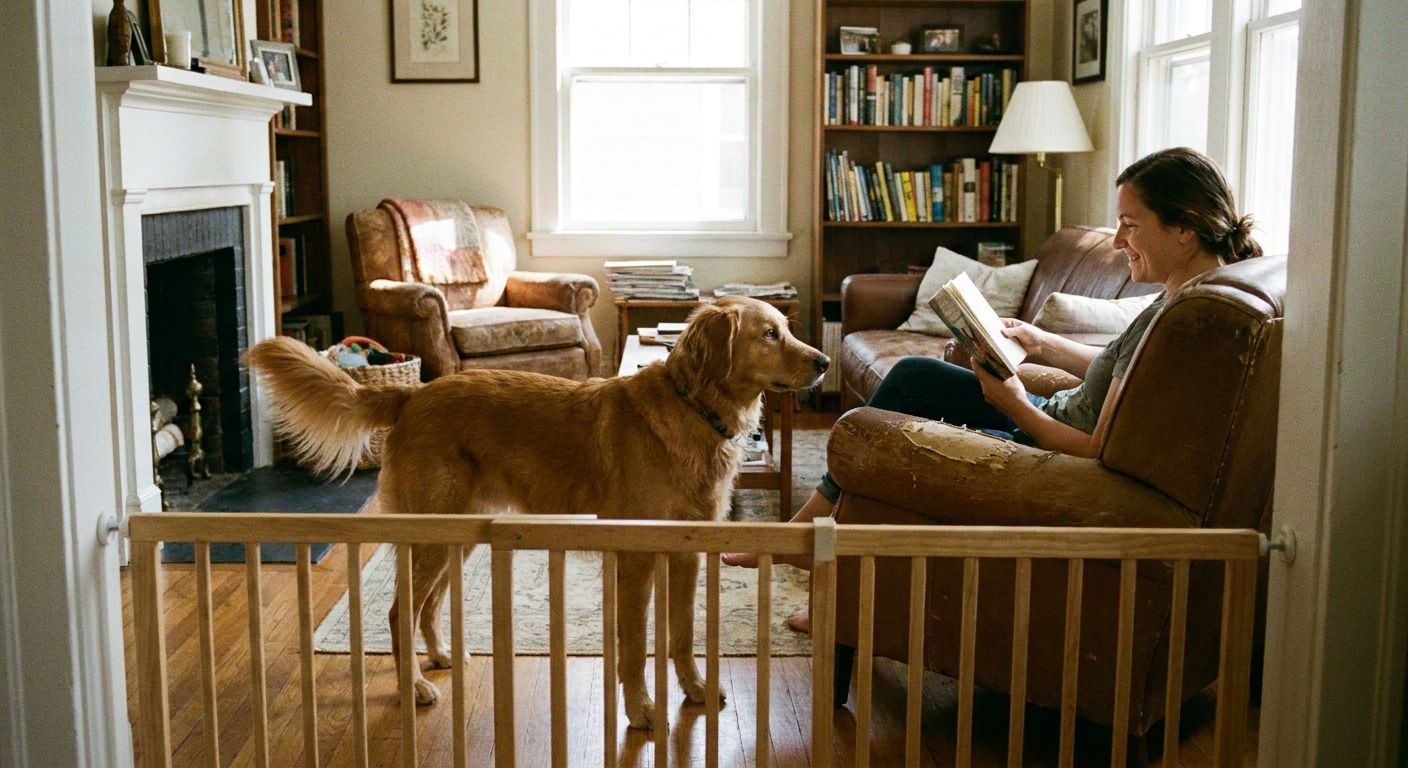
Pick better chews
If your dog is chewing furniture and shoes, they are telling you the chew options you’re offering are not meeting the need. Aim for chews that match your dog’s style.
Match the chew to the job
- For teething puppies: softer rubber chews, puppy-specific chew rings, and safe, chilled options (ask your vet if your pup can have a cold washcloth twist under supervision).
- For “I need to shred” dogs: durable chew toys plus supervised shredding outlets like cardboard boxes with treats inside (only if your dog does not eat the cardboard).
- For heavy chewers: tough rubber chews designed for power chewers. Avoid anything that splinters or breaks into sharp pieces.
A quick safety check I used as a vet tech
Aim for chews that are firm but have a little give. Extremely hard items can crack teeth. A common rule of thumb is: if you cannot make a dent with a fingernail or it would hurt to tap it against your kneecap, it is probably too hard for many dogs. When in doubt, ask your veterinarian what is safest for your dog’s age and chewing intensity.
What counts as a safe chew
- Right size: big enough that your dog cannot fit the whole thing in their mouth.
- Supervision at first: especially with new toys or edible chews.
- Replace when worn: toss chews that are cracking, splintering, or small enough to swallow.
- Watch the stomach: some edible chews cause vomiting or diarrhea in sensitive dogs. Call your vet if your dog seems unwell.
Pro tip: Make legal chews part of your daily rhythm. A chew given only once a week is not competing with a shoe your dog can steal anytime.
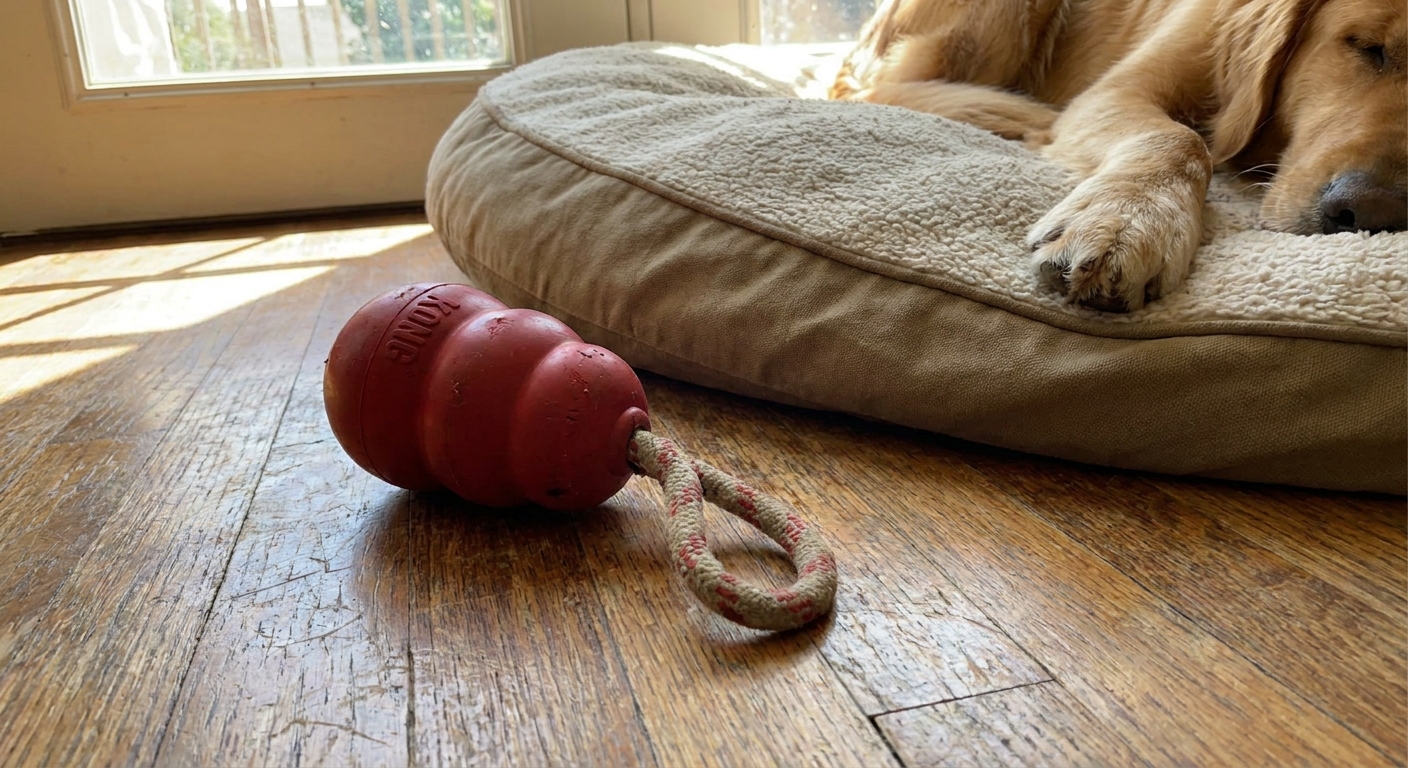
Teach two key skills
Most owners accidentally create a shoe-stealing game. Dog grabs shoe, human chases, dog runs, adrenaline party. Instead, we teach calm swaps and better choices.
Skill 1: Trade
This is your emergency brake for when your dog already has something they should not.
- Grab a high-value treat (tiny pieces of chicken, cheese, or whatever your dog adores).
- Hold the treat right by their nose and stay still. No scolding.
- When your dog drops the item to take the treat, say “Yes” or “Good”.
- Give the treat, then immediately offer a legal chew.
- Pick up the item while they are chewing the legal option.
Why this works: your dog learns that letting go makes good stuff happen, and grabbing household items does not turn into an exciting keep-away game.
Practice often with low-stakes items (a boring toy, a paper towel roll) so your dog learns the pattern when nobody is stressed.
Skill 2: Go get your chew
This is what you’ll use when you catch your dog sniffing a shoe rack or eyeing the couch corner.
- Place a legal chew on the floor a few feet away.
- When your dog looks at it or moves toward it, say “Yes” and drop a treat next to the chew.
- Repeat until your dog starts immediately choosing the chew when it appears.
- Add the cue: “Go get your chew.” Point to the chew, then reward when they engage with it.
You are building a habit: temptation appears, dog goes to their chew instead.
Supervised practice at home
Management protects your stuff, but practice is what makes the behavior change durable.
A 5-minute living room lesson
- Put your dog on leash or keep them in the room with you.
- Have 5 to 10 treats and a legal chew ready.
- Sit near the problem area (table leg, couch corner) before your dog gets worked up.
Reward calm near furniture
Any time your dog is near the couch or table and not chewing it, calmly drop a treat on the floor. You are reinforcing “being near furniture with your mouth closed.” That sounds silly, but it is powerful.
If they start to chew
- Interrupt gently with a brief neutral sound (for example, “uh-oh” or a kissy noise).
- Guide away with the leash or your body position. No yelling.
- Redirect to “go get your chew,” then reward.
Keep these sessions short. We want your dog succeeding, not spiraling into frustration.
Chewing only when you are gone
If the damage is an alone-time problem, the fix is not more chew toys scattered around and hoping for the best. Start with safety and data.
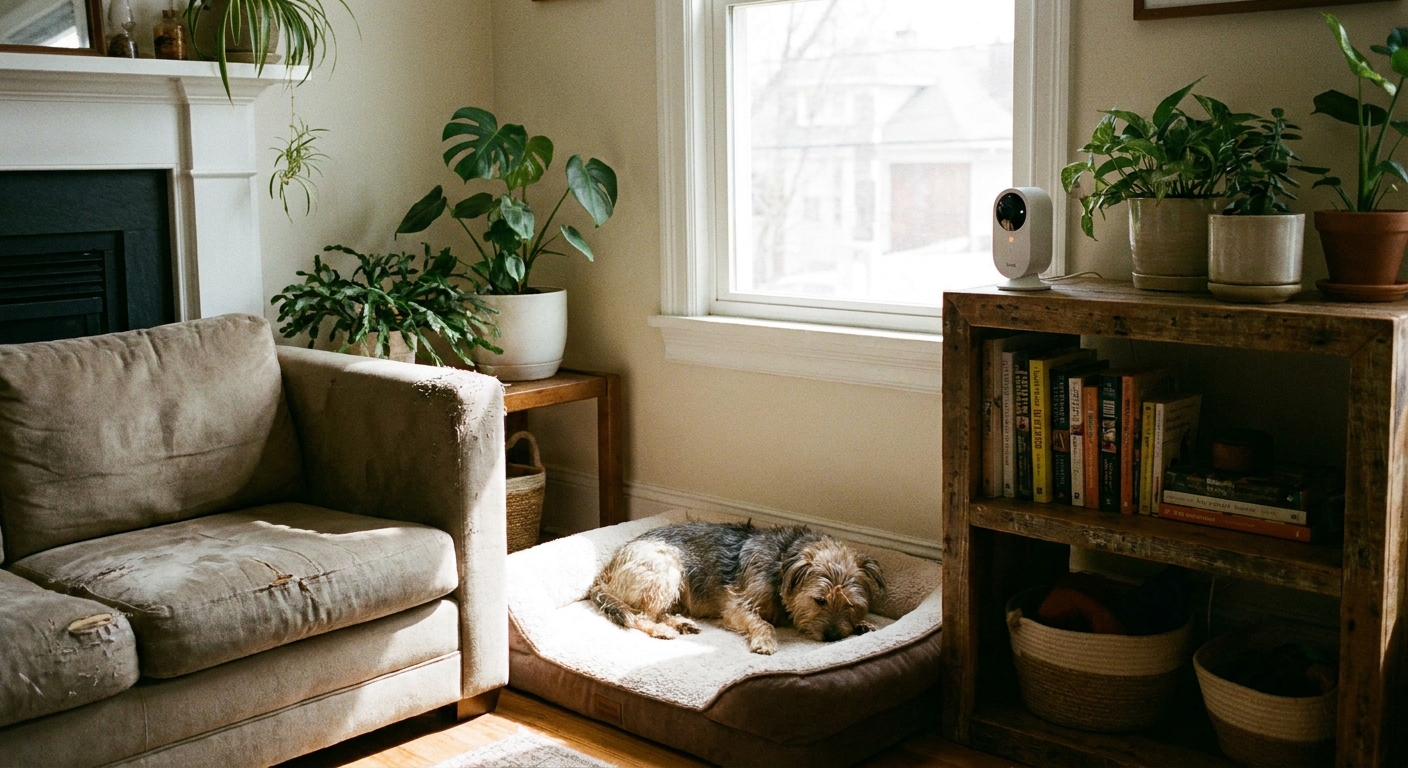
Step 1: Use a camera
A simple pet cam or an old phone can tell you a lot. Are they calmly chewing a table leg at minute 20, or panicking at minute 1? Those are two very different plans.
Step 2: Adjust confinement
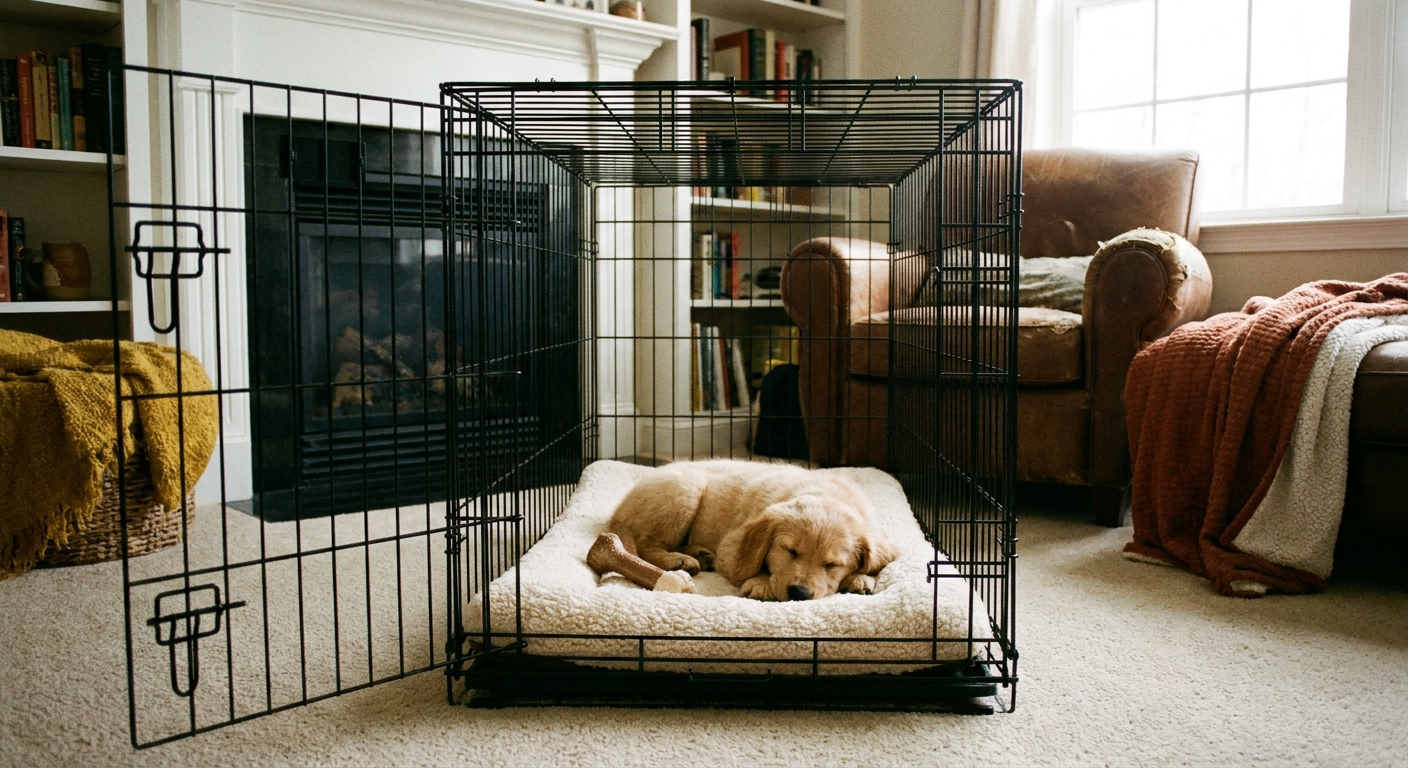
- If your dog is comfortable in a crate, that can prevent dangerous chewing.
- If your dog panics in a crate or gated area, confinement can increase distress and destruction.
- A dog-proofed room or exercise pen with safe enrichment sometimes works better.
Step 3: Try a predictable pre-departure routine
Before you leave, aim for: potty break, a little sniffy walk or play, then a calming activity (food puzzle, scatter feeding, lick mat). Many dogs chew less when their needs are met and their nervous system is settled.
When to get help
If you see intense drooling, self-injury, escape attempts, nonstop vocalizing, or destruction focused at exits, consult your veterinarian and a credentialed positive-reinforcement behavior professional. Separation-related issues are very treatable, but they need a tailored plan.
Health issues to rule out
Most chewing is normal dog behavior plus opportunity, but if the behavior feels sudden, intense, or out of character, check in with your vet. Mouth pain, broken teeth, nausea, and some compulsive conditions can make chewing worse. Also talk to your vet if your dog is eating non-food items, not just chewing them.
Mistakes that make it worse
- Chasing your dog when they steal something. It turns it into a game and increases grabbing behavior.
- Scolding after the fact. Dogs often do not connect punishment with something they did minutes ago. They are more likely to learn you are scary near chewed items.
- Relying on bitter sprays alone. Some dogs ignore them, and they do not teach what you want instead.
- Not supervising enough during the learning phase. Freedom is earned. Fewer mistakes equals faster progress.
- Underestimating adolescent dogs. The 6 to 18 month stage can be a chewy rollercoaster, even for dogs who were great as puppies.
A 7-day reset plan
If you want something you can start today, here’s a realistic one-week reboot.
Days 1 to 2: Lock down the environment
- Shoes away, bins closed, gates up.
- Pick 2 to 3 legal chews your dog genuinely likes.
- Start trade practice with low-value items twice daily.
Days 3 to 4: Add structure
- One chew session per day when your dog is usually most mouthy.
- One food puzzle or scatter feed per day.
- Two 5-minute living room lessons rewarding calm near furniture.
Days 5 to 7: Add supervised freedom
- Allow access to the problem room only when you can watch.
- Redirect early with “go get your chew.”
- Keep managing when you cannot supervise.
If you slip, that’s normal. The goal is fewer rehearsals of the unwanted behavior each day. Many families notice less damage within a week when management is tight, but fully breaking the habit often takes several weeks of consistent practice. Separation-related chewing usually takes longer and deserves a tailored plan.
FAQ
Will my dog grow out of chewing shoes?
Some puppies improve as teething ends, but the habit can stick if they have practiced it for months. It is much faster to prevent rehearsal now and teach a strong chew alternative.
Should I give my dog an old shoe?
I do not recommend it. To a dog, “old shoe” and “new shoe” are the same category and smell. It often creates more shoe stealing. Give a dedicated chew toy that does not resemble household items.
What if my dog chews one specific spot?
That’s common. Block that spot, cover it temporarily, clean it well, and do short training sessions right there. Many dogs return to the same corner because it now smells like them after previous chewing.
How long until this stops?
You may see improvement quickly when you stop access to shoes and furniture and your dog starts choosing legal chews instead. For deeply ingrained habits or separation-related chewing, plan on several weeks of consistent practice and management.
When to call your vet
Reach out promptly if your dog:
- May have swallowed fabric, foam, wood, or plastic
- Is vomiting, not eating, lethargic, or has diarrhea
- Has broken teeth, bleeding gums, or mouth pain
- Is chewing compulsively or seems unable to settle
Chewing is normal, but injuries and blockages are not worth waiting out.