A practical checklist of the most important dog cues for safety, calm behavior, and real-life manners, plus easy training steps and proofing tips.
Why recall matters most
If I could magically gift every dog parent one finished behavior, it would be a truly reliable recall. “Come” is the cue that keeps dogs safe when a gate swings open, a leash clip fails, or a bunny rockets across the trail and your dog’s brain briefly leaves Earth.
But reliable recall is not about having a “good dog” versus a “bad dog.” It is a trained skill built on two things: motivation (your dog wants to come) and practice (your dog has rehearsed coming in lots of real situations).
Let’s build a recall that makes your dog snap their head around and sprint back to you like you just opened a treat vault.
“Come” is a promise
Your recall cue should mean: “Run to me and something wonderful happens.” That “something” can be food, a toy, a game, permission to go sniff again, or all of the above. The point is consistency.
Two rules that protect recall
- Do not use your recall to end fun every time. If “come” always means leaving the park, your dog will start weighing their options.
- Do not call your dog for things they dislike. Nail trims, baths, medication, getting crated when guests arrive. Go get them calmly instead, or pair those moments with extra-good rewards.
Think of recall like a savings account. Every time you call and pay well, you make a deposit. Every time you call and then do something unpleasant, you make a withdrawal.
If you only do three things
- Practice indoors first until the head turn is instant.
- Pay like it matters and use “come, treat, release” often so recall does not always end freedom.
- Use a long line outdoors so ignoring you never becomes a winning strategy.
Choose your cue (and an emergency cue)
If your dog already has a “come” that is a little… optional, you can absolutely rebuild it. Sometimes I keep “come” for easy situations and add a fresh, special cue for higher stakes.
Everyday recall
Use “come” or “here,” but pick one and stick to it. Say it once, then help your dog succeed.
Emergency recall
This is the cue you reserve for urgent moments, like the leash slipped or your dog is headed toward a road. Choose something you do not say casually, like “NOW!” “TOUCH!” or “COOKIE!” Then pay with the best rewards you own.
Emergency recall practice should feel like a jackpot party: cue, sprint to you, huge payout, then the dog goes right back to life. No leash-up-and-leave routine.
Gear for safer, faster training
You can teach recall indoors with zero equipment, but as soon as you add distance and distractions, gear matters for safety.
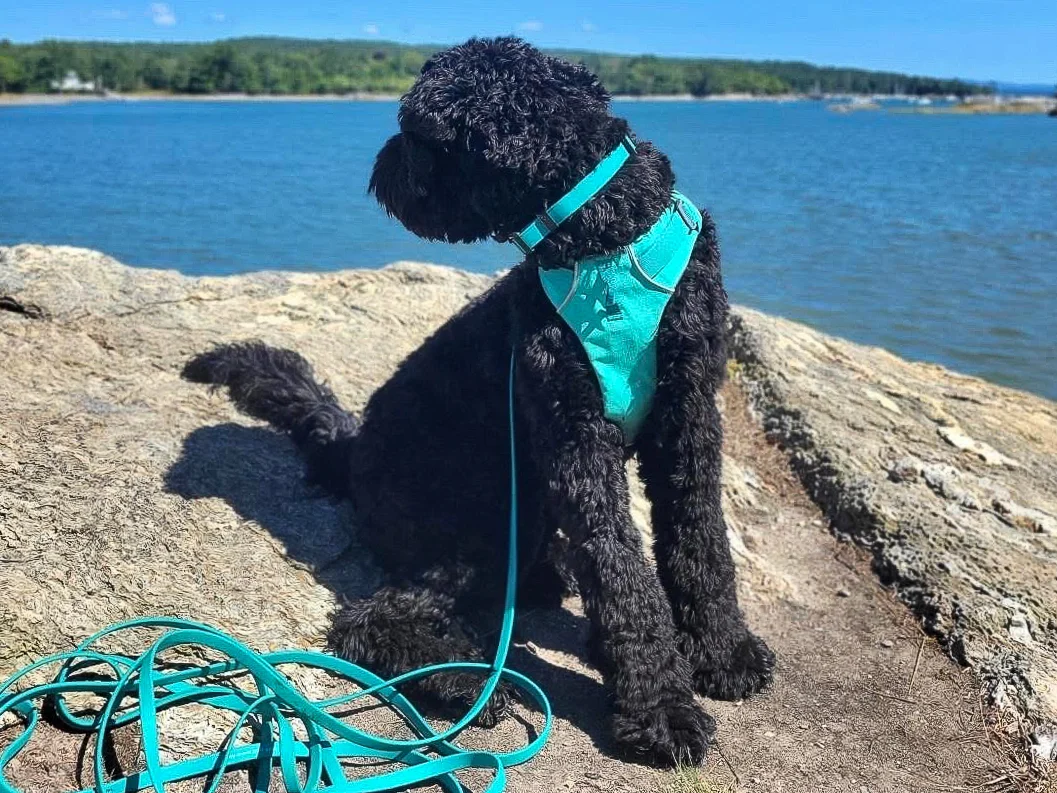
- Long line (10 to 50 feet): This gives your dog freedom while preventing “successful escapes.” Biothane is easy to clean and less likely to snag.
- Comfortable harness: Clip the long line to a back-clip harness, not a collar, to reduce neck risk if they hit the end at speed.
- High-value rewards: Soft, smelly treats are ideal. Think chicken, cheese, hot dog slices, or a commercial training treat your dog would write poems about.
- Treat pouch: Because if the treats are in the pantry, they do not exist in your dog’s world.
Long line safety basics
- Do not wrap the line around your hand, wrist, or waist.
- Wear gloves if you need them, long lines can burn.
- Avoid sudden stops at full speed. Keep slack when possible and step on the line smoothly rather than yanking.
Step 1: Make it a reflex (indoors)
Before you ask for recall outside, you want a strong “turn on a dime” response inside. Start when your dog is not already zooming.
The name game
Say your dog’s name once in a cheerful voice.
The moment they look at you, mark it with “yes!” (or a click) and deliver a treat.
Repeat until their head whips toward you every time.
This matters because recall begins with attention. If your dog does not orient to you, “come” is just a sound drifting through the air.
Short-distance reps
In a hallway or living room, wait until your dog is a few steps away.
Say “come!” once.
As they move toward you, back up a couple steps to encourage chasing you.
When they arrive, reward at your legs, then feed 2 to 5 tiny treats in a row.
That little “treat stream” builds the idea that staying close to you pays off, not just the moment of arrival.
Step 2: Use games
Drills are fine. Games are better. Games create speed, enthusiasm, and repetition without your dog feeling like they are in doggy school.
Ping-pong recall
Two people stand 10 to 20 feet apart (indoors first, then fenced yard). Take turns calling the dog and rewarding. Keep it fast and fun.
Hide-and-seek
In the house, one person holds the dog while the other “hides” behind a doorway. Call once, then celebrate like your dog just discovered you after a decade at sea. This builds drive to find you, not just wander back slowly.
Chase me (the safe version)
Many dogs love chase. You can harness that by running away after you call. Avoid running toward your dog, which can feel like pressure and make some dogs dodge.
Step 3: Add a clean finish
A lot of dogs learn: “Come” means “run close enough to snatch a treat, then dodge the leash.” Totally normal, very common, and very fixable.
Teach a gentle collar grab
Reach toward your dog’s collar or harness.
Touch it briefly, say “yes!” and treat.
Build to holding for one second, then treat. Build to two seconds, then treat.
Later, pair it with recall: dog arrives, you calmly take collar, then pay.
This makes being held feel safe and rewarding. It also prevents the “keep-away game” when you truly need to clip a leash.
Pick a default position
For most dog parents, I like “come” meaning “run to me and land close.” You can reinforce a sit if you want, but speed matters more than form in real life. I would rather have a dog slam on the brakes next to your knees than do a perfect front sit three feet away.
Step 4: Proof outdoors
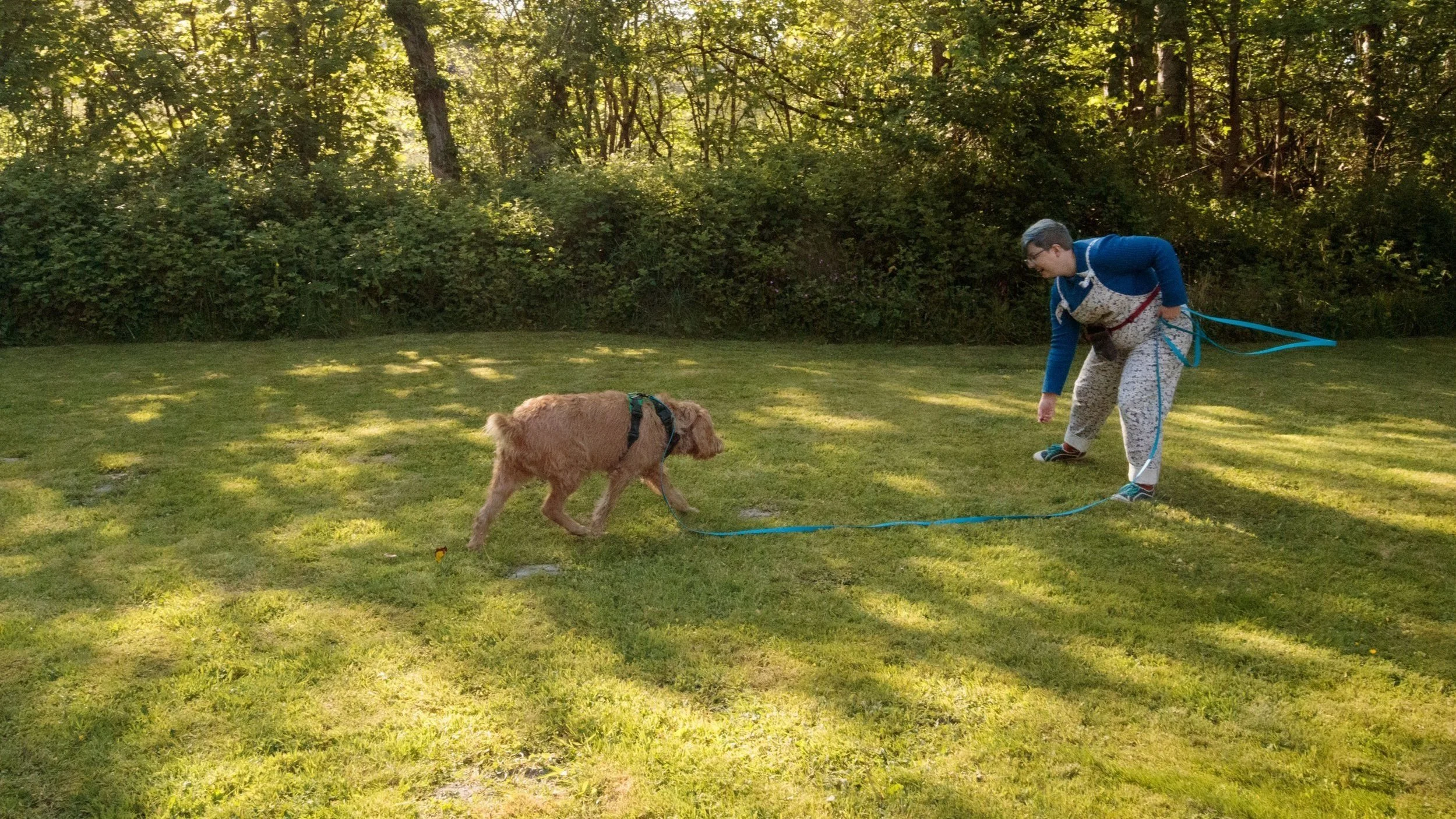
This is where recall becomes real. The long line is your friend because it prevents your dog from learning that ignoring you works.
Start boring on purpose
Pick a quiet area: backyard, empty field, off-hours park (where long lines are allowed). Let your dog sniff. Then:
Say “come!” once.
When they turn toward you, praise.
If they hesitate, gently reel in the long line like you are pulling in a kite, not yanking.
When they reach you, reward generously, then release them back to sniff with “go sniff.”
The release cue is a secret weapon. It teaches your dog that coming to you does not always end freedom.
Turn up difficulty with three dials
- Distance: Start at 6 feet, then 10, then 20.
- Distraction: Start with mild smells, then add mild movement, then add higher excitement.
- Duration: Call when they are mildly engaged, then more engaged, then very engaged.
Only turn one dial at a time. If you increase distance and distractions together, you may accidentally jump from “level 2” to “level 9.”
Practice in new places
Dogs do not automatically generalize “come” from your living room to the park, then to the woods, then to your friend’s yard. Build your recall in multiple locations on purpose: different rooms, the front yard, a quiet parking lot edge, a new field, a new trail. Keep it easy at first each time, then build back up.
Rewards that make recall fast
In training, we talk about reinforcement like it is a concept. For your dog, it is very simple: “Was it worth it?”
Use a reward menu
- Everyday pay: kibble, low-value treats, praise
- Medium pay: soft training treats, tug toy, quick game
- Jackpot: chicken, cheese, meatballs, a handful of treats one after another
Pay based on difficulty. Calling your dog off a squirrel trail should not earn the same as calling them off the couch.
Mix food with “life rewards”
Some dogs care more about the environment than snacks. You can use that. Call your dog, reward, then release them back to what they wanted.
It sounds counterintuitive, but it works because you become the gateway to good stuff instead of the fun police.
Don’t call unless you can help
One of the fastest ways to make “come” optional is calling when you cannot follow through. You do not need to be harsh. You just need to be strategic.
A quick decision check
- Can my dog succeed here? If not, move closer or lower distractions.
- Do I have a long line, barrier, or way to guide them in? If not, go get your dog instead of calling.
- Do I have a reward that can beat the environment? If not, upgrade your pay or skip the rep.
If your dog is mid-sprint or locked into chase mode, do not “spend” your cue. Step on the long line, create distance, and set up an easier success next time.
Common mistakes
Calling repeatedly
If you say “come, come, come,” your dog learns the first two were optional. Say it once. If your dog does not respond, you are too far, too distracting, or the reward is not worth it. Help them succeed with distance, a long line, or better pay.
Using recall when you are angry
I get it. I have been the person jogging after a puppy with a stolen sock, trying not to lose my mind. But if your voice predicts trouble, your dog will avoid you. Take a breath, lower the stakes, and reset training later.
Chasing your dog
Chasing turns it into a game, and your dog gets better at it. Instead, run away, crouch, clap lightly, or scatter treats near your feet to draw them in.
Ending the outing immediately
Sometimes you must. But if it is always the pattern, you will see slow recalls. Practice “come, reward, release” most of the time so the cue stays optimistic.
If your dog ignores you
Ignoring is information, not defiance. It usually means one of these is true:
- The distraction is too big. Move farther away from the thing, or choose an easier environment.
- You have not practiced enough at that level. Proofing takes repetition.
- The reward is too small. Upgrade the payment.
- Your dog did not hear you. Wind, distance, hearing changes, or simply being absorbed in sniffing can all play a role.
In the moment, do not keep yelling. Calmly step on the long line, guide them in gently, and then reward when they arrive. Later, adjust your training plan so you are not needing to physically guide them as often.
Recall around real chaos
This is the advanced course, and it is where most recalls fall apart. The trick is not “being more stern.” The trick is systematic practice.
Use distance like a superpower
Start far enough away that your dog can notice the distraction and still respond. That might be 200 feet at first, and that is fine. You are building a habit, not proving a point.
Practice with staged distractions
- Dogs: Work outside a dog park fence at a distance where your dog can still eat treats. Reward for attention and short recalls. Skip fence greetings, they can trigger barrier frustration.
- People: Recruit a friend to walk past, then progress to mild jogging, then tossing a ball.
- Wildlife: You cannot stage squirrels easily, but you can practice near bunny-heavy areas at a safe distance and reward heavily for choosing you.
Know when to skip it
If your dog is mid-lunge, already sprinting, or in full chase mode, your recall likely will not land. Do not “waste” the cue. Grab the long line, create distance, and set up a success next time.
Special situations
Puppies
Puppies are recall sponges. Keep sessions short, playful, and frequent. Call them for treats and cuddles all day long. Avoid calling them for time-outs.
Adolescents
Teenage dogs can look like they forgot everything. They did not. Their brains are just easily hijacked by the environment. Adolescence often starts around 6 months and can stretch past 18 months, especially in large and giant breeds. Go back a step, use the long line, and pay well.
Rescue dogs
Start indoors and build trust first. If your dog is fearful, never use recall to pull them toward scary things. Let recall be the cue that always leads to safety.
Separation anxiety or “velcro dogs”
These dogs often come easily at home but can struggle outside. They may freeze when overwhelmed. Build confidence with gentle exposure and predictable rewards, and consider working with a qualified trainer if panic signs show up.
How long does it take?
Many dogs can learn the basic idea in a few days. Real-world reliability is a longer project, and it varies with age, breed tendencies, reinforcement history, fear, and how distracting your daily environment is.
I like to think in phases:
- Phase 1 (1 to 2 weeks): strong indoor recall and fun games
- Phase 2 (2 to 6 weeks): long-line success in low-distraction outdoor spots
- Phase 3 (ongoing): proofing around bigger distractions and maintaining the behavior for life
Maintenance matters. Even well-trained dogs need occasional “jackpot” paychecks to keep the response sharp.
Recall without treats?
You can train recall using toys, praise, play, and life rewards, but most dogs learn faster with food. Food is efficient, consistent, and easy to deliver the second your dog arrives. If you prefer not to rely on treats forever, that is fine. Use treats heavily at first, then gradually switch to a mix of rewards once the behavior is strong.
Safety and rules
A reliable recall is one part of off-leash safety, not the whole story. Some dogs have strong prey drive, some live near traffic, and some environments are simply too risky. Using a long line can give your dog freedom while keeping everyone safe.
Also, check local leash laws and park rules. Some parks prohibit long lines or require standard leash lengths. Choose training locations where you can be safe, legal, and relaxed.
If your dog is still in training, assume the environment will win sometimes. That is not pessimism. That is smart management.
Quick troubleshooting
My dog comes, then veers away
- Reward closer to your legs, not with your arm extended.
- Add the collar-grab game.
- Practice in a narrow hallway to build a straight approach.
My dog comes slowly
- Use better rewards and bring more energy.
- Run away after you cue “come.”
- Reward speed by tossing a treat behind you so they chase through.
My dog only comes when they see treats
- Hide treats in your pockets, on shelves, or in jars around the house.
- Call, then reward from the hidden stash.
- Gradually mix in non-food rewards so the cue, not the visible snack, predicts good stuff.
A 10-minute routine
- 2 minutes: name game and short recalls indoors
- 3 minutes: ping-pong or hide-and-seek
- 5 minutes: long-line recalls outdoors in a low-distraction area, ending with “come, treat, release”
Stop while your dog still wants more. That is how you keep recall spicy.
When to hire a pro
If your dog bolts regularly, has a bite history, or you are dealing with intense prey drive, fear, or reactivity, working with a qualified positive reinforcement trainer can speed up progress and keep everyone safe. Look for credentials like CPDT-KA, and ask how they teach recall. You want a plan built on reinforcement and setup, not intimidation.
Recall FAQ
What is the best recall word?
The best recall word is the one you will say consistently, clearly, and cheerfully. “Come” and “here” are common. For an emergency recall, choose a unique word you never use casually.
Should I use a whistle?
A whistle can be fantastic, especially outdoors where your voice may not carry. It is consistent and cuts through noise. You still have to condition it with great rewards the same way you would with a verbal cue.
Is it okay to punish a dog for not coming?
Avoid it. Punishment and scolding tend to make recall less reliable because they teach your dog that coming to you can be risky. If your dog does not come, treat it as a training problem: lower distractions, shorten distance, use the long line, and make your rewards worth the trip.
Bottom line: A reliable recall is built, not demanded. Start easy, reward generously, practice like it matters, and use a long line so your dog cannot rehearse ignoring you. With consistent reps, your “come” can become the safest, happiest word your dog knows.