A practical, coat-type based comparison of undercoat rakes and slicker brushes, plus tips for safer, more comfortable deshedding sessions.
If you live with a double-coated dog, you already know the truth: the fluff is not seasonal. It is a lifestyle. The good news is you do not need marathon grooming sessions to keep that coat healthy. You need a simple schedule, the right tools, and a plan for heavy shedding weeks so you do not end up fighting painful mats or a compacted undercoat.
This routine works for many double-coated breeds, including Siberian Huskies, Golden Retrievers, German Shepherds, Samoyeds, Australian Shepherds, Bernese Mountain Dogs, and mixes with a similar coat structure.
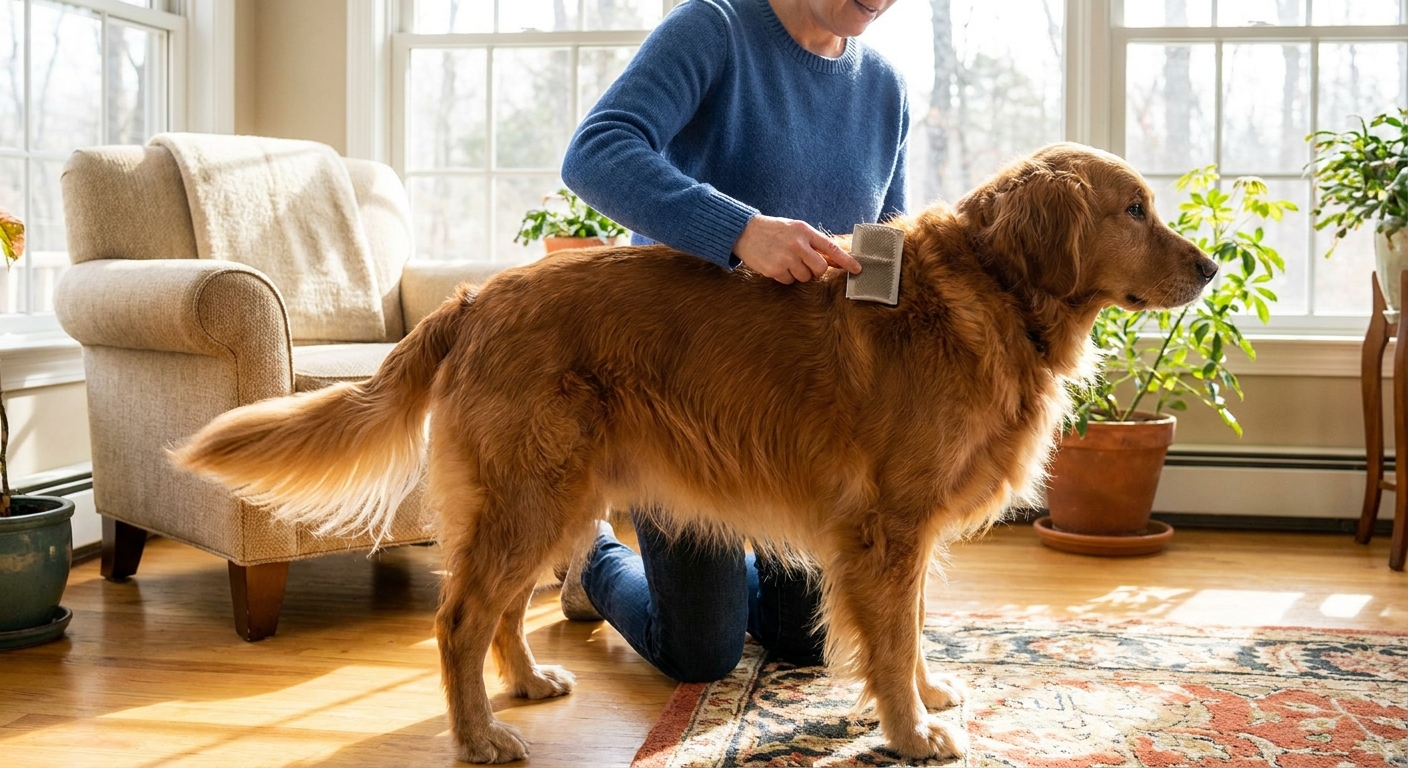
Double coat basics
A double coat has two layers:
- Topcoat (guard hairs): longer, water-resistant hairs that protect from sun, moisture, and dirt.
- Undercoat: shorter, dense fluff that insulates. This layer is the main driver of shedding and matting problems when it gets loose and then packs down.
Your grooming goal is not “remove all shedding.” Your goal is regularly removing loose undercoat before it compacts, keeping the skin clean and dry, and catching tangles early.
Important: Shaving is not a routine coat-care shortcut for most double-coated dogs. Removing the coat also removes a big part of its natural insulation and UV protection, which can increase sunburn and skin irritation risk. In some dogs, regrowth can be uneven or take a long time. There are medical and humane exceptions, so if you are considering shaving for a skin issue, heat concerns, or severe matting, talk with your veterinarian or a trusted groomer first.
Daily routine (5 to 10 minutes)
Daily grooming is about quick prevention, not perfection. Think of it like brushing your own hair. A little each day beats a painful detangling session later.
Daily checklist
- 1 to 3 minutes: quick body scan with your hands. Feel for bumps, burrs, damp patches, dandruff, or tight spots that could become mats.
- 3 to 5 minutes: targeted brushing in high-friction zones (see below).
- 30 seconds: reward your dog and stop. Ending early is how you build a dog who likes grooming.
Where to focus daily
These areas mat first because they get friction, moisture, and movement:
- Behind the ears
- Collar and harness lines (especially the chest strap and behind the front legs)
- Armpits and elbows
- Feathering on legs and belly (Goldens, Aussies)
- Base of tail and “butt fluff”
- Ruff around the neck (Huskies, Shepherds)
How to brush to prevent mats
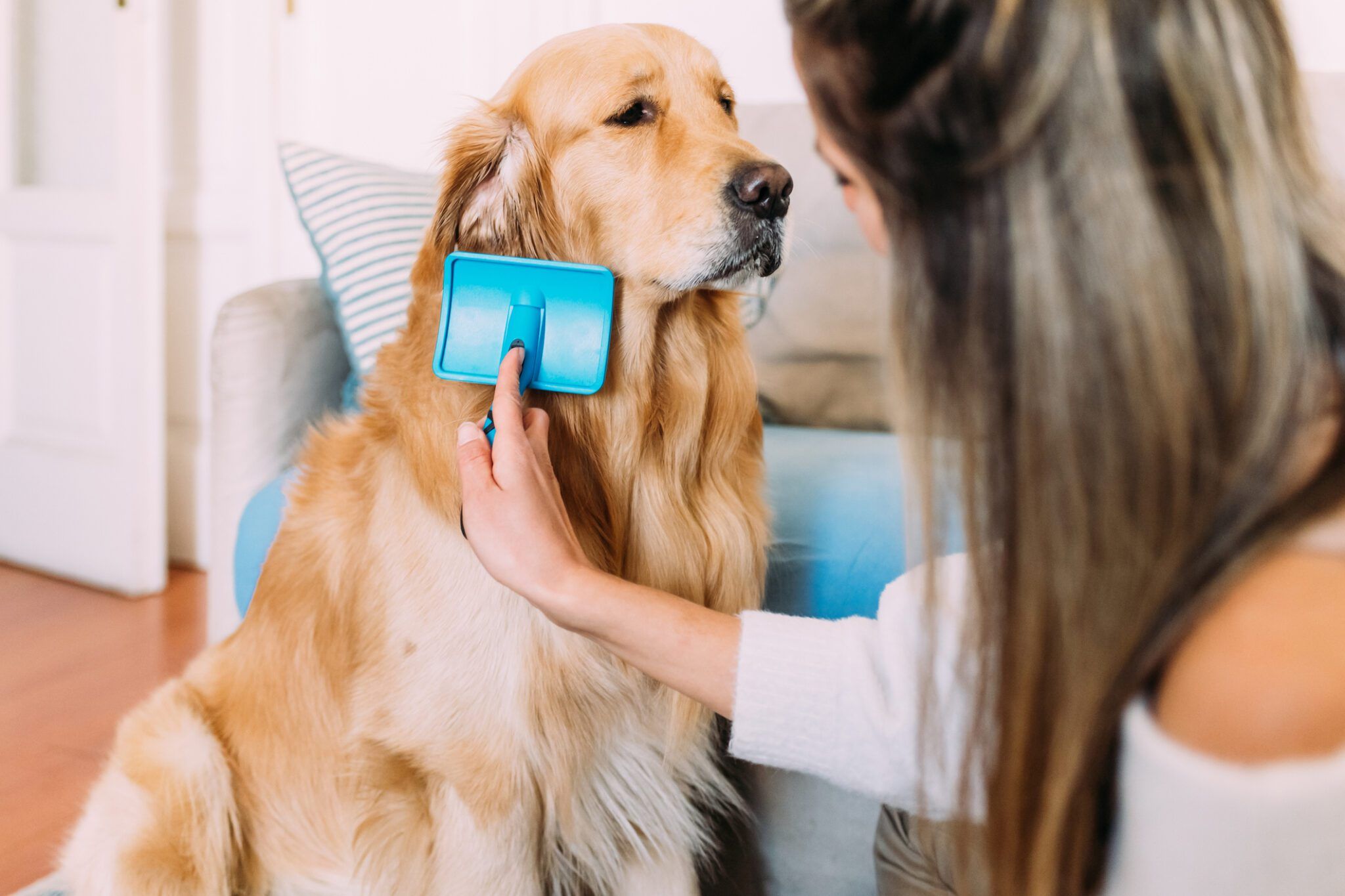
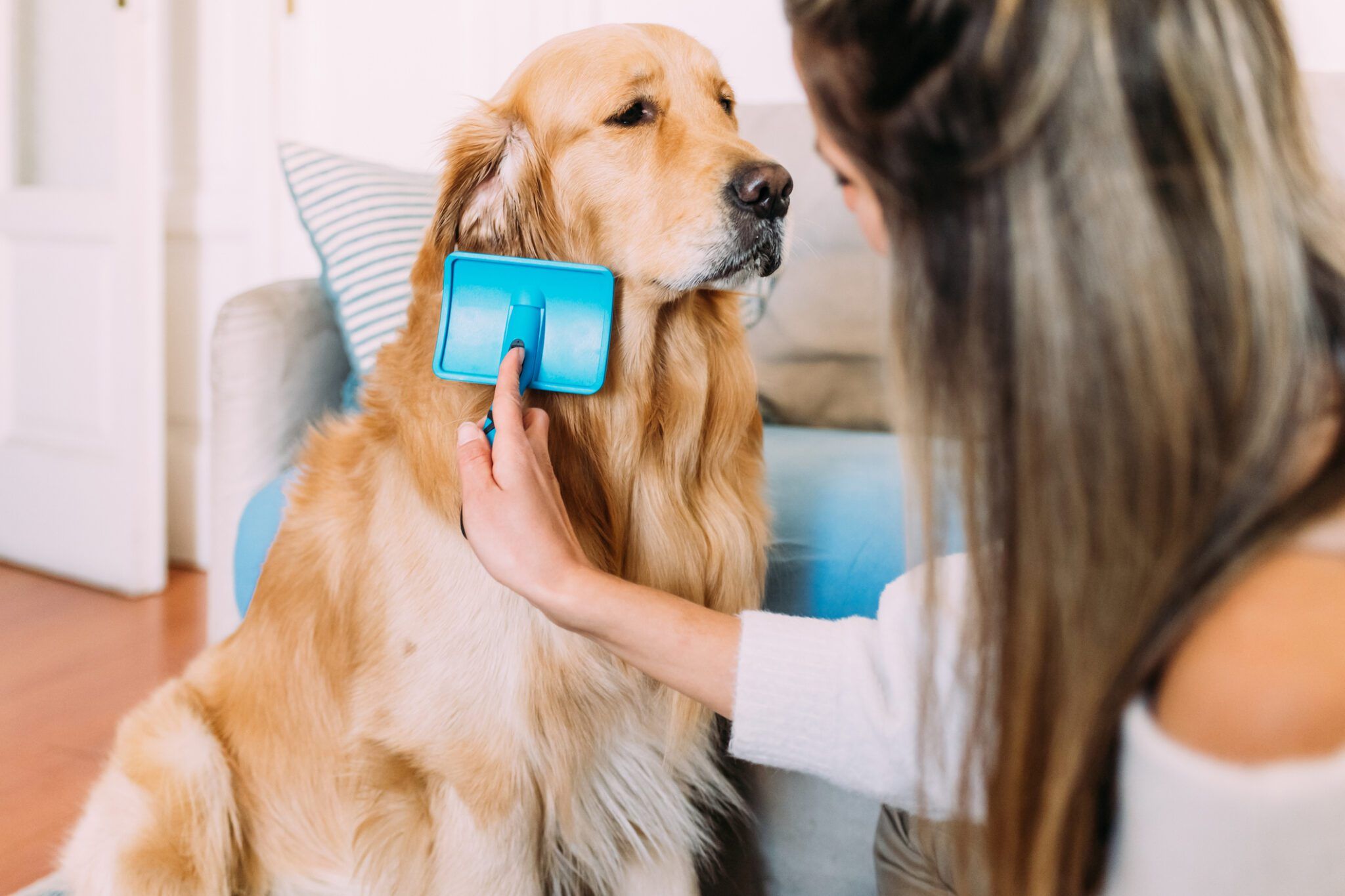
Use a slicker brush or pin brush to separate hair, then follow with a medium/coarse-to-fine metal comb (often called a greyhound comb) to check your work.
- Step 1: Lightly mist the coat with water or a dog-safe conditioning spray. You want it slightly damp to reduce static and friction, not wet down to the undercoat.
- Step 2: Brush in small sections, starting at the ends of the hair and working toward the skin.
- Step 3: “Comb test” the area. If the comb will not glide to the skin, there is still a tangle forming.
Training tip: Pair grooming with a predictable routine: mat, brush, treat. Aim for lots of tiny rewards, especially when you touch paws, ears, and the tail.
Weekly routine (20 to 45 minutes)
This is your undercoat maintenance session: the one that keeps shedding manageable and helps prevent that dense, felted layer that traps moisture against the skin.
Weekly schedule options
- Moderate shedders, most of the year: 1 deeper session per week.
- Heavy coat, active outdoors, or prone to tangles: 2 shorter sessions per week.
- Coat blow season: 3 to 5 sessions per week for 10 to 20 minutes each (more on that below).
Tools that help
- Slicker brush: for separating and removing loose hair from the top layer and light undercoat.
- Metal comb: your truth-teller for mats and tangles.
- Undercoat rake (deshedding rake): for loosening undercoat in thick areas (use gentle pressure and short strokes).
- High-velocity dryer (optional): especially after baths, to blow out loose undercoat safely when used correctly.
- Nail trimmers or grinder: for weekly nail checks.
A quick word on “deshedding tools”: There is a big difference between a rake (a tool that helps lift and loosen undercoat) and a blade-style cutter (often Furminator-style tools) that can cut or strip hair if used aggressively. Cutting tools can thin or damage guard hairs in some coats and can irritate skin if overused. If you are unsure, stick with a slicker, comb, and a quality undercoat rake, or ask a groomer to show you what is safe for your dog’s coat type.
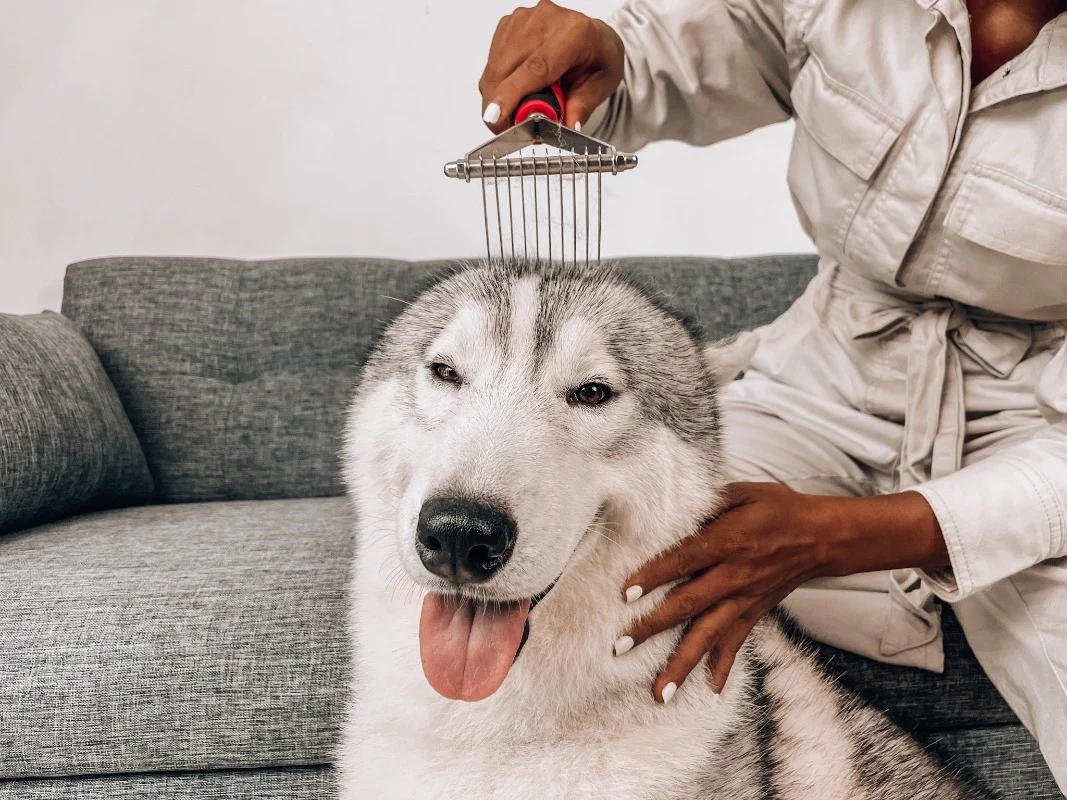
Weekly brush-out steps
1) Set up for calm
Choose a non-slip surface, good lighting, and a time when your dog is naturally mellow (after a walk is perfect). If your dog is wiggly, a lick mat with peanut butter or canned food can help.
2) Line brush in sections
Line brushing is the secret for thick coats. You lift a layer of coat, brush a thin line underneath, then move up little by little until you have brushed the whole area down to the skin.
- Pick one zone, like one side of the body.
- Part the coat with your hand so you can see the skin.
- Brush that thin line with a slicker.
- Comb test the same line.
- Move up a half inch and repeat.
This is slower than surface brushing, but it is how you prevent the classic problem where the top looks fine and the undercoat is quietly matting underneath.
3) Use the undercoat rake to loosen, not scrape
Once the coat is detangled, use an undercoat rake in the thickest areas (ruff, hips, thighs). Keep strokes short, and stop if you see skin getting pink or your dog is flinching. For some dogs with shorter, tighter double coats, less rake and more slicker plus comb is the gentler option.
4) Finish with a comb and hands-on check
Comb through the high-risk zones one last time, then run your hands over the coat. You should feel airy fluff, not dense pads.
Coat blow season
When double-coated dogs blow their coat, the undercoat releases in waves. During these weeks, the undercoat can compact fast, especially if the dog swims, gets rained on, or wears a harness daily.
Coat blow schedule (realistic)
- 10 to 15 minutes, 4 days a week: slicker plus comb test on friction areas.
- 20 to 30 minutes, 1 day a week: full-body line brush and undercoat rake (if your dog tolerates it well).
If you use a high-velocity dryer
Use it after a bath and on a fully detangled coat. Keep the nozzle moving and avoid blasting one spot. The goal is to push water and loose undercoat out, not to irritate the skin.
Safety note: Never aim forceful air into ears, eyes, nose, mouth, or irritated skin. High-velocity dryers can also kick up dander and product residue, so use good ventilation and consider eye protection for you. If your dog has respiratory issues, extreme noise sensitivity, or an active skin infection, skip it and work with brushing instead (or ask your groomer or vet what is appropriate).
Bathing and coat care
Bathing too often can dry the skin, but bathing too rarely can let oils, dirt, and undercoat build up and tangle. Many double-coated dogs do well with a bath about every 4 to 8 weeks, but lifestyle and skin needs matter. Dogs with allergies, recurring skin infections, or medical conditions may need a different schedule, so follow your veterinarian’s guidance if that applies.
How to avoid bath-created mats
- Brush and comb before the bath. Water tightens tangles like a zip tie.
- Use dog shampoo and conditioner. Human products can be too harsh for canine skin, and conditioner helps undercoat slide out instead of clumping.
- Rinse longer than you think you need to. Leftover product can cause itchiness and dandruff.
- Dry thoroughly. A damp undercoat is a recipe for hot spots and matting, especially on the hips, thighs, and under a collar.
If your dog is prone to hot spots, prioritize drying and keep an eye on damp areas after swimming or rainy walks.
Weekly checkups
Coat grooming is only part of the routine. These small checks prevent bigger problems.
- Nails: quick check weekly. If you can hear nails clicking on the floor, you are usually due.
- Paw pads: check for cracks, foxtails, sap, and hair mats between toes.
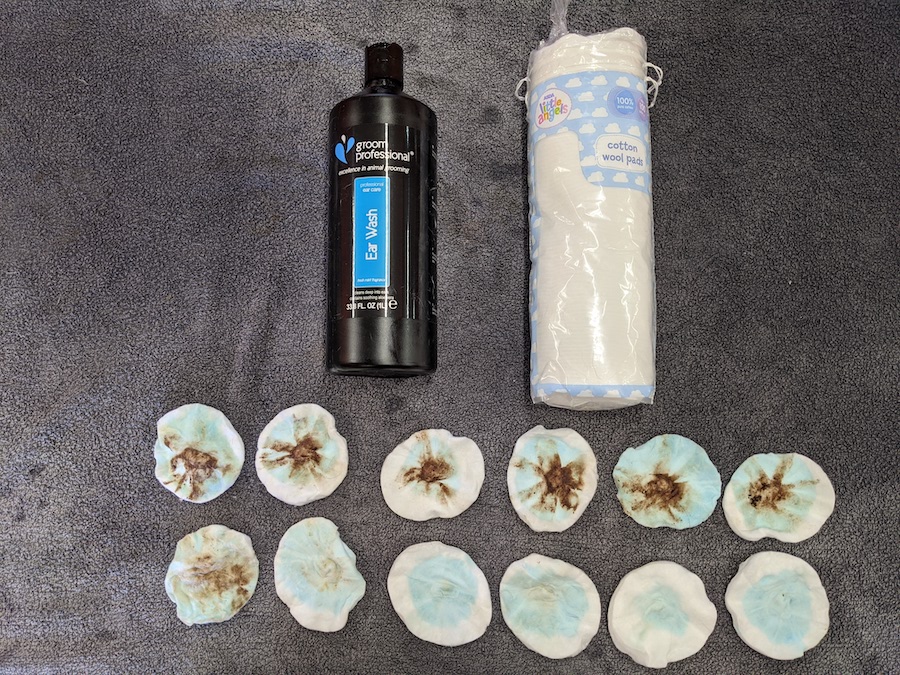
- Ears: sniff test. Healthy ears smell like nothing much. Yeasty or sour odor, redness, or gunk needs a vet check.
- Teeth: aim for brushing several times a week if you can. Even 30 seconds helps.
- Eyes: wipe away debris with a damp cloth if needed.
Tool safety and coat types
Double coats are not all the same. A plush Samoyed coat, a flatter German Shepherd coat, and a feathered Golden coat do not mat in exactly the same places, and they do not all tolerate the same tools the same way. When in doubt, go gentler and let the comb be your guide.
- Be careful with undercoat rakes: they are helpful on thick areas, but too much pressure or too many passes can irritate skin, especially on shorter, tighter coats.
- Skip scissors on tight mats: it is easy to cut skin because mats pull it up into the tangle. If a mat is close to the skin, get professional help.
- Avoid essential oils unless vet-approved: many are irritating or unsafe for pets, especially when applied to skin or coat.
A sample schedule
Most weeks (not peak shedding)
- Mon: 5 to 10 minute friction-zone brush plus comb test
- Tue: quick scan, touch paws and ears, treat
- Wed: 20 to 30 minute weekly brush-out (line brush one side, then the other)
- Thu: 5 minute brush behind ears, collar line, tail base
- Fri: nail check, paw pad check, quick comb-through
- Sat: optional short session or outdoor adventure, then burr check
- Sun: rest day, cuddle inspection
During a coat blow
- 4 days: 10 to 15 minutes brushing and comb test
- 1 day: longer line-brush session or professional deshed appointment
- Daily: 1 minute friction-zone check, especially behind ears and under harness straps
Red flags
If you have ever watched a small skin issue turn into a big one under a dense coat, you know the clock moves fast.
Get help from a groomer or veterinarian if you notice:
- Mats that are tight to the skin (these can pull painfully, cause sores, and in severe cases restrict circulation)
- Moist, smelly, or oozing spots (possible hot spot or infection)
- Persistent itching, chewing, or head shaking
- Red, inflamed skin after brushing
- Sudden heavy shedding plus thinning patches
If matting is severe, please do not try to “rip through it” with a brush. That is painful and can make dogs terrified of grooming. A professional can clip mats safely when needed and help you reset your routine.
Make grooming easier with training
Grooming is a handling skill, and you can teach it like any other behavior.
Three quick exercises
- The two-second touch: touch a paw, treat. Touch an ear, treat. Build duration slowly.
- Brush equals treat: one brush stroke, one treat. Repeat for 30 seconds, then stop.
- Consent breaks: pause every minute. If your dog leans in or stays relaxed, continue. If they move away, take a short break and lower the difficulty.
The goal is not to “hold them still.” The goal is a dog who trusts you and feels safe, which makes grooming faster and better for both of you.
FAQ
How often should I brush a Golden Retriever?
Most Goldens do well with quick daily friction-zone brushing plus one deeper session weekly. During a coat blow, bump up to 3 to 5 shorter sessions a week.
How often should I brush a Husky?
Huskies often need more undercoat work during a coat blow. In normal weeks, aim for daily quick checks plus one thorough weekly brush-out. During a blow, expect several short sessions per week.
Can I prevent shedding completely?
No, and you should not try. Shedding is normal coat turnover. Your goal is to remove loose hair before it compacts and to keep skin healthy.
What is the best brush for double-coated dogs?
Most homes do best with a slicker brush plus a metal comb. Add an undercoat rake for thick coats and coat blow season. If you only buy one “extra” tool, make it the comb. It tells you where the tangles actually are.
My dog hates grooming. What should I do?
Start with very short sessions, high-value treats, and a predictable routine. If your dog is panicking, snapping, or has a history of painful matting, work with a force-free trainer and a patient groomer. You can absolutely turn this around, but it works best when you go slowly.
If you want to keep it simple, remember this: touch the friction zones daily, do one real undercoat session weekly, and increase frequency during coat blow season. Your vacuum will still have opinions, but your dog’s skin and coat will thank you.