A step-by-step 7-day schedule many dogs do well with when changing foods, plus troubleshooting for gas, diarrhea, picky eating, and when to slow down.
Great Danes are basically gentle couch giraffes with surprisingly sensitive nutritional needs. Because they grow fast and carry a lot of weight on big joints, what and how you feed matters just as much as how much.
This guide will help you build a Great Dane feeding routine that supports steady growth, protects joints, and lowers bloat risk. I will keep it practical, because nobody needs a nutrition lecture at 6 a.m. with a hungry Dane breathing in their ear.
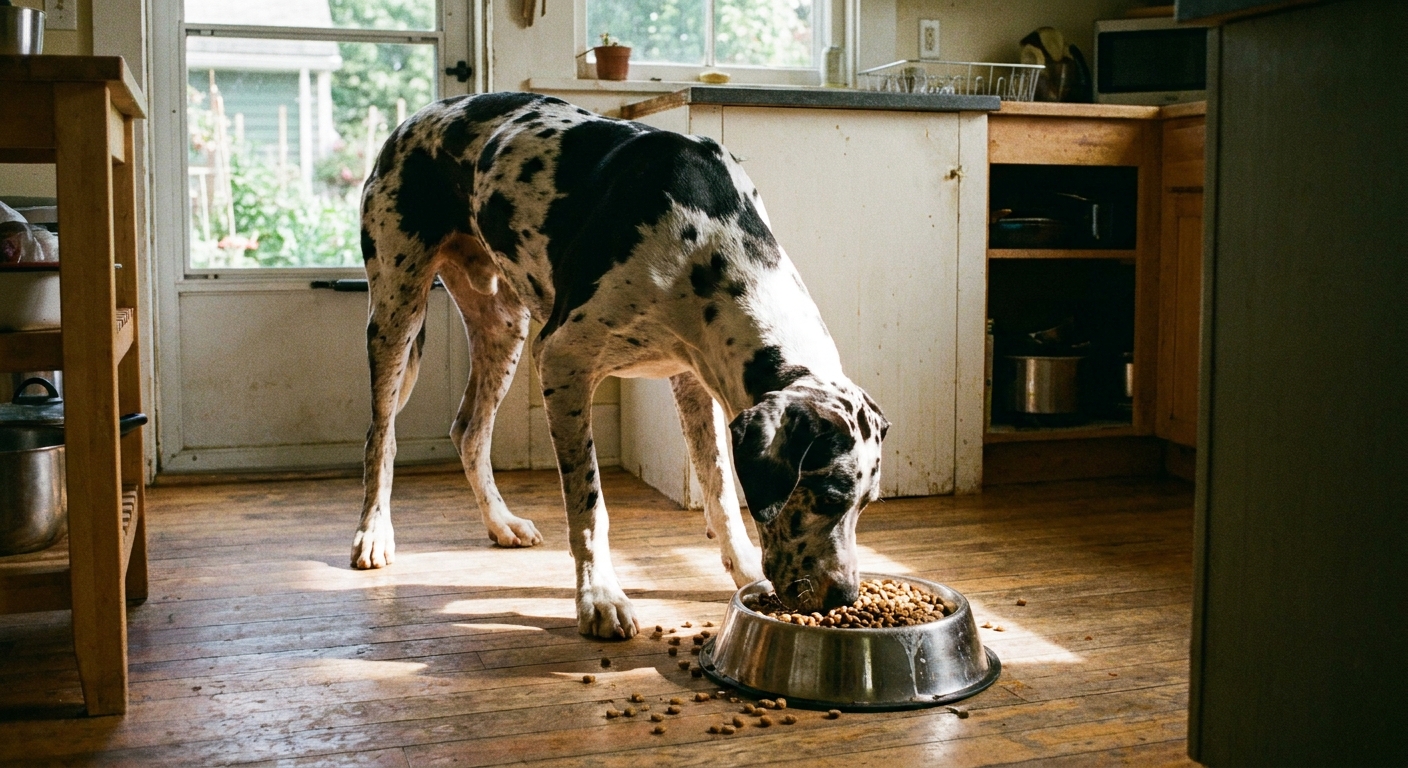
What makes Great Danes different
Great Danes are a giant-breed dog, and giant breeds are not just scaled-up Labs. The biggest differences:
- Rapid growth window: Great Danes do a huge amount of growing in the first 12 to 18 months. Too many calories or the wrong calcium balance can push growth too fast, increasing orthopedic risk.
- Joint and bone load: Their joints must support a lot of body mass. Lean body condition is one of the best gifts you can give your Dane.
- Higher bloat risk: Danes are one of the breeds most prone to GDV (gastric dilatation-volvulus), a life-threatening emergency often called bloat.
If you remember one theme, let it be this: steady and lean beats fast and chunky, especially in a Dane.
How much to feed a Great Dane
Every feeding chart has a catch: calorie needs vary based on age, sex, neuter status, activity level, and metabolism. Two Danes of the same weight can need very different amounts.
Instead of chasing a single perfect cup number, use a two-step system: start with calories, then adjust based on body condition and growth pace. Cups are just a measuring tool. Calories and body condition are what keep your Dane safe.
Step 1: Start with calories, not cups
Ask your vet for your Dane’s target adult weight range and ideal body condition score (BCS). Then choose a food and look at calories per cup (or per can). This makes your math accurate, especially if you switch foods.
Most large-breed kibbles land somewhere around 350 to 450 kcal per cup, but it varies a lot. If your food is 280 kcal per cup or 520 kcal per cup, the cup totals will look very different for the same daily calories.
Step 2: Use these ranges as a starting point
Safety note: The numbers below are intentionally broad, and plenty of healthy Danes will fall outside them. Use them to get in the ballpark, then let your dog’s body condition and your vet’s guidance do the steering. If the ranges feel wildly off for your dog, that is not a failure. It is a sign to shift to calorie tracking and a BCS check.
Daily calories (ballpark)
- Puppy (8 to 16 weeks): often about 1,000 to 1,800 kcal per day, split into 3 to 4 meals
- Adolescent (4 to 12 months): often about 1,800 to 2,800 kcal per day, split into 3 meals
- Young adult (12 to 24 months): often about 1,700 to 2,600 kcal per day, split into 2 to 3 meals
- Adult (2+ years): often about 1,600 to 2,500 kcal per day, split into 2 meals
- Senior: often about 1,300 to 2,200 kcal per day, split into 2 meals
What that can look like in cups
If your kibble is around 350 to 450 kcal per cup, many Danes end up somewhere in these rough daily cup totals. Again, these are broad.
- Puppy (8 to 16 weeks): often around 3 to 6 cups per day, split into 3 to 4 meals
- Adolescent (4 to 12 months): often around 5 to 10 cups per day, split into 3 meals
- Young adult (12 to 24 months): often around 4 to 9 cups per day, split into 2 to 3 meals
- Adult (2+ years): often around 4 to 8 cups per day, split into 2 meals
- Senior: often around 3 to 7 cups per day, split into 2 meals
Important: More is not always better. If your Dane is looking soft over the ribs or losing a defined waist, the first move is usually adjusting calories and treats, not adding supplements.
The hands-on check that beats the measuring cup
Do this once a week:
- Ribs: you should be able to feel ribs easily with light pressure, like feeling the knuckles on the back of your hand.
- Waist: viewed from above, there should be a visible waist behind the ribs.
- Tuck: from the side, the belly should tuck up behind the ribcage.
If you are new to this, ask your vet or a vet tech to show you BCS in person once. It takes two minutes and can save you months of second-guessing.
Best feeding schedule for Great Danes
For Great Danes, feeding schedule is not just about convenience. It is part of your bloat-risk reduction plan.
Meal frequency by age
- 8 to 12 weeks: 4 meals per day
- 3 to 6 months: 3 meals per day
- 6 to 18 months: 3 meals per day works well for many, especially for fast growers
- Adult: 2 meals per day (minimum). Avoid one large meal daily.
Bloat-smart routine habits
- Avoid hard exercise right before and right after meals: many vets commonly recommend keeping things calm for roughly 60 to 90 minutes after eating. A gentle leash potty break is fine.
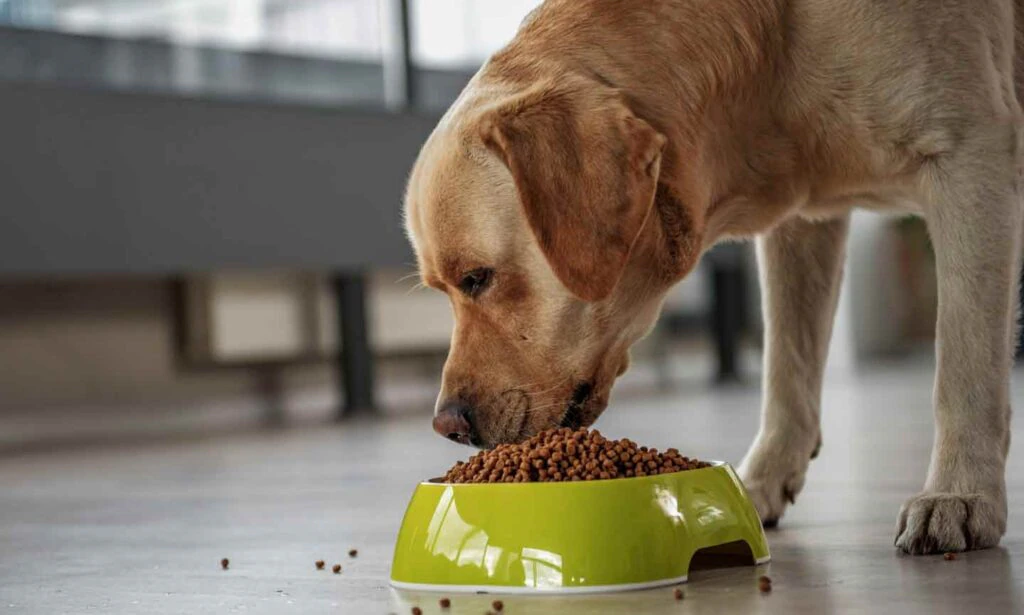
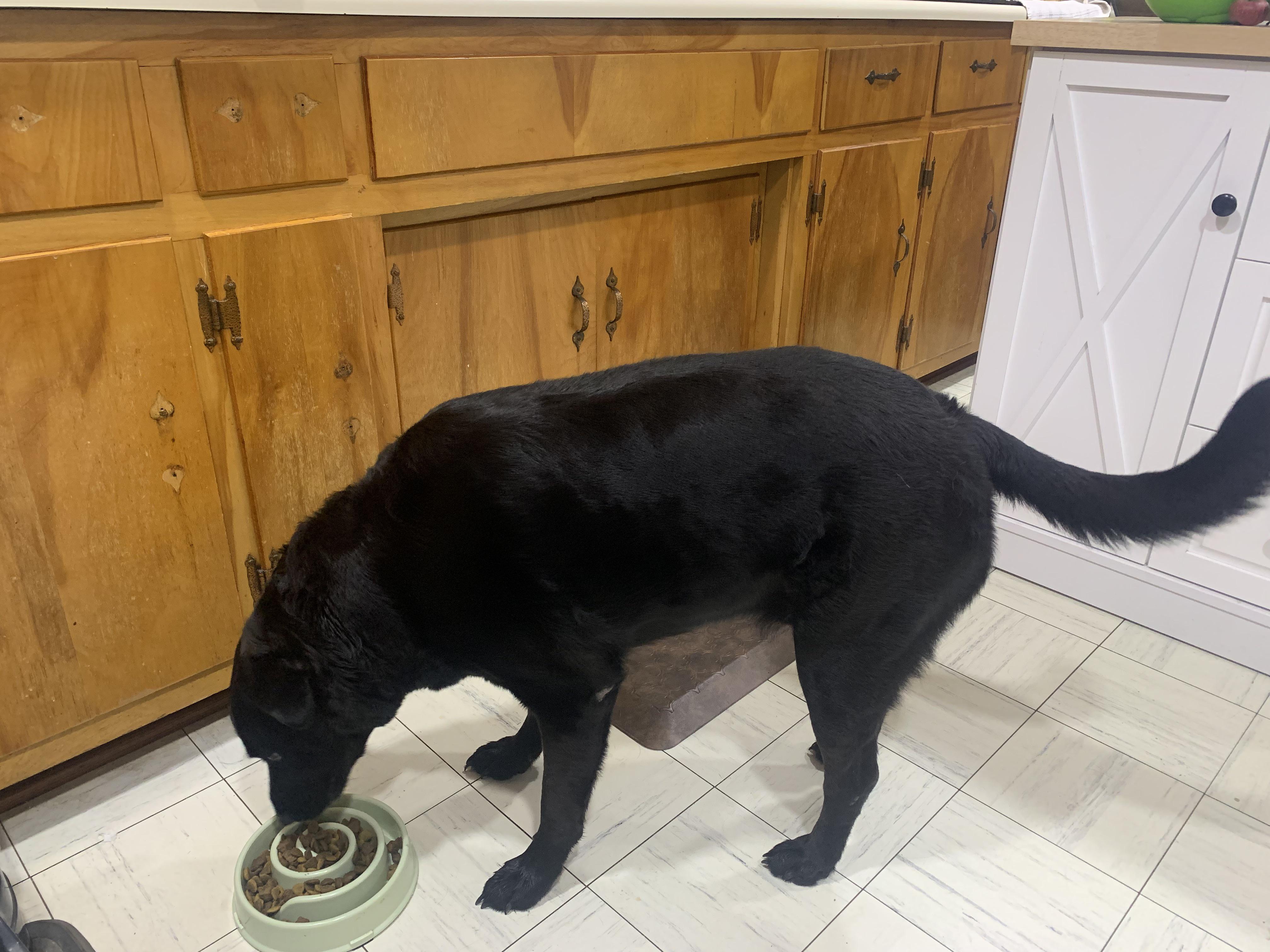
- Slow down fast eaters: use a slow feeder bowl, food puzzle, or scatter feeding in a snuffle mat.
- Reduce air gulping: if your dog inhales meals, consider a slow feeder and a kibble size that makes chewing more likely. If you want to moisten kibble, ask your vet if your Dane has any regurgitation or aspiration concerns.
- Keep water available, but discourage chugging: if your dog guzzles huge amounts at once, offer smaller amounts more frequently and talk with your vet.
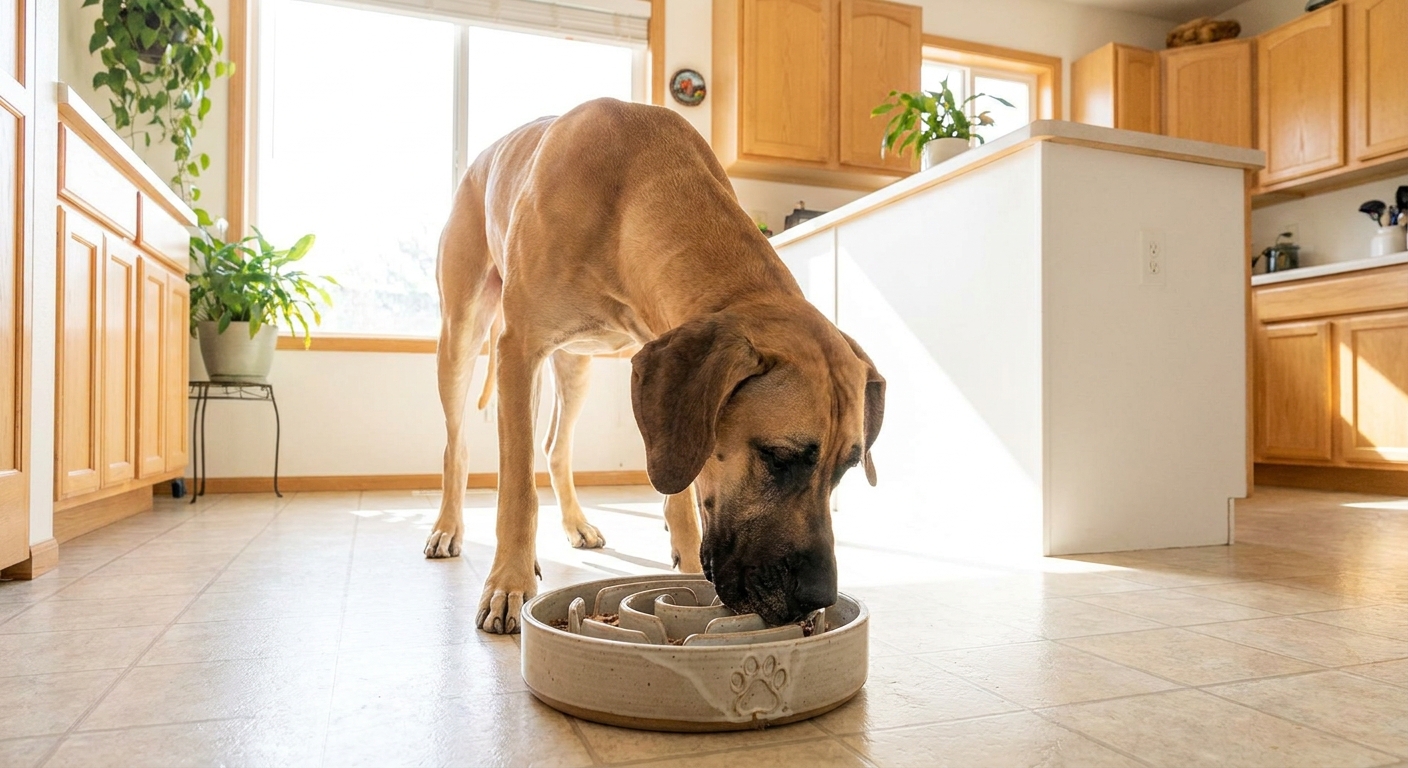
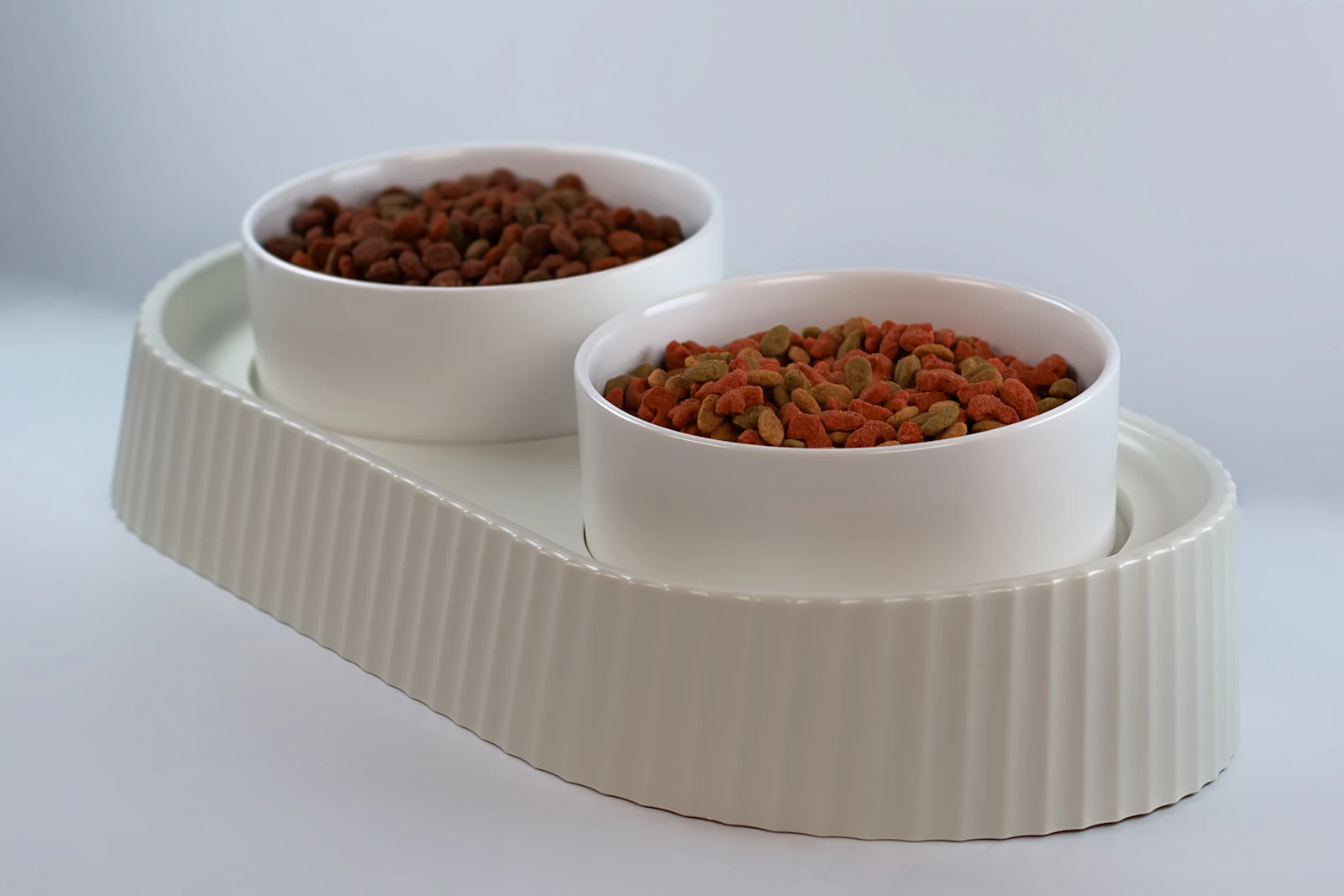
Raised bowls: should you use one?
You will hear mixed opinions, and there is a reason. Some older studies suggested an association between raised feeders and increased GDV risk in large and giant breeds, which is why general guidance shifted over time. At the same time, some individual dogs genuinely eat more comfortably with a bit of elevation.
Bottom line: decide with your veterinarian, factoring in your dog’s posture, orthopedic comfort, and any history of regurgitation. If your Dane seems uncomfortable bending to eat, bring it up at your next visit and troubleshoot together.
Choosing the right food
For most Great Danes, a high-quality commercial diet is the safest starting point. The key is choosing a formula designed for the way large and giant breeds grow.
Puppies: look for large-breed puppy
Great Dane puppies should generally eat a diet formulated for large-breed growth. These diets are designed to support controlled growth and appropriate mineral balance.
- Look for an AAFCO statement indicating the food is complete and balanced for growth including growth of large size dogs (often specified on the package).
- Avoid all life stages unless your vet recommends it and you have confirmed it is appropriate for large-breed growth.
Adults: large-breed adult is a solid default
Adult Great Danes usually do well on a large-breed adult food with moderate calories. The best food is the one that keeps your Dane lean, comfortable, and producing normal stool.
Grain-free caution
Unless your veterinarian has diagnosed a true dietary need, I am cautious with grain-free diets due to a possible association between certain diets and dilated cardiomyopathy (DCM), an area that is still being studied. If you prefer boutique or alternative diets, talk with your vet or a board-certified veterinary nutritionist first.
Key nutrients for Great Danes
When I was a vet tech, I saw how often well-meaning owners unintentionally created problems by adding supplements just in case. With Great Danes, balance matters more than boosting.
Calcium and phosphorus
Great Dane puppies are sensitive to mineral imbalances. Too much calcium, especially from supplements, can contribute to abnormal skeletal development.
- Do not add calcium supplements to a complete and balanced puppy diet unless your veterinarian specifically directs it.
- Skip high-calcium toppers like large amounts of dairy or bone meal.
Protein
Protein supports muscle and tissue growth, and most quality puppy foods provide an appropriate level. The bigger risk in giant-breed puppies is often excess calories and mineral imbalance, not protein alone.
Omega-3s (EPA and DHA)
Omega-3 fatty acids can help support skin, coat, and joint comfort. Many large-breed foods include fish oil. If you want to add a supplement, ask your vet for a dose based on your dog’s weight and the product’s EPA and DHA content, because a pump of this is not a real measurement.
Glucosamine and chondroitin
These are commonly included in large-breed formulas and can be useful for joint support in some dogs, especially as they age. They are not a fix for excess weight or too much impact exercise.
Vitamin D and trace minerals
Vitamins and trace minerals are where home mixing and supplement stacking can go sideways fast. If you are feeding a complete and balanced diet, keep add-ons modest.
Feeding Great Dane puppies
Great Dane puppyhood is where feeding choices have the biggest lifelong payoff.
How to support steady growth
- Use a large-breed puppy food through the primary growth phase. Many Danes stay on it until 12 to 18 months, but confirm timing with your veterinarian.
- Measure meals and adjust every 2 to 3 weeks as your pup’s body changes.
- Stay lean, even if relatives insist the puppy looks too skinny. A lean Dane puppy is usually a healthier Dane puppy.
- Go easy on high-calorie extras like peanut butter, cheese, and frequent chews.
Treats without derailing nutrition
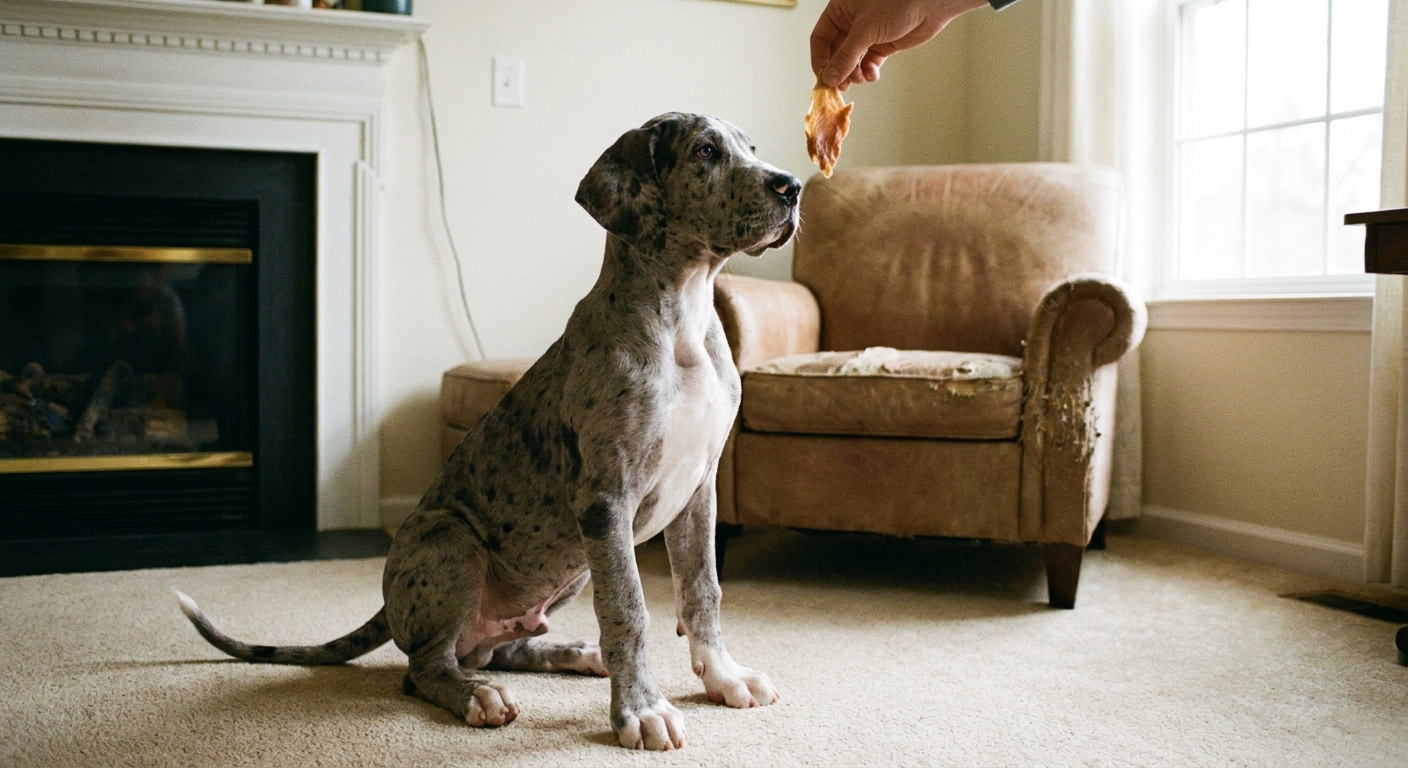
I love treats. My kitchen counters have a treat jar situation that is basically permanent. For Danes, keep treats to 10 percent or less of daily calories. Great options:
- Single-ingredient freeze-dried meats
- Carrots, green beans, cucumber slices
- Portions of their regular kibble saved from meals
When to switch to adult food
Many Great Danes transition to an adult large-breed formula somewhere around 12 to 18 months, sometimes later for very large males. The right moment is when growth rate slows and your vet is happy with body condition and orthopedic development.
Preventing bloat
Let’s talk about the scary thing, calmly and clearly. GDV is an emergency, and Great Danes are at higher risk. Feeding choices cannot eliminate risk, but they can help stack the deck in your favor.
Habits to prioritize
- Feed at least two meals daily, not one giant meal.
- Slow down eating if your Dane is a vacuum.
- Keep routine predictable. Stress can affect appetite and gut motility.
- Avoid intense activity after meals. This is commonly recommended even though exact timing rules are not absolute.
Know the early warning signs
If you suspect bloat, do not wait it out. Get to an emergency vet immediately. Signs can include:
- Unproductive retching or trying to vomit without bringing anything up
- Distended or tight abdomen
- Drooling, pacing, restlessness
- Sudden weakness, collapse
Ask your vet about prophylactic gastropexy
Many Great Dane families choose a preventive gastropexy (often done at the time of spay or neuter). It does not prevent the stomach from filling with gas, but it can prevent the deadly twisting component. This is a conversation worth having early, before you are in an emergency.
Joint health beyond the bowl
Nutrition supports joints, but day-to-day management is the full package.
- Keep your Dane lean. Extra weight is extra joint stress.
- Choose low-impact exercise for young dogs. Think controlled leash walks and gentle play, not repetitive jumping.
- Use traction on slippery floors. Rugs and runners can prevent splits and strains.
- Talk to your vet early if you see limping, bunny-hopping, stiffness, or reluctance to climb into the car.
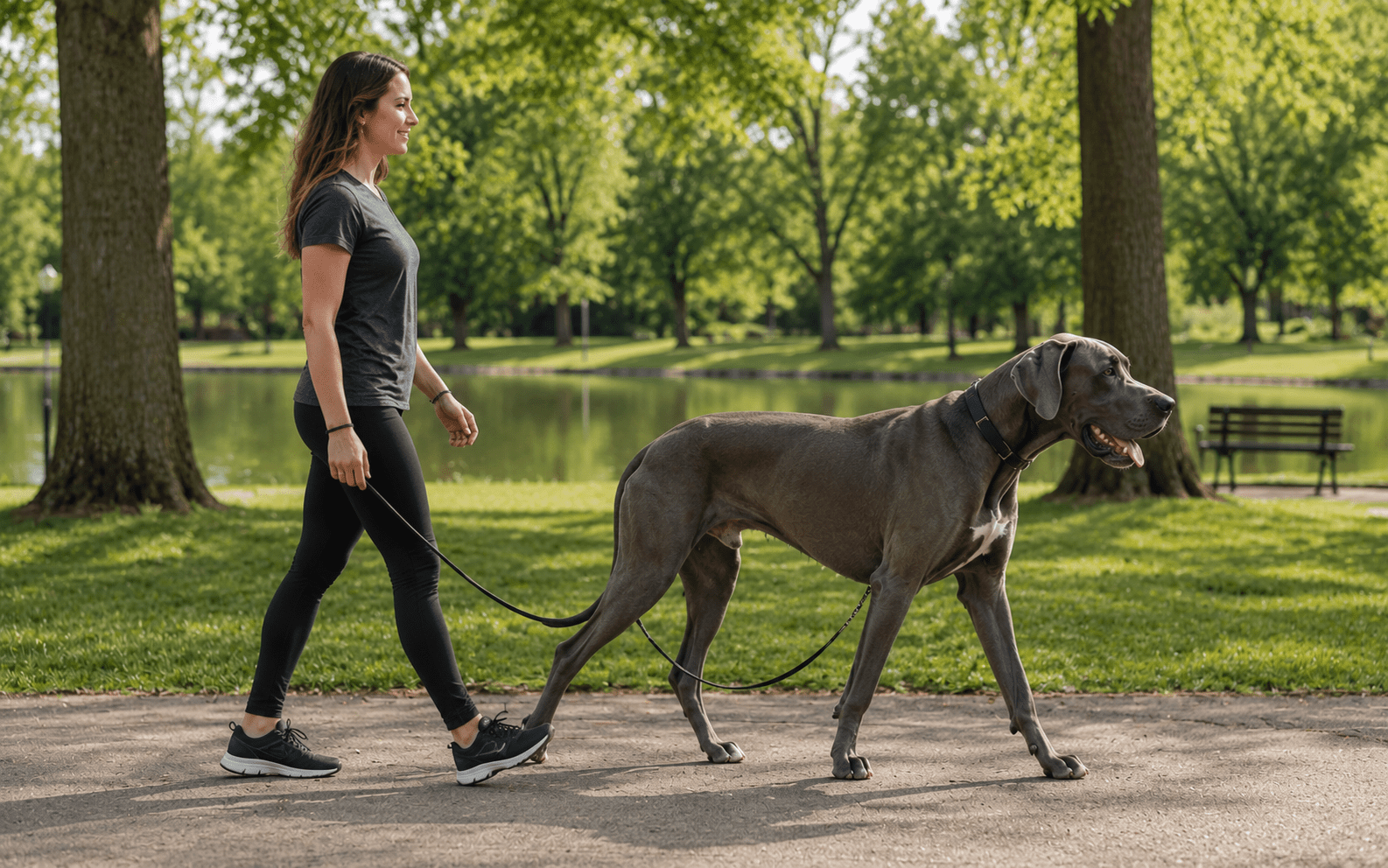
If your Dane is already showing discomfort, your vet may recommend a targeted plan that can include weight management, physical therapy, pain control, and joint supplements chosen for your individual dog.
Wet food, toppers, and home cooking
You can absolutely use toppers and variety, but with giant breeds we want to protect nutrient balance.
Wet food
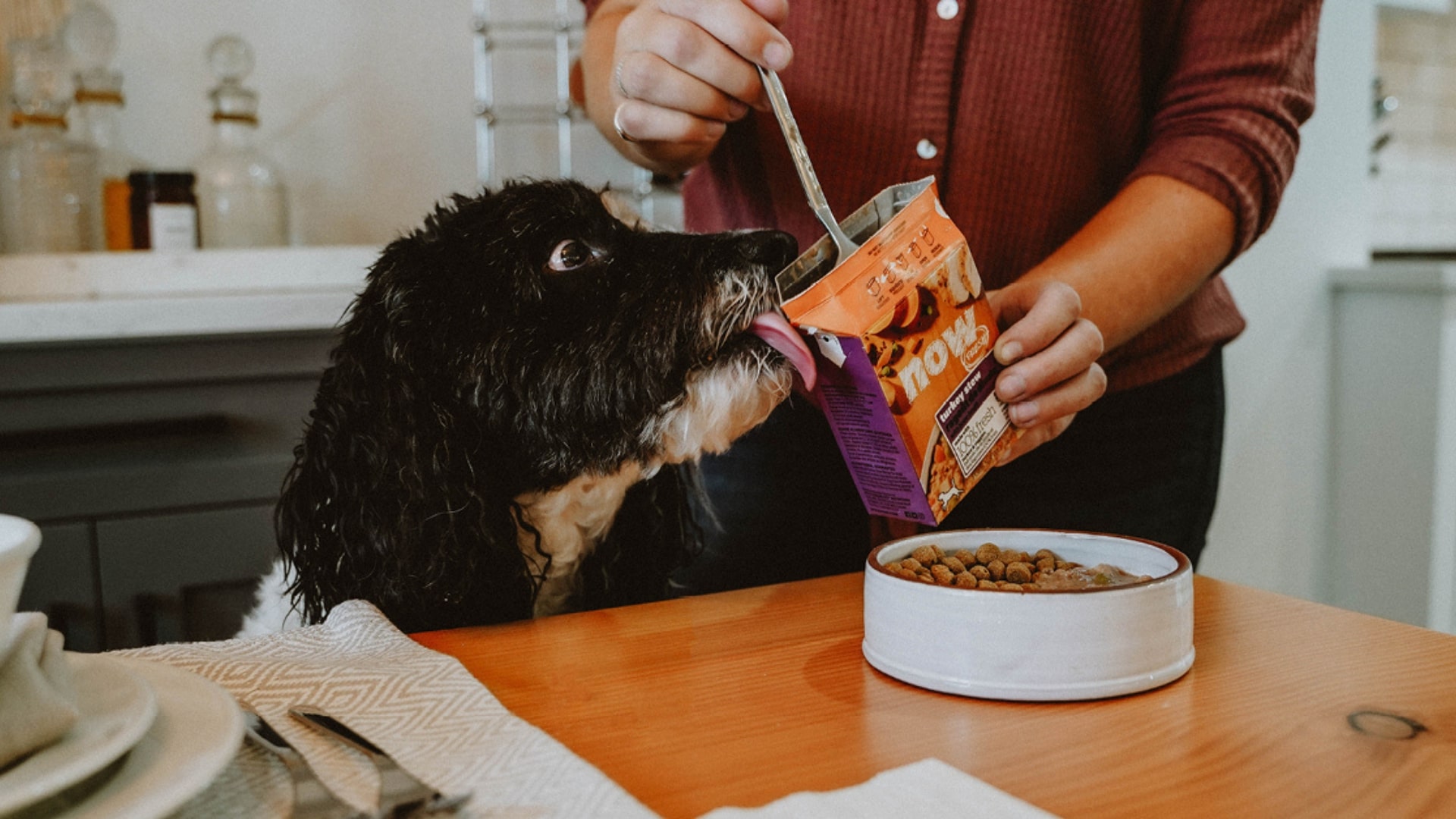
Wet food can be helpful for picky eaters or dogs who need extra hydration support. Just track calories. Danes can gain weight fast if canned food becomes a generous bonus.
Toppers
Keep toppers simple and consistent. Good options in small amounts include:
- Plain canned pumpkin (not pie filling)
- Plain cooked chicken or turkey
- Low-sodium broth poured over kibble
Home-cooked and raw
For Great Danes, I recommend only doing home-cooked or raw diets with professional formulation. It is very easy to miss calcium, phosphorus, and trace mineral targets, especially for puppies. If you want to go this route, ask your vet for a referral to a board-certified veterinary nutritionist.
Switching foods safely
If you change foods, do it gradually unless your veterinarian tells you otherwise. A fast swap is a classic way to buy yourself a week of diarrhea.
- Days 1 to 3: 25 percent new food, 75 percent old
- Days 4 to 6: 50 percent new, 50 percent old
- Days 7 to 9: 75 percent new, 25 percent old
- Day 10: 100 percent new
If stool gets loose, slow the transition down and check in with your vet, especially for puppies.
Common feeding questions
Why is my Great Dane always hungry?
Some Danes are enthusiastic eaters, and some are truly underfed. Check body condition first. If your dog is lean and acting ravenous, try adding low-calorie volume (like green beans) with your vet’s approval, splitting meals into three smaller feedings, and using puzzle feeders to extend eating time.
My Great Dane eats fast. How do I slow them down?
A large slow-feeder bowl, a snuffle mat, or feeding measured kibble in a food puzzle are all solid options. If your dog gets frustrated, start easy and build up.
Should I add joint supplements now?
If your food already includes fish oil and joint support ingredients, you may not need to add anything. If you want to supplement, talk with your veterinarian about EPA and DHA dosing and whether glucosamine is appropriate for your dog’s age and risk factors.
When should I worry about loose stool?
One soft stool after a new treat is common. Ongoing diarrhea, mucus, straining, vomiting, lethargy, or weight loss warrants a vet visit. Dogs can dehydrate quickly with GI issues, and you do not want to guess.
Quick checklist
- Feed a large-breed puppy formula through growth, then transition to large-breed adult at the right time.
- Prioritize calories and body condition over cups, and adjust portions as your dog changes.
- Feed 2 to 3 meals per day. Avoid one huge daily meal.
- Use slow feeding tools for fast eaters.
- Keep things calm after meals and know bloat warning signs.
- Do not add calcium or stack supplements without veterinary guidance.
- Transition foods gradually over 7 to 10 days.
If you want to dial in your routine, bring your Dane’s age, current weight, body condition notes, and your food’s calories per cup to your next veterinary visit. A quick conversation with your vet (or a board-certified veterinary nutritionist if needed) can turn pretty good feeding into a plan that is truly tailored to your dog.