
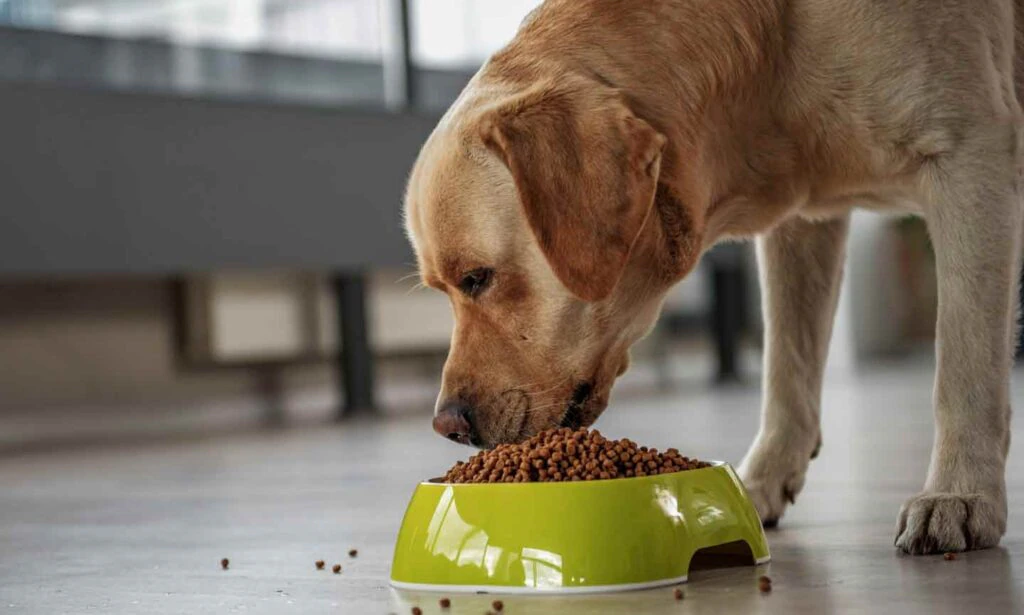
“Grain-free” has a way of sounding automatically healthier. I get it. As a former veterinary technician and a certified dog trainer who spends a lot of time translating nutrition talk into normal-people language, I see the same pattern over and over: pet parents want to do the right thing, but the labels are loud and the information is… not always clear.
Here’s the truth: some dogs do great on grain-free diets, many dogs do great on grain-inclusive diets, and the safest choice depends less on trends and more on your dog’s medical history, your budget, and the quality control behind the brand.
Quick definitions
What “grain-inclusive” means
A grain-inclusive dog food includes grains like rice, oats, barley, corn, wheat, sorghum, or other cereal grains as part of the carbohydrate and fiber mix. Many well-researched, veterinary-recommended diets are grain-inclusive.
What “grain-free” means
Grain-free foods do not include those grains, but they still contain carbohydrates. They typically use ingredients such as peas, lentils, chickpeas, potatoes, sweet potatoes, tapioca, or other legumes and tubers to provide calories and structure for kibble.
Important detail: “Grain-free” is not the same as low-carb, hypoallergenic, or better quality. It is simply a different ingredient set.
Do dogs need grains?
Dogs do not have a nutritional requirement for grains specifically. They do, however, have requirements for amino acids (protein building blocks), fatty acids, vitamins, and minerals, plus enough calories and appropriate fiber.
Grains can be a very practical way to provide:
- Digestible energy (especially from cooked rice or oats)
- Fiber to support stool quality and the gut microbiome
- Key nutrients like B vitamins and certain minerals (depending on the grain and formulation)
They are useful, but not mandatory. A grain-free diet can be perfectly fine too, as long as it is complete and balanced and the formulation is solid.
Why some owners choose grain-free
There are legitimate reasons a grain-free diet might be on your shortlist. The key is making sure the “why” matches your dog’s actual needs.
Reason 1: A true food allergy or sensitivity
When dogs have food-related allergies, they most often involve proteins (think beef, chicken, dairy, eggs). Grain allergies can happen, but they are less common than the internet makes them sound.
If your dog has chronic itch, ear infections, or ongoing GI upset, the gold standard for diagnosis is a veterinary elimination diet trial, typically using a prescription hydrolyzed or truly novel protein formula for 8 to 12 weeks, depending on your veterinarian’s protocol. Many of these diets are grain-inclusive, some are not. The point is controlled ingredients, not a marketing claim.
Reason 2: You are avoiding certain grains for GI comfort
Some dogs do better with different carb sources, including certain grain-free formulas, particularly if a specific grain seems to worsen stool quality. But “grain-free” is not automatically gentler. For some dogs, legume-heavy recipes can cause gas or loose stools.
Reason 3: Preference or practicality
Sometimes it is as simple as: one dog is on a veterinary-directed grain-free plan, and feeding everyone the same food reduces mistakes. That is a valid management decision, as long as the food is well-formulated and your veterinarian is on board.
The DCM question
If you have heard about a possible link between certain grain-free diets and dilated cardiomyopathy (DCM), you are not imagining it. In 2018 and 2019, the US Food and Drug Administration (FDA) issued public updates after receiving reports of DCM in dogs eating diets that were often described as grain-free and frequently higher in legumes and/or potatoes. The FDA has not identified a single causative ingredient, and research is still evolving.
Here is the most practical, least-panicky way to think about it:
- DCM is a serious heart disease that can lead to heart failure.
- Some dogs have genetic predispositions (Dobermans, Boxers, Great Danes, and others).
- There has been concern that, in some dogs, certain diet formulations may be associated with DCM, including some grain-free diets and some diets that rely heavily on legumes and potatoes.
- The issue appears more nuanced than “grains good, grain-free bad.” Formulation, ingredient ratios, nutrient bioavailability (how well the body can use the nutrients), and quality control likely matter a lot.
What should you do today? If your dog is doing well on their current diet, do not panic-switch at 10 p.m. on a Tuesday. Instead:
- Talk to your veterinarian, especially if your dog is a breed at higher DCM risk.
- Consider choosing foods from companies with strong nutrition expertise and robust quality control.
- If you are feeding a grain-free formula, consider avoiding recipes where peas, lentils, chickpeas, or potatoes dominate the first several ingredients, unless your veterinarian has a specific reason for that choice. Think of this as a cautious, interim strategy while the science keeps developing, not a hard rule.
- Ask whether a baseline cardiac exam or echocardiogram makes sense for your dog, particularly if they are predisposed or have symptoms like coughing, exercise intolerance, fainting, or rapid breathing.
Bottom line: the safest move is not “always grain-inclusive.” The safest move is well-formulated, complete-and-balanced nutrition from a reputable manufacturer, chosen with your dog’s health history in mind.
How to choose the safest option
Quick note: This article is educational and not a substitute for veterinary advice. If your dog has ongoing symptoms, a medical condition, or a known heart risk, your veterinarian should be your co-pilot here.
Whether you land on grain-free or grain-inclusive, use this checklist to pick a diet you can feel good about.
1) Start with your dog
- Puppy, adult, or senior: life stage matters a lot.
- Large-breed puppy: look for large-breed puppy formulas with appropriate calcium and phosphorus levels.
- Medical needs: pancreatitis history, urinary issues, kidney disease, allergies, and GI disease often call for veterinary guidance and sometimes a prescription diet.
- Body condition: if your dog is gaining weight, the “right” diet is the one you can portion accurately and stick with.
2) Look for an AAFCO statement
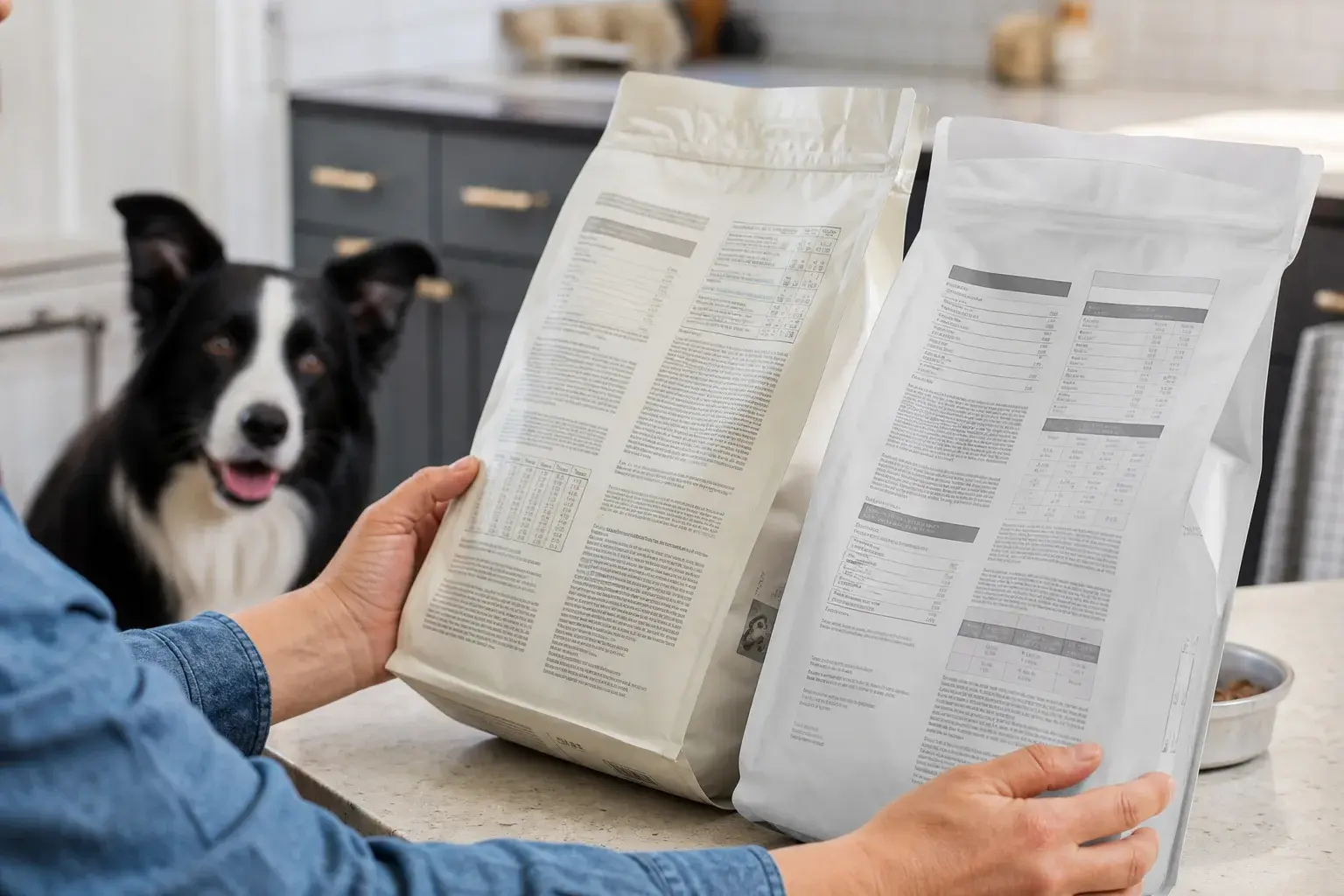
On the bag or can, find the statement indicating the food is complete and balanced for a specific life stage, based on AAFCO nutrient profiles or feeding trials. This is one of the quickest ways to avoid pretty packaging with weak formulation behind it.
If you are not sure what “feeding trials” means, it is simple: the company actually fed the diet to dogs under a formal protocol to confirm it supports health, not just that it looks good on paper.
3) Prefer brands with real nutrition expertise
As a vet tech, I cared far more about what was happening behind the scenes than what was printed on the front of the bag. Helpful signs include:
- They employ qualified nutrition experts (for example, a PhD animal nutritionist or board-certified veterinary nutritionist).
- They can tell you where the food is manufactured and what testing they do (ingredient testing, finished product testing).
- They have a customer service line that can answer detailed questions without dodging.
Two concrete questions you can ask a manufacturer:
- Who formulates your diets, and what are their credentials?
- Do you conduct AAFCO feeding trials on this specific formula, or is it formulated to meet AAFCO nutrient profiles?
4) Read the ingredient list with context
Ingredient lists are ordered by weight before processing. That is one reason “fresh chicken” can appear above “chicken meal” even though chicken meal can be a concentrated protein source after water is removed. More importantly, ingredients alone do not automatically tell you nutrient balance.
That said, if you are deciding between similar foods:
- Grain-inclusive: rice, oats, barley, or corn can be perfectly appropriate carb sources.
- Grain-free: be cautious with formulas where multiple legumes and potatoes appear repeatedly near the top, unless you have a specific veterinary reason.
5) Make sure grain-free solves a real problem
If your only reason is “grains are fillers,” you can usually pick a high-quality grain-inclusive diet and feel confident. If your reason is a diagnosed medical issue, coordinate with your veterinarian so you do not accidentally trade one problem for another.
Grain-free treats
Many dogs eat a mix of meals, treats, chews, and table scraps. In most cases, treats are not a big deal nutritionally as long as they stay under about 10 percent of daily calories. If you feed a grain-inclusive food but use grain-free treats, or vice versa, that is usually fine.
The bigger issue is quantity and sensitivity. If your dog gets soft stool or itch flare-ups after certain treats, treat them like any other ingredient: simplify, keep notes, and bring the pattern to your veterinarian. And if your dog is on a prescription elimination diet, ask your vet before adding any treats at all, because one “little snack” can ruin the trial.
Boutique diets and fresh food
You may hear the term BEG diets, which refers to some boutique companies, exotic proteins, and grain-free formulations. The concern is not that “small company” automatically equals unsafe. It is that smaller or trend-forward brands sometimes have less robust formulation expertise, fewer feeding trials, or looser quality control.
If you want to feed fresh, lightly cooked, or a home-prepared plan, please do it with support. I have seen well-meaning home diets cause nutrient deficiencies in real dogs. The safest approach is a recipe formulated by a board-certified veterinary nutritionist or a fresh food company with transparent nutrition credentials and testing.
Transition tips
Any diet change can cause temporary GI upset, no matter how “good” the new food is. Plan a slow transition:
- Days 1 to 3: 75% old food, 25% new food
- Days 4 to 6: 50% old, 50% new
- Days 7 to 9: 25% old, 75% new
- Day 10+: 100% new
If your dog has a sensitive stomach, stretch each step longer. If you see vomiting, significant diarrhea, blood in stool, or your dog seems painful or lethargic, stop the transition and call your veterinarian.
Special situations
Puppies
Puppies need precise nutrition for growth. Choose a food labeled for growth or all life stages, and for big pups, look for large-breed puppy guidance. This matters more than whether the food has grains.
Dogs with itchy skin
Before you blame grains, rule out the common stuff: fleas, environmental allergies, secondary infections, and protein sensitivities. If you are considering a diet trial, do it with your vet so you can actually get a clear answer.
Dogs with heart risk
If your dog is in a breed known for DCM or you have a family history, talk to your veterinarian about diet choice and monitoring. You may be advised to select a diet with a long track record and to avoid certain formulations.
FAQ
Is grain-free dog food better?
Not inherently. Grain-free can be a good fit for some dogs, but it is not automatically higher quality or healthier. The formulation and the manufacturer matter more than the presence or absence of grains.
Are grains just fillers?
No. In properly formulated diets, grains can provide digestible energy, fiber, and nutrients. A “filler” is an ingredient added without nutritional purpose, and many grains do have nutritional value for dogs.
What grains are easiest to digest?
Many dogs do well with rice and oats. Digestibility depends on how the food is processed and your individual dog’s tolerance.
My dog is fine on grain-free. Should I switch?
Maybe, maybe not. If your dog is thriving and has no heart risk factors, you can discuss pros and cons with your veterinarian rather than making an abrupt change. If your dog is a higher-risk breed or your food is heavy in legumes and potatoes, your vet may suggest a different option or cardiac screening.
How can I tell if a food is causing a problem?
Watch for persistent itching, recurrent ear infections, chronic GI upset, poor stool quality, weight changes, or reduced energy. For heart concerns, symptoms can include coughing, tiring easily, fainting, or fast breathing. Any of those warrant a veterinary visit.
The takeaway
If I could leave you with one practical rule, it is this: pick a complete-and-balanced diet from a company you trust, then tailor it to your dog’s actual health needs. Grains are not the enemy, and grain-free is not automatically risky. Your best choice is the one that is thoughtfully formulated, well-tested, and a good match for the dog in front of you.
If you want extra reassurance, bring the bag (or a screenshot of the label) to your next vet visit. I promise your vet would much rather have a five-minute food conversation now than a preventable nutrition problem later.