A step-by-step guide to socialization and obedience training for German Shepherds, with practical routines to prevent reactivity and build a confident, respo...
If your dog barks at the window like it is their full-time job, you are not alone. From your dog’s perspective, the window is basically a giant, ever-changing trigger machine: squirrels, delivery drivers, skateboards, other dogs, and that one neighbor who exists a little too loudly.
The good news: you do not need to “alpha” your dog into silence, and you do not need to wait for them to “grow out of it.” With a mix of environment tweaks and positive reinforcement training, many dogs can improve noticeably over a few weeks, with steadier progress as the new habits stick.
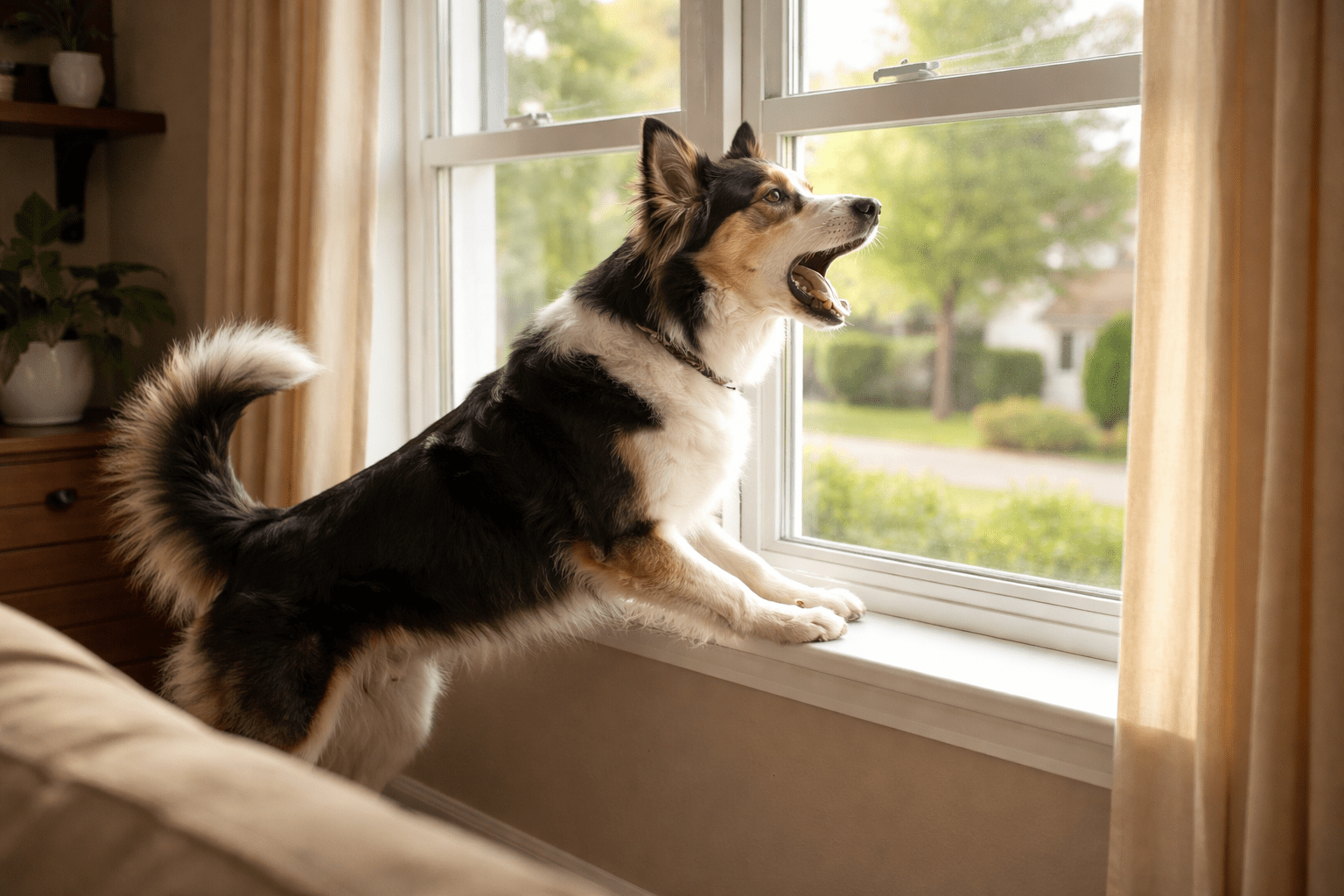
Quick note: barking is normal canine communication. Our goal is not a mute button. It is helping your dog feel safe and teaching them what to do instead of launching into a full alert cycle.
Why dogs bark at the window
Window barking usually falls into one (or more) of these buckets:
- Alarm barking: “Something moved! Everyone wake up!”
- Territorial behavior: “That is my space. Keep going.”
- Frustration: “I want to get to that dog/person/squirrel and I cannot.”
- Fear: “That feels scary, so I will make it go away.”
- Boredom and habit: barking became a self-reinforcing routine.
Here is the sneaky reinforcement loop that keeps it going: your dog barks, the person eventually walks away, and your dog learns, “My barking worked.” They did not leave because of the barking, but your dog does not know that.
If this is new or sudden: a quick check-in with your veterinarian can be smart, especially for senior dogs. Changes in hearing, vision, pain, or cognitive decline can make dogs more reactive to normal sights and sounds.
1) Block the rehearsal
If your dog practices window barking 30 times a day, training will feel like trying to bail out a canoe while someone keeps pouring water in. Step one is prevention while you teach new skills.
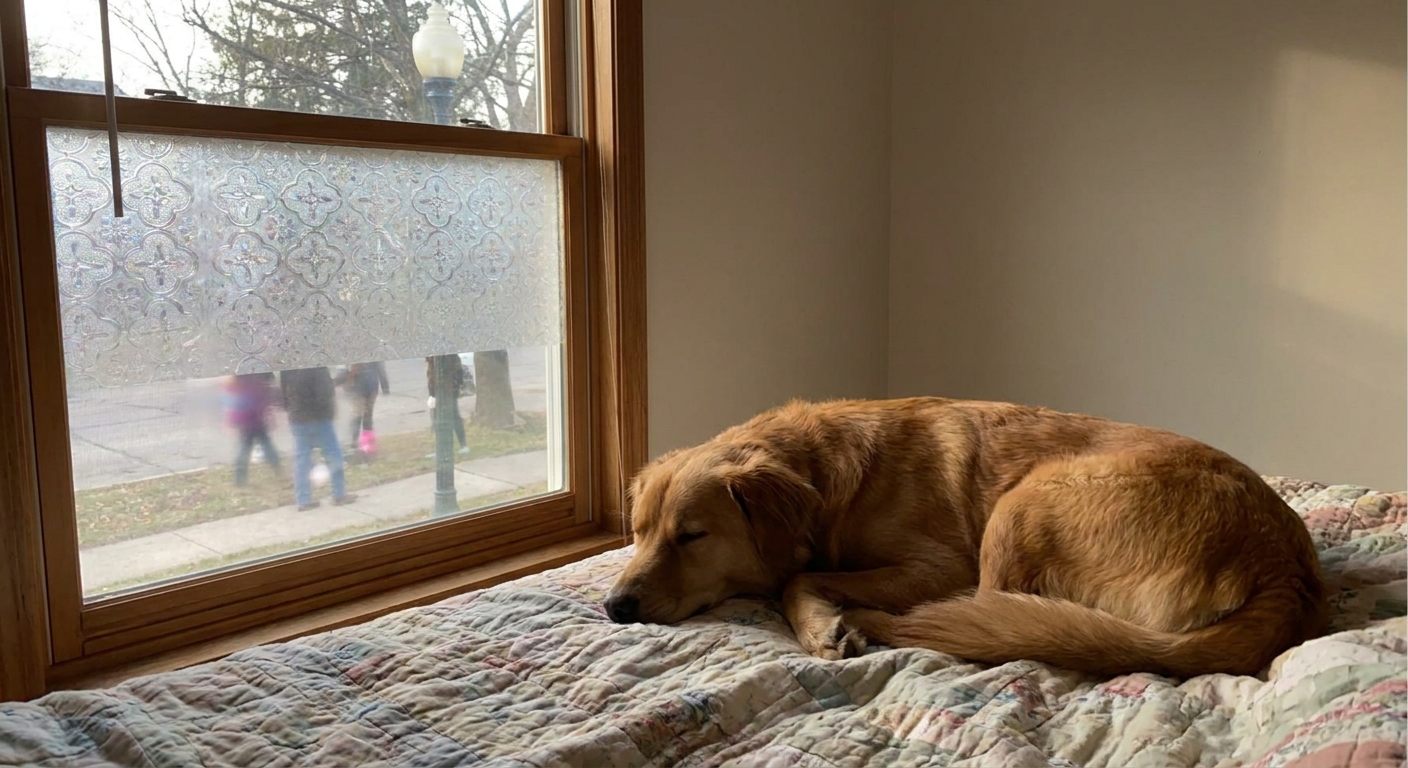
- Use frosted window film on the lower half of the window so your dog can still get light without a perfect view.
- Close curtains or blinds during peak trigger times like school pickup or mail delivery.
- Move furniture so the couch is not a launch pad straight to the sill.
- Use baby gates or exercise pens to block access to the front room when you cannot actively train.
- Add white noise (fan, sound machine) if street sounds are part of the problem, especially in apartments.
This is not “giving in.” It is reducing rehearsal so your dog can actually learn.
2) Teach “go to mat”
I love “go to mat” for window barkers because it gives your dog a clear job that is incompatible with sprinting to the glass.
How to start
- Place a mat or dog bed far enough from the window that your dog can relax.
- Toss a treat onto the mat. When your dog steps on it, calmly praise and toss another treat on the mat.
- Once your dog is seeking the mat, add the cue “mat” or “place” right before they step onto it.
- Build duration by feeding several treats in a row while they stay on the mat, then release with “all done.”
Practice when it is quiet first. Then practice with low-level triggers, like someone walking by at a distance, while you are ready to reinforce.
Trainer tip: do not drag your dog to the mat. We want the mat to feel like a great choice they control.
3) Use a “thank you” cue
Some dogs need to alert bark once or twice. That is normal. The goal is teaching: “Thanks, I heard you. Now we are done.”
Try this
- When your dog barks, walk over calmly.
- Say a cue like “thank you” or “got it.”
- Hold a treat at your dog’s nose and slowly lure them one or two steps away from the window.
- The moment they stop barking to sniff, mark with “yes” and give the treat.
- Redirect to a mat, scatter a few treats on the floor, or hand them a chew.
With repetition, your cue starts predicting that quiet and moving away pays well.
Safety note: if your dog is so revved up that you worry they might redirect and nip, do not reach into their space at the window. Create distance first (block the view, step behind a gate, toss treats away from the window), then work on the cues when they are calmer.
What to avoid: yelling “quiet!” from across the room. Many dogs interpret shouting as you joining the alarm party.
4) Countercondition triggers
This is my go-to for dogs who bark because they are overaroused, frustrated, or a little worried.
The concept is simple: the trigger shows up, and your dog gets something wonderful before they escalate.
Set it up
- Grab high-value treats like chicken, cheese, or soft training bites.
- Use tiny pieces and keep sessions short, like 1 to 3 minutes. End on a win before your dog tips over threshold.
- Start at a time of day when triggers are mild, or create distance by working in a room farther from the window.
- When your dog notices a passerby but is still under threshold (no barking, no lunging), start feeding a steady stream of small treats.
- When the trigger disappears, treats stop.
Over time, your dog learns: “People walking by equals snack time,” and their emotional response softens. Less emotion usually means less barking.
Threshold clue: if your dog is already exploding at the window, learning is much harder and they are unlikely to respond well. Increase distance, block the view, or start with easier scenarios.
5) Offer a controlled look
Some dogs feel like window patrol is their responsibility, especially herding breeds, guardian breeds, and any dog who takes their job description seriously.
Rather than arguing about it all day, give a controlled option:
- Invite and dismiss: let your dog look out the window with you for a few seconds, then cue “all done” and guide them to a mat for a reward.
- Set “watch times”: allow a brief look after meals or after a walk, then close the blinds for downtime.
This approach is surprisingly calming for dogs who get more upset when they feel abruptly cut off from their “duty.”
6) Add enrichment
Window barking often spikes when dogs are under-exercised, under-enriched, or just plain bored. I am not saying you need marathon walks, but most dogs do better with a predictable daily outlet.
- Sniff walks: let your dog investigate. Sniffing is fantastic decompression.
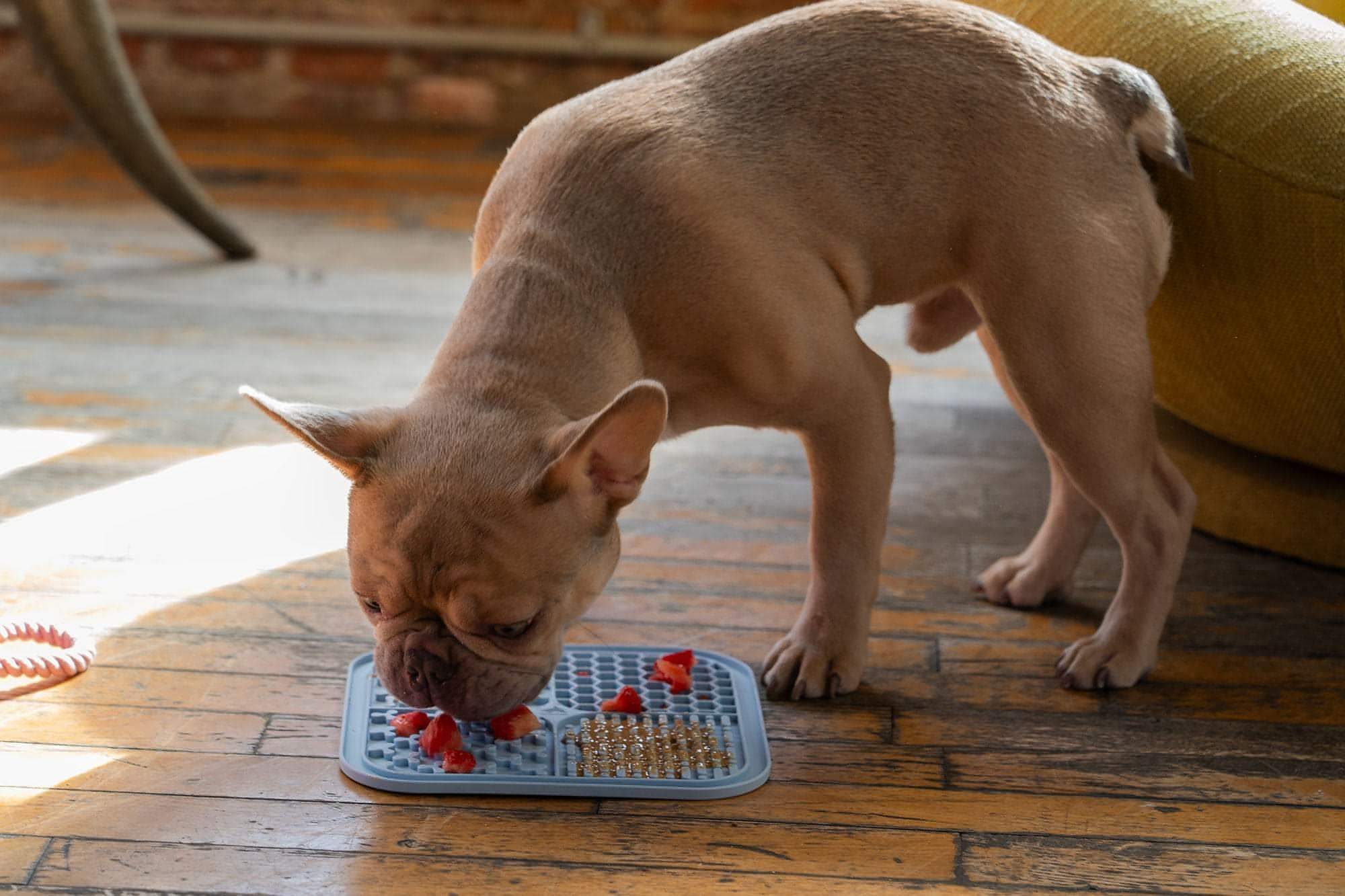
- Food puzzles: Kongs, lick mats, or a scatter feed in the yard.
- Shredding and chewing: cardboard boxes (supervised), appropriate chews, or stuffed toys.
- Short training sessions: 3 to 5 minutes of cues like touch, heel, or place can take the edge off quickly.
Then, when peak trigger time hits, you have a calmer dog with a fuller cup.
7) Keep responses boring
One of the biggest reasons window barking persists is that it is unintentionally rewarded.
Common accidental rewards
- Attention: even scolding can be rewarding to a dog who wants engagement.
- Access: your dog barks, you open the door, and now barking predicts access to outside.
- Chasing: you run over dramatically, which can add excitement and fuel the behavior.
A better routine
- Keep your response boring and consistent.
- Guide your dog away from the window.
- Reinforce quiet and calm behaviors, like sitting, going to mat, or making eye contact.
- If you need to block the view, do it without fanfare and then redirect to something your dog loves.
If multiple family members respond differently, barking gets stronger. Pick a plan and get everyone on the same page.
What not to do
- Do not use shock collars or bark collars. They may increase fear and anxiety for some dogs, especially dogs who are already reactive, and they do not teach a replacement behavior.
- Do not punish growling or warning behaviors. Suppressing communication can make reactions less predictable.
- Do not rely on “no bark” sprays as your main solution. Management and training are more effective long-term.
If your dog is truly panicking at the window or seems unable to settle for long periods, talk with your veterinarian. Sometimes underlying anxiety needs a broader plan, and there is no shame in that.
Troubleshooting
Barks at every tiny sound
Lean heavily on management (window film, white noise) plus “thank you” and mat work. These dogs often need help learning that the house is safe and quiet is rewarding.
Cannot disengage
You are likely over threshold. Increase distance from the window, lower trigger exposure, and focus on counterconditioning with higher-value treats.
Lunges or seems scared
Skip confrontation. Work below threshold and consider hiring a credentialed positive reinforcement trainer for a tailored plan, especially if there is any bite risk.
FAQ
How long does it take?
With consistent management and daily practice, many families see early improvement in 1 to 3 weeks, with bigger changes over 6 to 12 weeks. Dogs with long-standing habits, frequent triggers, or higher anxiety may take longer, and that is normal.
Should I ignore the barking?
Ignoring can work for attention-seeking barking, but window barking is often self-reinforcing because the trigger leaves. It is usually more effective to prevent rehearsal and teach a replacement behavior.
Can I teach “quiet”?
Yes, but it works best when paired with reinforcement and a clear alternative, like “go to mat.” If your dog is already in full alarm mode, “quiet” alone often fails because they are too wound up to respond well.
When to get help
Consider working with a certified positive reinforcement trainer or talking with your vet if:
- Your dog’s barking includes snarling, snapping, or redirected biting.
- Your dog cannot settle for long periods after a trigger passes.
- You suspect fear, panic, or separation anxiety is part of the picture.
- The behavior is escalating despite consistent management and training.
If you are hiring help, look for reputable credentials and a force-free approach. Common examples include IAABC, CCPDT (CPDT-KA), and KPA.
You deserve a peaceful home, and your dog deserves a plan that makes them feel safe. With the right mix of management, skill-building, and reinforcement, window barking can absolutely get better.