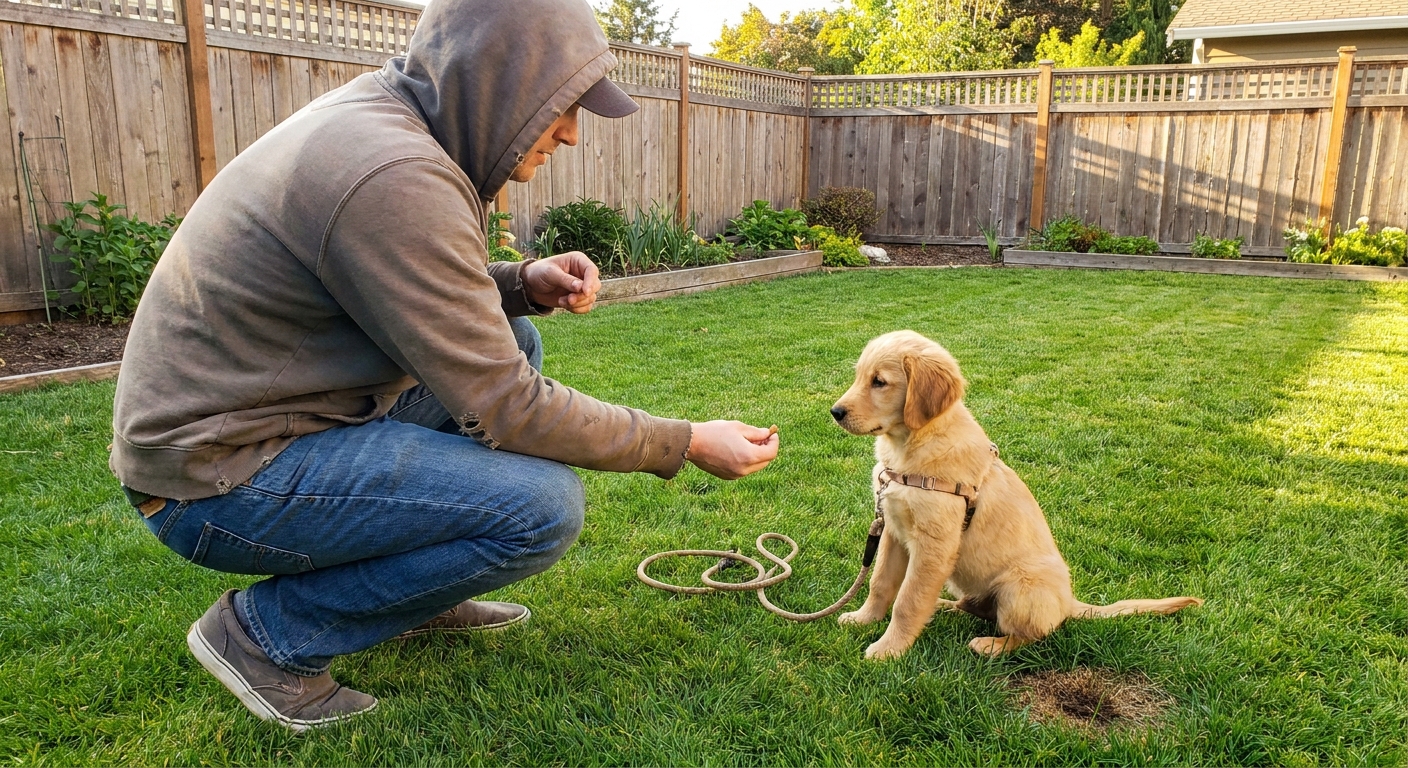
Potty training can feel like an around-the-clock job for the first week. The good news is that puppies learn patterns fast when we make the pattern easy: frequent trips outside, the same potty spot, a clear cue, and a reward that makes your puppy think, “Ohhhh, this is what you wanted!”
This 7-day plan is my go-to “fast track” for new puppy families. It is built on positive reinforcement, smart supervision, and crate training used correctly. You will still have to put in the reps, but if you do, most puppies show a big drop in accidents by the end of the week.
Quick expectations check: This plan works best for young, healthy puppies (often around 8 to 16 weeks) and households that can be consistent for a week. If your puppy is older, newly adopted, coming from a shelter environment, or has any medical concerns, you can still use the same framework, but you may need a longer runway and a little more management.
Before you start
Supplies you need
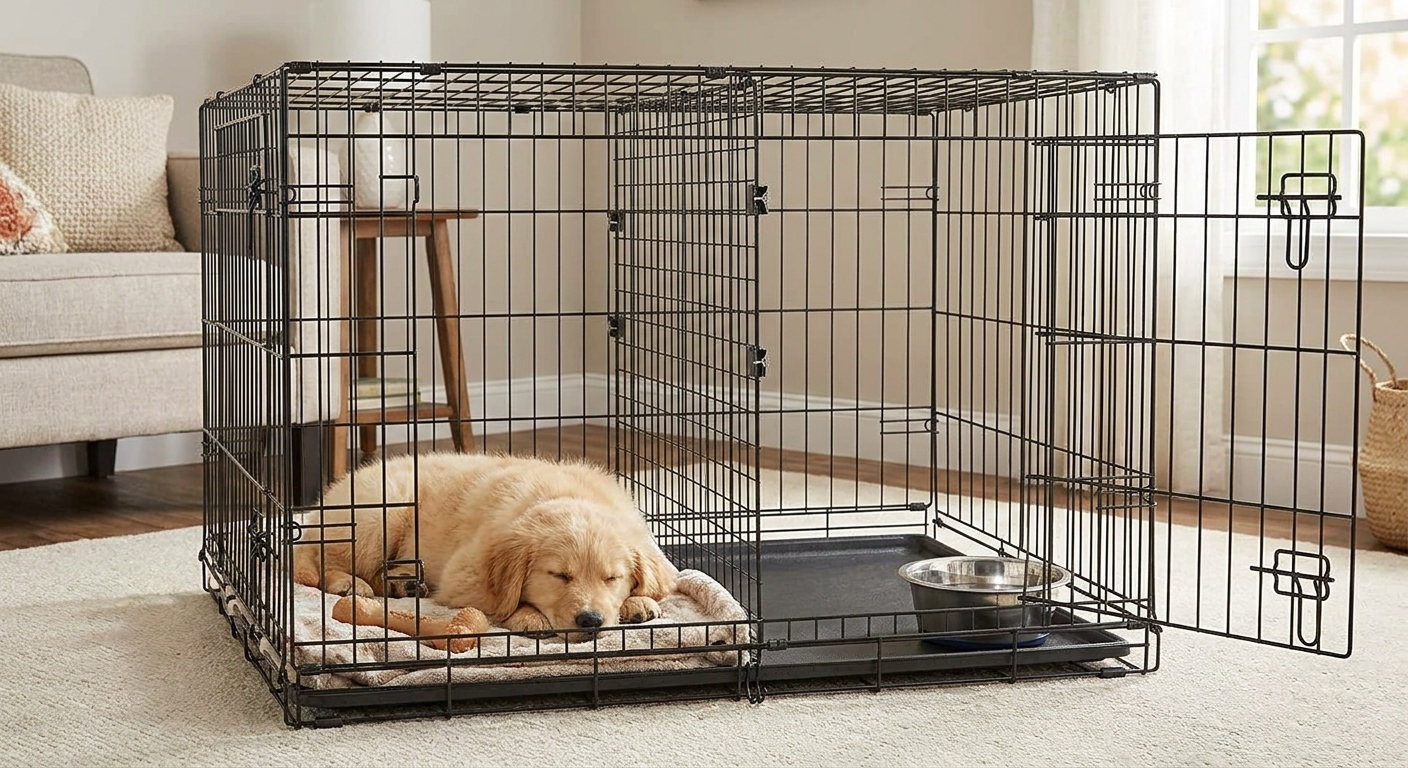
- Crate sized so your puppy can stand up, turn around, and lie down comfortably (too big invites a potty corner)
- Baby gates or an exercise pen to limit roaming
- Enzyme cleaner (not just soap and water)
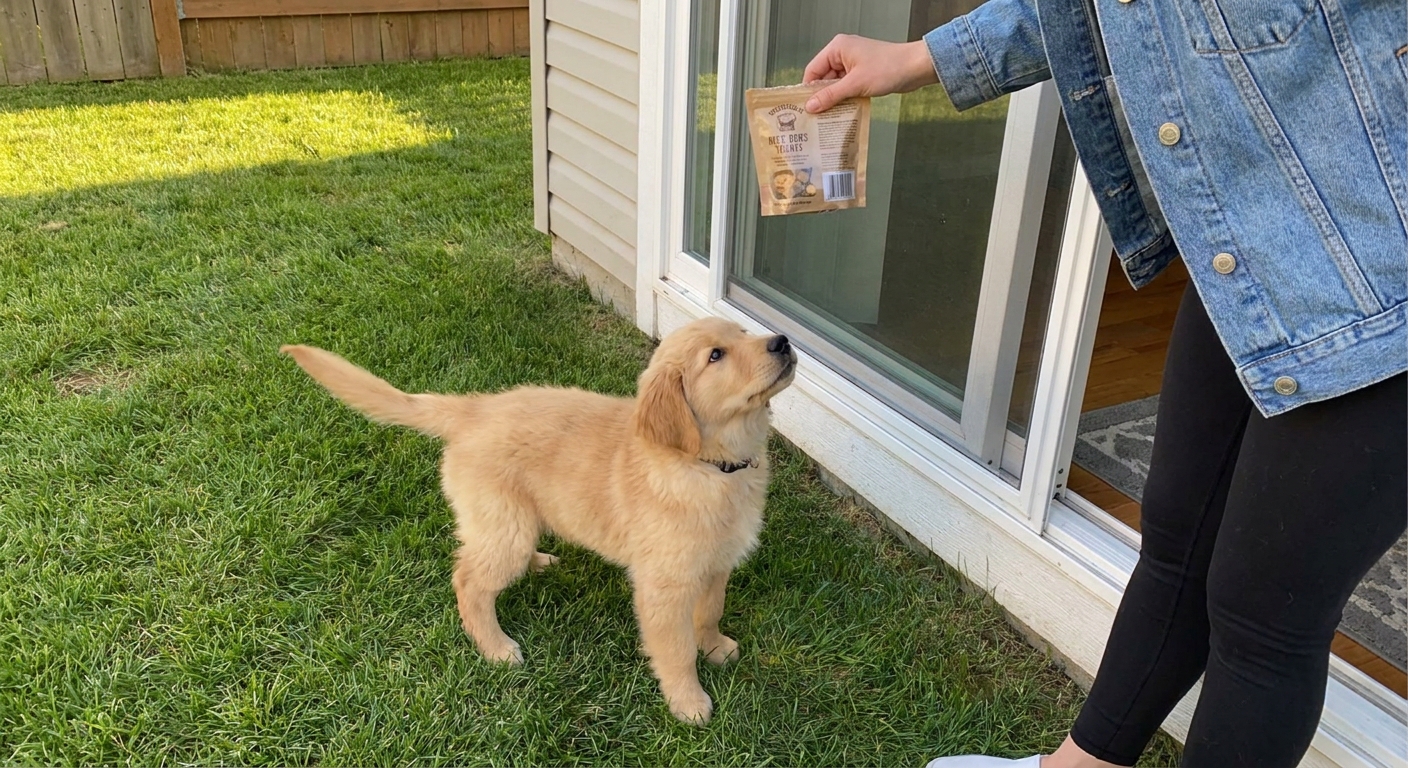
- High-value treats in a jar near the exit door (tiny, soft pieces)
- Leash for every potty trip, even in a fenced yard (yes, really)
- Poop bags and a flashlight for nighttime trips
The core rules
Rule 1: Supervision or confinement
If your puppy is awake and not actively supervised, accidents will happen. For the first week, your puppy should be in one of three places:
- Outside on a potty trip
- With you (on leash or within arm’s reach)
- In the crate (or a small puppy-safe pen) for naps and short downtime
Rule 2: Potty trips are boring first
Go to the potty spot. Stand still. Give your cue once (example: “Go potty”). Wait. When your puppy goes, throw a tiny treat party. Think: 3 to 5 pea-sized treats plus happy praise. Then and only then comes the fun walk, sniff time, or play.
Rule 3: Reward immediately
Puppies connect consequences to behavior in the moment. Treats should show up immediately, ideally within a couple seconds of your puppy finishing peeing or pooping. If you fumble with the bag, your puppy learns, “I pottied… and then we stood around.” Keep treats in your pocket.
Rule 4: Clean accidents thoroughly
First, blot up urine with paper towels (do not rub it deeper into fabric). Then use an enzyme cleaner and follow label instructions. If any odor remains, your puppy will consider that spot a legitimate bathroom option.
Your 7-day schedule
Below is the step-by-step plan. Read the whole thing once, then commit to it like a short-term training boot camp. One week of consistency beats a month of “kind of.”
How often to go out
Use this as your baseline in week one:
- Immediately after waking up
- Immediately after eating
- 5 to 15 minutes after a big drink
- After play (especially zoomies)
- After training sessions
- Before crating
- Right after coming out of the crate
- Every 30 to 60 minutes when awake (you will adjust as you learn your puppy)
A realistic day 1 example
Adjust times to your life, but keep the pattern. For young puppies, predictability is magic.
- 6:30 am Wake up, straight outside
- 6:40 am Breakfast, water
- 6:55 am Outside
- 7:10 am Play or training (supervised)
- 7:30 am Outside
- 7:45 am Crate nap
- 9:00 am Outside immediately
- 9:15 am Supervised free time
- 9:45 am Outside
- 10:00 am Crate nap
- 12:00 pm Outside, then lunch, then outside again
- Afternoon Repeat the cycle: potty, supervised time, potty, crate
- 6:00 pm Dinner, then outside
- Evening Potty every 45 to 60 minutes when awake
- 10:00 pm Last potty trip, then crate for bedtime
Quick note on water: Do not restrict water during the day to “prevent accidents.” Hydration matters. The schedule prevents accidents, not dehydration. In many households it is reasonable to offer water as normal through the evening, then pick up the water bowl about 1 to 2 hours before bedtime to reduce overnight potty needs. Make sure your puppy has had plenty of chances to drink earlier, and consider offering a final small drink after the last big play session and before your last potty trip. If it is hot, your puppy is very active, you feed kibble late, or your veterinarian has told you to keep water available, follow that guidance.
Apartment and high-rise tip: Hallways and elevators are accident traps. For the first week, it often helps to carry your puppy to the potty spot or hustle them out on leash with treats ready. If getting outside takes too long, a temporary indoor option (like a pad or grass patch on a balcony) can be a practical bridge while you build bladder control, as long as you transition intentionally later.
Vaccine safety: If your puppy is not fully vaccinated, ask your veterinarian about parvo risk in your area. In many places, the safest choice is a low-traffic potty spot at home, not a popular dog park or busy sidewalk where many dogs eliminate.
Day-by-day plan
Day 1: Set the routine
- Pick one potty door and one potty spot.
- Leash up for every trip.
- Start your cue (example: “Go potty”). Say it once, calmly.
- Reward immediately after your puppy finishes.
- Track pees and poops in your notes app for one day. Patterns show up fast.
Day 2: Teach an “outside” signal
Your puppy will not reliably “ask” yet, so we teach a simple habit.
- Every time you go out, pause at the door.
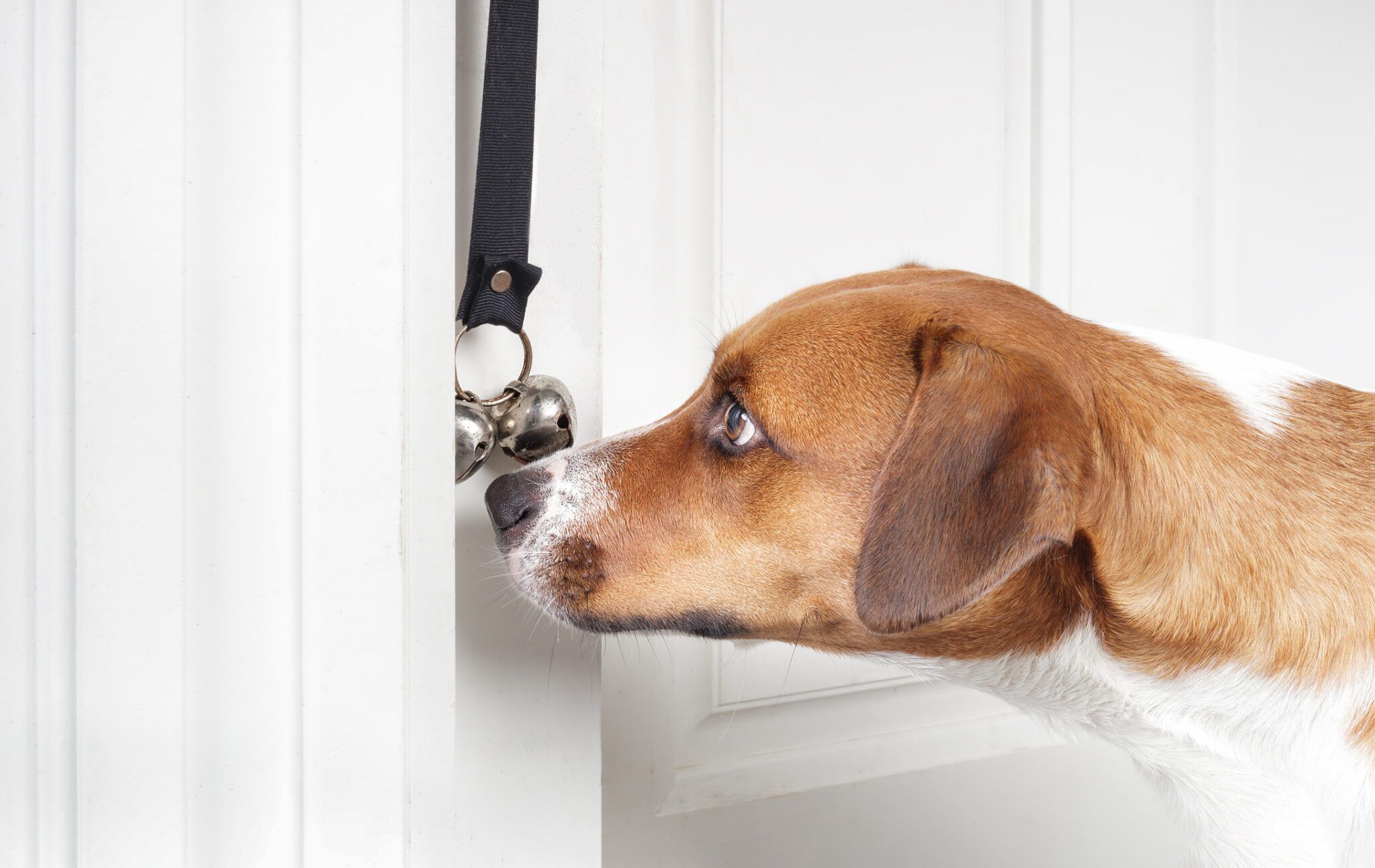
- Encourage a touch to a hanging bell or a sticky note target with their nose.
- Say “Outside,” then open the door and go to the potty spot.
This works because the cue becomes part of the ritual, not because your puppy is being sneaky-smart on day two.
Day 3: Tighten supervision
Day three is often when families relax and puppies get crafty. This is when I see “mystery puddles behind the couch.”
- Use a leash tether to keep your puppy near you during awake time.
- Block access to rugs and bedrooms for now.
- Increase potty trips if you have had more than one accident in a day.
Day 4: Stretch time a bit
If accidents have been minimal for 48 hours, you can stretch the interval by 10 to 15 minutes during awake time.
- From every 45 minutes to every 60 minutes, for example.
- If you get an accident, shorten the interval again for 24 to 48 hours.
Day 5: Practice in new places
Puppies do not generalize well. A puppy who potties perfectly in the backyard might “forget” at grandma’s house.
- Do one potty trip on a different surface (gravel, mulch, sidewalk edge).
- Do one potty trip at a friend’s yard or on a short outing.
- Reward generously for success in new places.
Day 6: Fade treats slowly
If your puppy is consistently pottying outside, you can begin to fade from “jackpot treats every time” to “treat most times,” while keeping praise and access to fun.
- Still reward every poop for a bit longer. Many puppies find pooping more challenging on cue.
- Keep treats by the door anyway. Relapses happen.
Day 7: Test a little freedom
This is not “my puppy is done forever now.” It is a controlled test.
- Give 5 to 10 minutes of supervised off-leash freedom in one puppy-proofed room after a successful potty trip.
- If your puppy starts sniffing intensely, circling, or wandering away, calmly interrupt and go outside.
- If all goes well, repeat later. Small wins build real reliability.
Crate training basics
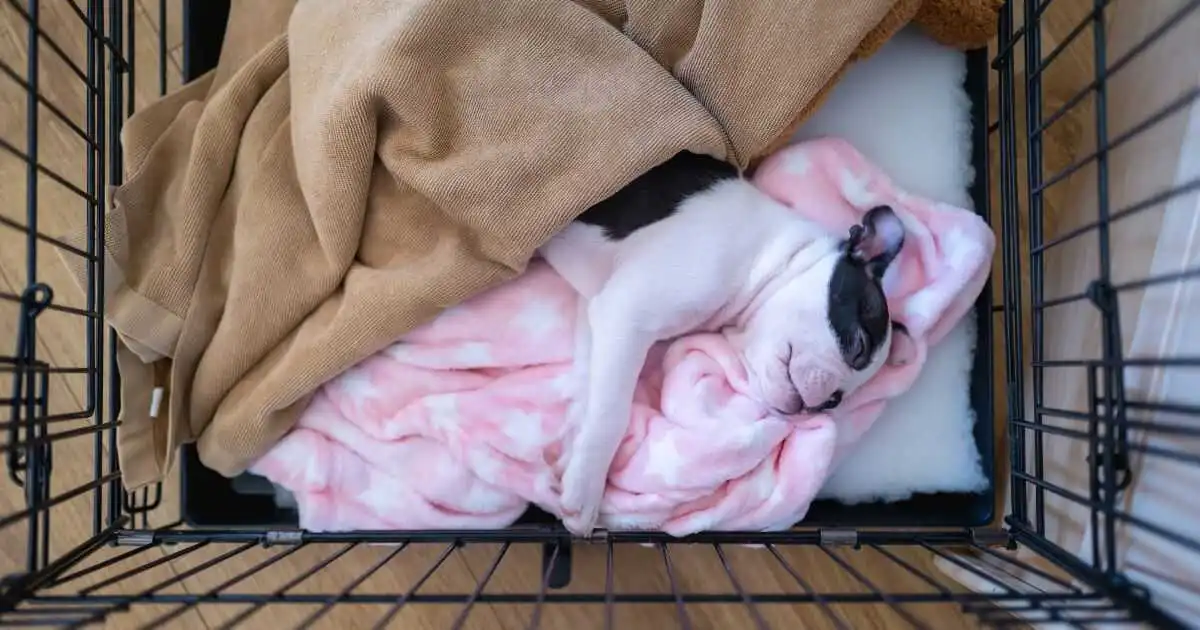
A crate works because most puppies avoid soiling their sleeping area. It is not a punishment. It is a management tool that keeps your puppy safe and helps you predict potty needs.
Crate rules that matter
- Right size: big enough to be comfortable, small enough to discourage pottying inside.
- Crate equals good things: feed meals in the crate, sprinkle a few treats inside, provide a safe chew.
- Potty immediately after: whenever your puppy comes out, go straight outside.
- Do not crate too long: young puppies cannot “hold it” for long stretches. If your schedule requires long absences, plan for a puppy sitter, neighbor help, or a vetted dog walker.
How long can a puppy hold it?
This varies a lot by puppy, especially by age, breed size, health, and what they were used to before you brought them home. Use the numbers below as a conservative starting point for maximum daytime crate time, not a promise. Many families also use the “age in months plus one hour” guideline, with plenty of exceptions.
- 8 to 10 weeks: about 1 hour
- 10 to 12 weeks: about 1 to 2 hours
- 3 to 4 months: about 2 to 3 hours
- 5 to 6 months: about 3 to 4 hours
At night, many puppies can go a bit longer because they are sleeping. Still, plan on at least one nighttime trip for very young puppies.
What to do after an accident
Accidents are information, not rebellion. Your puppy is not being “stubborn” or “spiteful.” They are a baby with a tiny bladder and a learning brain.
If you catch them mid-accident
- Make a gentle interruption sound (like “oops”) without scaring them.
- Pick them up or leash them quickly and go straight to the potty spot.
- If they finish outside, reward like crazy.
- Clean the indoor spot with enzyme cleaner.
If you find it later
- Say nothing to your puppy. No scolding.
- Clean thoroughly with enzyme cleaner.
- Adjust your plan: more frequent potty trips, tighter supervision, smaller freedom zone.
Please skip the nose-rubbing myth. It does not teach potty training. It teaches that humans are scary around pee, which can create hiding behaviors and anxiety.
Common problems
“My puppy pees right after coming inside.”
This usually means they were distracted outside or did not fully empty their bladder.
- Keep the potty trip on leash in one spot.
- Wait an extra minute or two after they pee, then quietly give them a chance for a second pee.
- If they do not go, crate for 10 minutes, then try again.
“My puppy potties in the crate.”
- Double-check crate size and add a divider if needed.
- Increase potty frequency, especially right before crating and immediately after.
- Talk to your veterinarian if stools are loose or urination is unusually frequent. Medical issues can derail training.
“My puppy only potties on pads.”
Puppy pads can be helpful in specific situations, especially for high-rise living, extreme weather, or owners with mobility constraints. They can also teach “soft surfaces are bathrooms.” If you want outdoor potty training, transition intentionally:
- Move the pad closer to the door every day or two.
- Then move it outside to your potty spot.
- Once your puppy reliably uses it outside, cut the pad smaller over several days until it is gone.
“My puppy pees when excited or when I greet them.”
Submissive or excitement urination is common in young puppies.
- Keep greetings calm and low-key.
- Take your puppy out before visitors greet them.
- Avoid looming over them or intense eye contact.
- Most puppies improve as they mature. If it is severe or persists, ask your vet and a qualified positive reinforcement trainer for help.
How to know you are on track
By the end of 7 days, many puppies are not “fully potty trained,” but you should see clear progress:
- Fewer accidents and more predictable potty times
- Your puppy heads toward the potty door or signal more often
- Quicker pottying once outside
- You feel like you understand your puppy’s rhythm
Full reliability often takes weeks to months, especially in tiny breeds, very young puppies, or busy households. That is normal. The win is building habits that stick.
When to call your vet
If any of the following are happening, pause the “training problem” assumption and check in with your vet:
- Straining to urinate, frequent small dribbles, or signs of pain
- Blood in urine or stool
- Sudden increase in accidents after doing well
- Diarrhea, vomiting, or lethargy
- Excessive thirst or urination
7-day FAQ
Should I carry my puppy outside?
If your puppy is tiny, sleepy, or likely to pee mid-walk to the door, yes. Carrying prevents “hallway accidents” and keeps the routine consistent. As they improve, switch to leashing and walking.
Do I need to wake my puppy at night?
For very young puppies, you may need one nighttime trip. If your puppy is sleeping soundly and consistently waking up dry, you can let them sleep and take them out immediately when they wake.
What is the best potty cue?
Pick something simple you will not feel weird saying at 2 am. “Go potty,” “Do your business,” and “Hurry up” are all fine. Consistency matters more than the words.
How long should I wait outside?
Give it 5 minutes in the potty spot. If nothing happens, go back inside and either supervise closely or crate for 10 to 15 minutes, then try again. Wandering the yard for 30 minutes usually teaches puppies to play outside, not potty outside.
The bottom line
Potty training in 7 days is less about “speed” and more about clarity. Your puppy is learning a brand-new rule in a brand-new home. When you keep the schedule tight, reward the behavior you want, and prevent opportunities to practice accidents, most puppies catch on surprisingly fast.
If you want, you can copy this plan into your calendar for the next week, then adjust based on your puppy’s patterns. And if you hit a wall, do not take it personally. A small tweak in supervision, timing, or crate setup is often all it takes.